


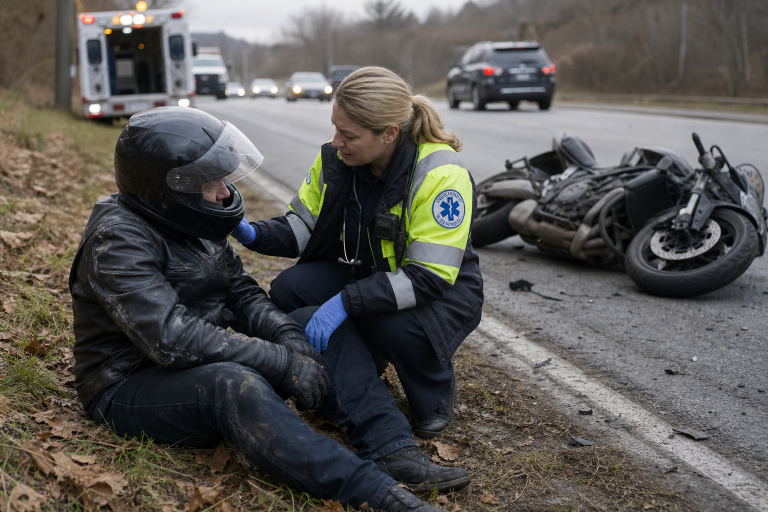
A motorcycle crash can leave a rider shaken, hurt, and uncertain about what comes next. In the first hours, focus on protecting people, getting appropriate medical care, and preserving the basic facts. Questions about repairs, insurance, or whether to speak with a motorcycle wreck attorney can wait until immediate dangers have been addressed.
This checklist offers practical steps for the first 72 hours after a crash. Every collision is different, and state reporting rules, insurance policies, and medical needs vary. When in doubt, prioritize safety and professional medical guidance.
1. The First Minutes: Protect Life And Prevent Another Crash
Safety comes before photographs, discussions about fault, or insurance calls. Look for moving traffic, fuel leaks, fire, downed wires, debris, and other hazards. If you can move without increasing the risk of injury, get yourself out of traffic and ask bystanders to warn approaching drivers.
- Call for emergency help as soon as it is safe.
- Do not try to lift the motorcycle if traffic or injuries make it unsafe.
- Keep a seriously injured person still unless there is an immediate danger, such as fire.
- Do not remove another person’s helmet unless emergency personnel instruct you to do so or an urgent rescue requires it.
2. Get Medical Care, Even If Injuries Seem Minor
Adrenaline can mask pain after an impact. A rider may feel capable at the scene and later develop neck pain, shoulder pain, dizziness, nausea, numbness, headache, confusion, or trouble sleeping. Accept emergency transport if paramedics recommend it, and arrange prompt follow-up care if symptoms appear after you leave the scene.
Worsening headaches, repeated vomiting, seizures, unusual behavior, weakness, confusion, loss of consciousness, or trouble waking up require urgent attention. The warning signs of concussion and mild traumatic brain injury can help riders and family members recognize symptoms that may emerge hours or days later.
- Keep discharge instructions, prescriptions, and appointment records.
- Write down when symptoms began and whether they are getting worse.
- Follow the treating provider’s instructions before returning to work or riding.
3. Call 911 And Give Clear, Factual Information
Call 911 when anyone is injured, lanes are blocked, the roadway is hazardous, there is substantial damage, or a driver may leave the scene. Tell the dispatcher the location, number of vehicles, visible injuries, traffic hazards, and whether fuel or fire is involved. Avoid guessing about speed, distance, or who caused the collision.
When officers respond, ask for the incident number and the name of the agency. A crash report can be useful later, but it may not include every fact or fully resolve what caused the crash.
4. Document The Crash Scene
If you can do so safely, take photos and short videos before vehicles are moved. Conditions can change quickly after a crash, especially when debris is cleared, weather shifts, or traffic resumes.
What To Capture
- Wide shots showing the roadway, intersections, and vehicle positions.
- Damage to every vehicle, including the motorcycle.
- Skid marks, debris, fluid, potholes, lane markings, signs, and traffic signals.
- Damaged clothing, visible injuries, and the condition of your helmet.
- Nearby homes, businesses, or vehicles that may have cameras.
As soon as you can, write a simple timeline: where you were riding, your direction of travel, weather, traffic conditions, and what happened immediately before impact.
5. Collect Driver And Witness Information
Exchange basic information without arguing. A photo of a driver’s license and insurance card can reduce mistakes caused by rushed handwriting. Collect names, phone numbers, vehicle descriptions, license plates, insurance details, and witness contact information. Also note the names and badge numbers of responding officers.
Avoid apologies, accusations, or statements that minimize your injuries. Comments such as “I am fine” or “I must have been speeding” can be misunderstood when the full circumstances are not yet known.
6. Preserve The Motorcycle, Helmet, And Riding Gear
Photograph your motorcycle, helmet, gloves, boots, jacket, pants, phone mount, and camera before cleaning, repairing, replacing, or discarding anything. Store damaged items somewhere dry and secure, and keep towing, storage, repair, rental-car, and replacement-transportation receipts.
Do not assume a helmet is safe to reuse after an impact. Riders can review helmet and protective-gear safety guidance while replacing equipment, but the damaged gear should still be preserved until you understand whether it may be needed as evidence.
7. Handle Insurance Calls With Care
Report the crash to the appropriate insurer as required by your policy, but stick to known facts. Record each adjuster’s name, phone number, claim number, and requests for documents. Keep copies of emails, estimates, letters, medical bills, and payment records.
Do not guess about injuries that have not been diagnosed, sign a release without reading what it covers, or accept a quick payment before future treatment needs are clearer. Coverage rules differ by state and policy.
8. Your First 72-Hour Checklist
Within The First Hour
- Get out of immediate danger when safe to do so.
- Call 911 and request medical help.
- Exchange basic information and identify witnesses.
- Take photos only if your condition and the traffic conditions allow.
Within The First Day
- Complete a medical evaluation and follow instructions.
- Save photos, videos, messages, and witness details.
- Notify your insurer and preserve the motorcycle and gear.
By The Third Day
- Request the crash report when available.
- Start a folder for medical, repair, and expense records.
- Track missed work, symptoms, and out-of-pocket costs.
9. Common Mistakes To Avoid
- Leaving without reporting a crash that requires a report.
- Ignoring symptoms because the pain was not immediate.
- Repairing or disposing of damaged gear too soon.
- Posting opinions, photos, or arguments about the crash online.
- Missing follow-up appointments or failing to retain records.
For example, a rider may feel fine at the roadside but develop a headache and shoulder pain later that evening. Prompt follow-up and a clear record of when symptoms began can make later decisions more informed.
10. Check State Rules And Filing Deadlines
Crash-reporting duties, helmet requirements, insurance rules, comparative-fault standards, and filing deadlines vary by state. Check the rules where the crash occurred, particularly after a hit-and-run or a collision involving an uninsured driver or government vehicle. This checklist is educational and does not replace medical care or advice based on the specific facts of a crash.
11. Frequently Asked Questions
Should A Rider Call 911 After A Minor Motorcycle Crash?
It is often wise when anyone is hurt, traffic is unsafe, property damage is significant, or local rules require a report.
Should The Motorcycle Be Moved?
Move it if it creates an immediate hazard, and it is safe to do so. Otherwise, document its position first when possible.
What If The Other Driver Leaves?
Call 911, record the vehicle description and plate if possible, locate witnesses, and ask nearby businesses whether camera footage may exist.
What If Symptoms Start Later?
Seek medical care promptly and document the time symptoms appeared, including dizziness, vomiting, worsening pain, confusion, or weakness.
Conclusion
After a motorcycle crash, protect people first, report the collision, seek medical care, preserve important evidence, and keep organized records. A calm, practical checklist can make the first 72 hours more manageable during a stressful situation.
