

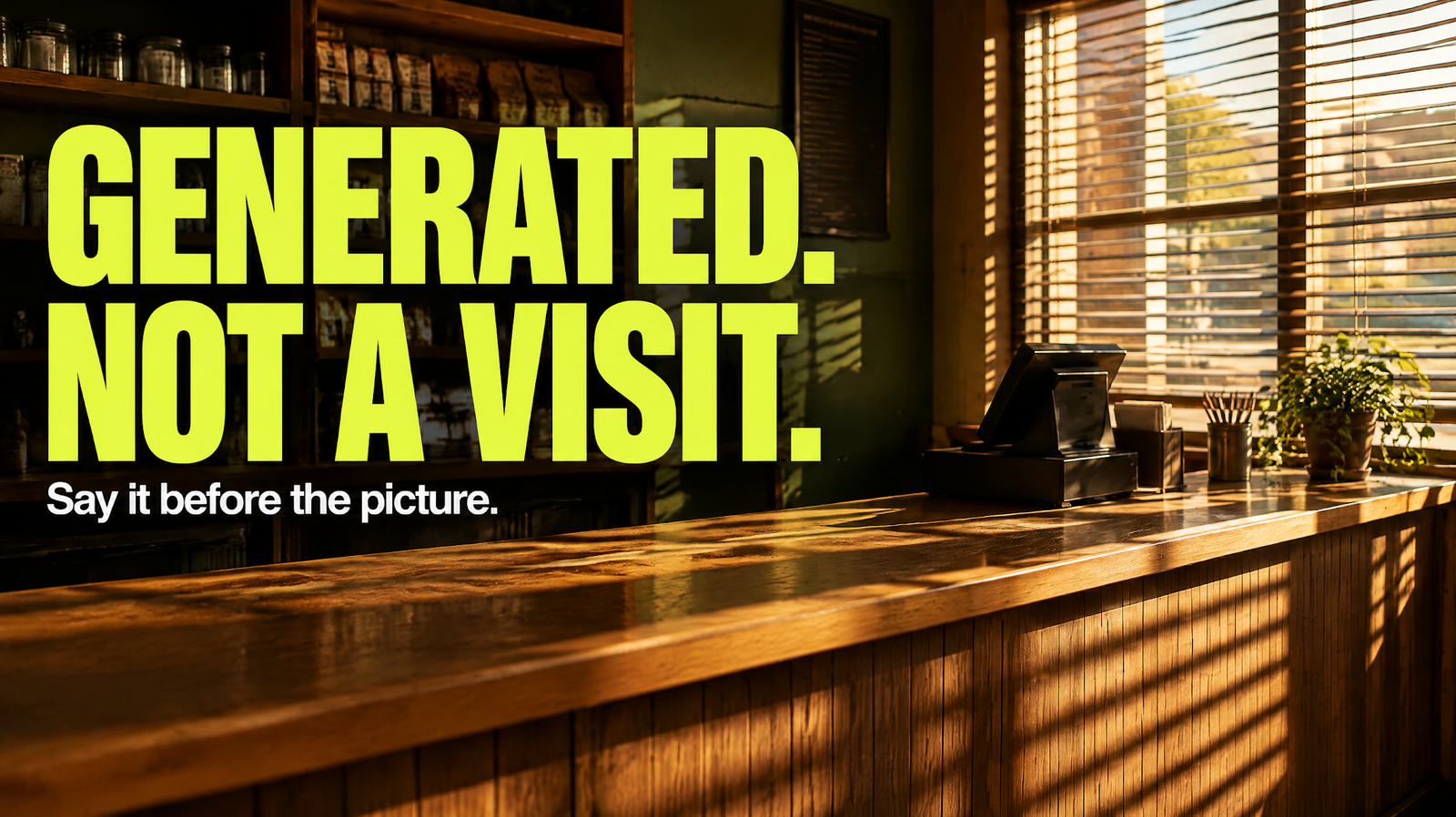
Apractical story used to rest on a sentence and a photograph someone took. A clip can now look like a visit to the house, the shop, or the water without anyone having stood there. Readers who came for a useful answer will ask what they are seeing. The clear version says, in the first moment, which frames were filmed and which were generated.
Put the label where the picture starts
If the room was not filmed, say so before the picture explains the place. A generated tour is not a walkthrough of a house for sale. A generated smile is not a treatment result. A generated afternoon on the water is not a record of that day. The story can still use the clip. It has to tell the reader which kind of picture it is.
Keep one scene editable
Topview is the workspace for that scene. You describe the idea, paste the passage, add a reference for the pace, or point at the page that already states the fact. The workspace plans the scenes, selects the models, and keeps each shot editable, so a correction to the sentence can be carried into the picture. The plan and the credits are on the site before you generate. The workspace does not publish the story, and a generated frame stays a draft until it matches what you are willing to say in public.
A series has to keep the same facts
When the story runs across more than one scene, the next scene has to remember the place, the object, and the people you already showed. That job is an AI Drama project. You can start from a line, an outline, a script, or a chapter. The project holds the characters, the locations, the props, and the beats, and you review them before a scene is generated. A phone version can be vertical. A generated face belongs to the draft. The homeowner, the patient, and the reader stay out of the clip unless they have agreed to a photograph.
A longer model, still switched off on this page
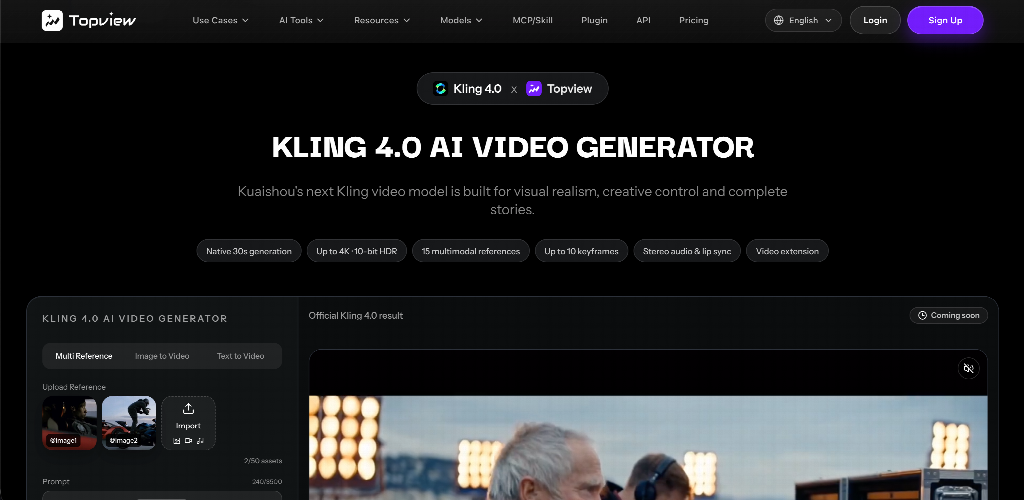
Kling 4.0 is the next video model in Kuaishou’s Kling family. Kling introduced it on September 28, 2026 for a scene that can set up, turn, and finish in one generation of about 3 to 30 seconds. The announcement includes up to 10 keyframes and up to 15 references: as many as 10 images, 5 videos whose combined length stays inside 30 seconds, and 7 subjects. It also describes stereo sound, lip sync, and ratios that include 21:9. The announced picture ceiling is 4K. 10-bit HDR on 1080p and 4K is marked coming soon, as is longer extension toward about two minutes.
On October 16, 2026 the generate buttons on this page are off. Kling says the full model is coming in October 2026 and has not published a day. Kling 4.0 Flash is live for Kling Ultra Yearly subscribers on Kling’s own plan. The examples on the page were published by Kling with the release note. Opening the link reads the spec. A render from this page starts when the buttons are enabled, and the 4K and HDR figures are not a file this page exports today.
The label still applies when that model is on. A realistic scene remains a generated scene until someone filmed it.
