


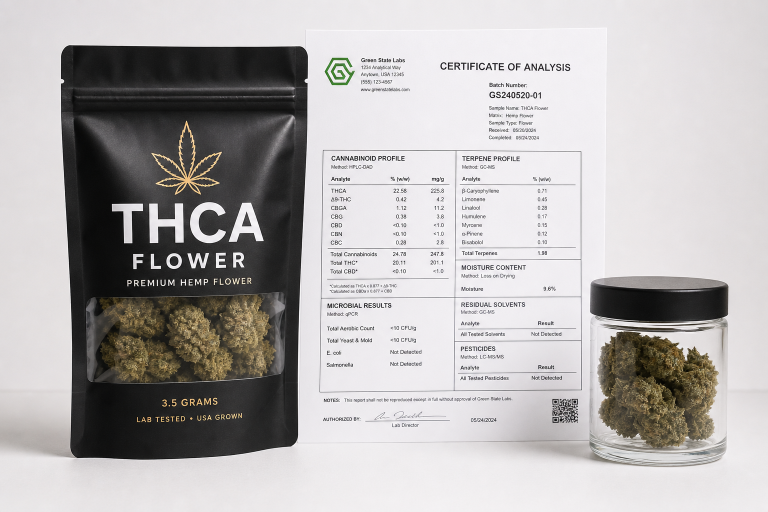
Buying THCA Flower can involve more than comparing strain names or picking the biggest number on a label. A current, batch-specific lab report provides a practical way to verify what was measured before making a purchase.
A Certificate of Analysis is useful, but it is not a blanket guarantee of quality or safety. It reflects the sample submitted to the lab, the testing methods used, and the substances included in that report. Product age, storage conditions, and later batch changes can still matter.
Why COAs Matter
Labels can make similar promises, yet documentation may be very different. One product may have a full report tied to the current lot, while another may display an old, cropped image with no clear connection to the package. A COA helps you move beyond broad marketing language and review measurable details. The most useful reports identify the laboratory, the company that submitted the sample, the sample ID, and relevant collection, testing, and report issue dates. They should also make it possible to determine exactly which product batch was tested.
The Main Parts of a Lab Report
Report Header
Start at the top. Look for the lab name, address, or contact details; the client name; the sample identification number; the test dates; and the report date. These details show whether the document appears complete and traceable.
Product and Batch Details
Next, compare the report with the package or online listing. The product or strain name, product form, and lot or batch number should match. A COA for a different harvest, pre-roll, or flower batch may not accurately describe the item in your cart.
Also note the sample type and testing method. Flower, shake, and infused products can be tested differently, so a result should be interpreted in context rather than copied from one format to another.
How to Read the Cannabinoid Panel
Results may be listed as a percentage, milligrams per gram, or milligrams per package. The units matter. Before comparing two products, make sure both reports use the same measurement format.
THCA, Delta-9 THC, and Total THC
THCA is an acidic cannabinoid that can convert to Delta-9 THC when heated. The basics of THCA chemistry and decarboxylation help explain why a report commonly lists these compounds separately. Delta-9 THC shows the amount detected in the sample before that potential heat-driven conversion. Total THC may combine Delta-9 THC with a calculated portion of THCA. It is useful for comparing reports, but it should not be treated as a precise prediction of any individual experience. Testing formulas and regulatory standards can differ by jurisdiction and product category.
Minor Cannabinoids
CBD, CBG, CBN, CBC, THCV, and CBDV may appear in smaller amounts. These results can provide context about the flower’s profile, but they do not automatically make one product better than another. Review the complete panel rather than focusing on a single headline percentage.
What Safety Testing Can Show
Potency is only part of a strong COA. Depending on the product and program, additional panels may include pesticides, heavy metals, yeast and mold, microbial contaminants, mycotoxins, residual solvents, moisture, or water activity. A “pass” result means the tested sample met the limits listed on that report for that panel. It does not mean every possible contaminant was tested. If a report contains only cannabinoid results, treat it as a potency report, not a full safety screen.
How to Verify the Lab and Batch
- Find the laboratory name and confirm the report is readable in full.
- Check whether the lab lists accreditation, credentials, methods, or a verification process.
- Match the product name, form, lot number, and batch number to the package.
- Review sample collection, testing, and report issue dates.
- Use a QR code only if it leads to the actual batch report, not a generic homepage.
- Ask the seller for clarification when any identifying detail is missing.
Lab Report Red Flags
- No COA is available, or the report has no batch number.
- The product name or product type does not match the listing.
- The report is old and reused across multiple current products.
- The lab cannot be identified, contacted, or verified.
- The document is blurry, heavily cropped, edited-looking, or incomplete.
- It shows potency but omits all relevant safety panels.
- The seller avoids basic questions about testing dates or lot details.
One unusual result does not prove fraud. It does mean you should pause, carefully compare the documentation, and request a complete explanation before buying.
Why Potency Is Not the Whole Story
A larger THCA percentage does not automatically mean fresher flower, better handling, smoother use, or stronger quality control. A well-cured, properly stored product with moderate potency may be a better choice than dry flower with an impressive but poorly documented number. Consider the report date, the completeness of contaminant testing, the package condition, the aroma, the trim, the moisture, and the clarity of the product details. The price should also make sense given the quantity and the level of documentation provided.
What to Check About Current Rules
Online availability does not prove that a product is lawful everywhere. Federal, state, and local rules can use different definitions, testing approaches, and restrictions. The USDA’s overview of hemp production rules and testing standards is useful context, but buyers should still confirm the current rules that apply where they live and where the product will be delivered. Do not rely on a seller’s general legal statement as personal legal advice. Rules can change, and issues such as shipping, possession, and total THC calculations may be handled differently across jurisdictions.
A Simple Buying Checklist
- Locate the current, full COA.
- Match the report to the exact product and batch.
- Review THCA, Delta-9 THC, total THC, units, and dates.
- Look for pesticide, heavy metal, and microbial testing where relevant.
- Verify the lab and assess whether the report is complete.
- Read shipping, return, and storage information.
- Confirm applicable rules before ordering or carrying the product.
- Save the batch report for future reference.
Frequently Asked Questions
What Does COA Stand For?
COA stands for Certificate of Analysis. It is a lab report showing results for a particular submitted product sample.
Does a COA Prove a Product Is Safe?
No. It shows results for the tests performed. Review the included panels, limits, dates, and batch match before concluding.
How Recent Should a Lab Report Be?
A recent report tied to the current batch is generally more useful than an older report reused for many products. Ask for updated documentation if the dates or lot details are unclear.
Can THCA Flower Affect a Drug Test?
It can. Heating THCA may produce THC, and standard drug testing may detect THC-related metabolites. Anyone subject to workplace, athletic, military, or legal testing should carefully consider that risk.
Is the Highest THCA Percentage Always Best?
No. Accurate testing, freshness, cure, storage, cleanliness, and complete safety documentation are all important factors.
Conclusion
A lab report is one of the most practical tools for making a more informed decision about THCA flower. Match the batch number, read the full cannabinoid and terpene panel, verify the testing laboratory, question unclear or missing results, and check the current rules that apply to you. Pay attention to testing dates and safety panels that may cover pesticides, heavy metals, mold, yeast, and other contaminants. A report should be easy to understand and clearly connected to the product being sold. If important information cannot be verified, consider choosing a product with more transparent documentation. A few careful minutes with a COA can prevent a rushed purchase based on a label alone and help you compare products using evidence rather than marketing claims.
