



Fundamentals of Industrial Thermal Processing and Calcination Systems
The calcination process is a thermal treatment aimed at inducing chemical dissociation, phase transition, or volatile removal in raw materials. At its core, the rotary calcination kiln functions as a sophisticated reactor where material is subjected to high temperatures while being continuously tumbled. This rotation is not merely for transport; it ensures that every particle of the material is exposed to the hot gas stream, facilitating uniform heat transfer.
The principle of thermal decomposition relies on maintaining a specific temperature profile—typically between 1100 and 1350 degrees Celsius for materials like limestone—to drive off carbon dioxide or other impurities. Modern systems utilize counter-current flow, where the material moves from the higher, feed end toward the lower, discharge end, while hot gases flow in the opposite direction. This arrangement maximizes the temperature gradient, ensuring that the hottest gases meet the material that is already at its peak temperature, while the cooler exhaust gases preheat the incoming raw feed.
This thermal efficiency is the hallmark of modern design. By controlling the residence time—the duration the material spends inside the kiln—operators can ensure that the chemical reaction reaches completion without over-burning or under-processing the product. Achieving this level of precision requires a deep understanding of the kiln’s thermal mechanics and a robust, reliable infrastructure.
Core Components in Industrial Thermal Processing Kilns
A rotary calcination kiln is a massive, precision-engineered assembly. The primary structure is the steel shell, which must be robust enough to withstand both the mechanical stresses of rotation and the intense internal heat. Lining this shell is a layer of refractory material, which acts as a thermal barrier, protecting the steel from the extreme temperatures of the calcination zone.
The kiln is supported by riding rings, or tyres, that rest on massive rollers. These components allow the kiln to rotate smoothly, often at speeds between 0.5 and 5 revolutions per minute. The drive assembly, typically powered by high-torque motors, provides the force necessary to maintain this rotation under heavy load. To ensure the process remains efficient, sealing devices at the feed and discharge ends are critical; they prevent air leakage, which can disrupt the temperature profile and lower thermal efficiency. When evaluating high-efficiency thermal processing equipment, it is essential to look for systems that integrate these components with advanced combustion controls to ensure fuel is used effectively.
Process Flow and Heat Exchange Mechanics
The modern process flow is designed to capture every possible joule of energy. It begins with raw material preparation, where the feed is sized to ensure consistent reaction rates. The material then enters the vertical preheater, a crucial innovation that uses waste heat from the kiln exhaust to raise the material temperature above 800 degrees Celsius before it even enters the rotating shell.

Once inside the kiln, the material undergoes the primary calcination phase. The internal atmosphere is carefully managed through graded combustion, where fuel and air are introduced to maintain a stable, high-temperature zone. After calcination, the material enters a vertical cooler. This stage is vital; by rapidly cooling the product, we preserve its chemical activity—a key metric for industries like steelmaking. This integrated approach of preheating and cooling creates a closed-loop thermal system that is significantly more efficient than older, standalone kilns.
Technological Advancements Across High-Temperature Applications
Advanced Energy Efficiency in Industrial Thermal Processing
The shift toward energy efficiency has been driven by the integration of vertical heat exchangers and improved sealing technologies. By keeping the air leakage coefficient below 10 percent, modern kilns maintain a consistent internal environment, which prevents fuel wastage. Furthermore, the ability to utilize diverse fuel sources—such as natural gas, coke oven gas, pulverized coal, or industrial tail gases—allows operators to leverage local energy markets to minimize operating expenses.
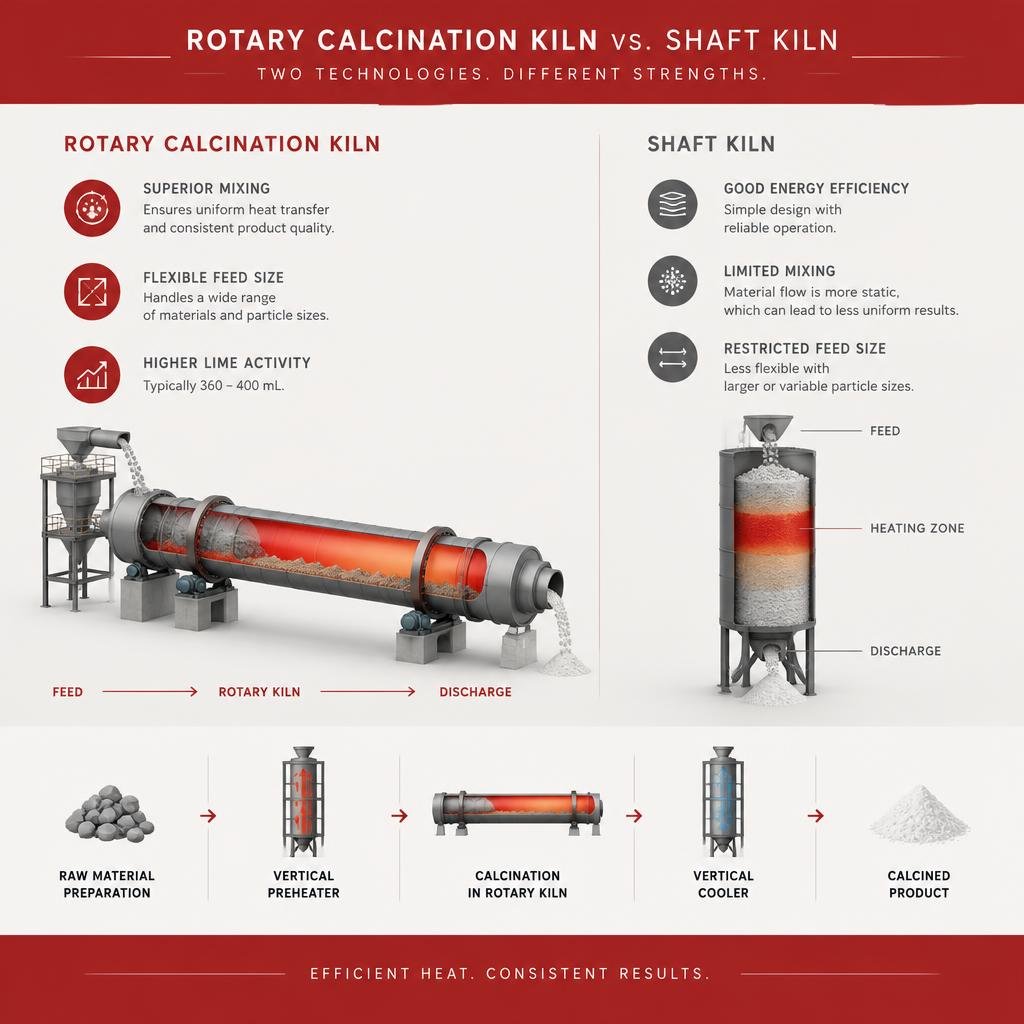
When comparing these systems to traditional shaft kilns, the advantages of the rotary design become clear. While shaft kilns can be efficient, they often struggle with material uniformity and flexibility regarding feed size. Rotary kilns offer superior mixing, which leads to more consistent product quality and higher lime activity, often measured in the range of 360 to 400 milliliters.
Multi-Sector Material Applications and Product Quality Control
The versatility of the rotary kiln makes it an indispensable tool across various sectors. In metallurgy, it is the standard for producing high-activity lime, which is essential for effective slag formation in steelmaking. In the chemical industry, it is used for the calcination of titanium dioxide and various mineral roasting processes.

Product quality is no longer left to chance. Modern kilns are equipped with Programmable Logic Controller (PLC) systems that monitor temperature, rotation speed, and fuel-to-air ratios in real-time. This automation allows for precise adjustments, ensuring that the final product meets stringent purity and reactivity standards regardless of variations in raw material quality.
Operational Best Practices and Future Outlook
Maintenance Strategies and Refractory Management
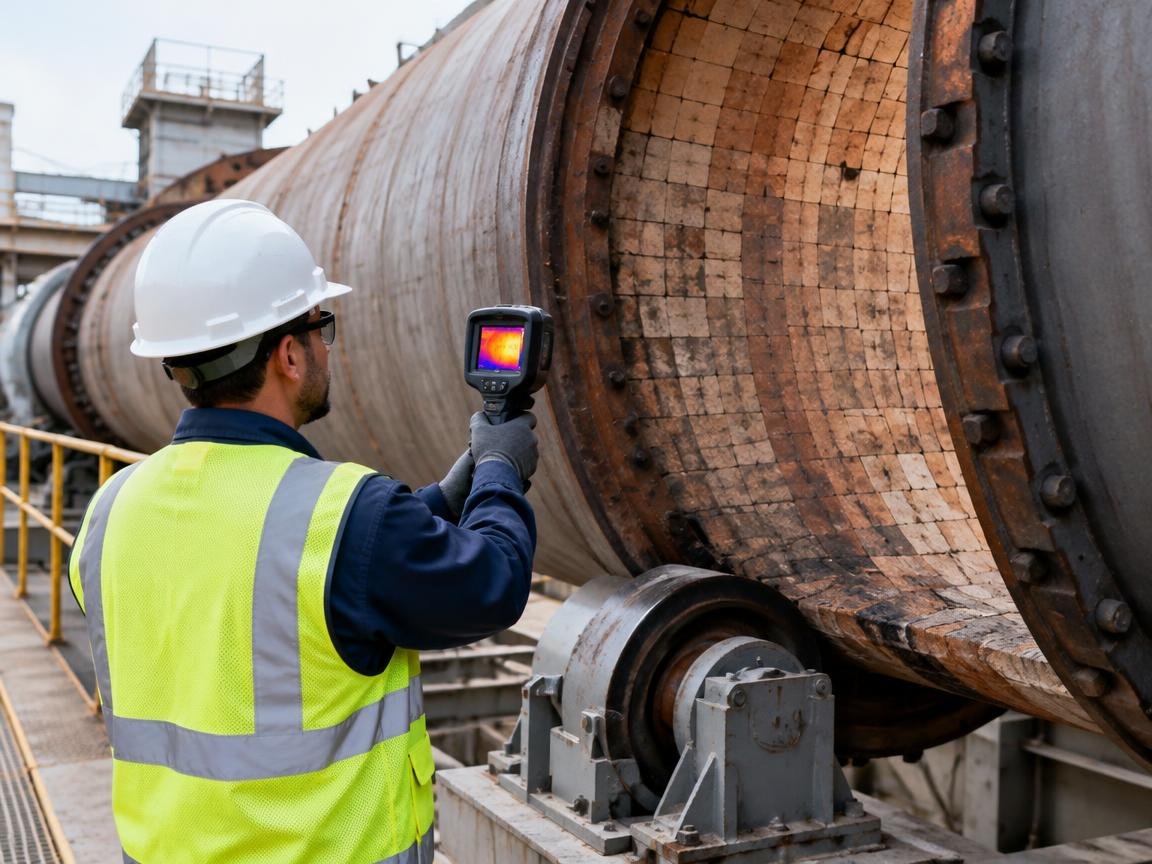
The longevity of a rotary kiln is largely dictated by its maintenance schedule. The refractory lining is the most vulnerable component, as it is subjected to constant thermal cycling and chemical erosion. Regular inspections, including the use of infrared scanning to detect hot spots on the kiln shell, are mandatory. A hot spot indicates that the refractory has thinned or failed, and immediate intervention is required to prevent shell warping or structural damage.
Beyond the lining, tyre and roller alignment is critical. If the kiln is not perfectly aligned, it can cause excessive vibration and mechanical wear on the drive assemblies. Implementing a preventative maintenance program that includes regular lubrication, bearing cooling, and auxiliary drive checks will significantly extend the lifespan of the equipment and prevent costly unscheduled downtime.
Decarbonization and Digitalization in Thermal Systems
Looking ahead, the focus of industrial thermal processing is shifting toward decarbonization and the “digital twin” concept. As carbon emissions regulations become more stringent, manufacturers are exploring ways to integrate carbon capture technologies directly into the kiln exhaust stream. Graded combustion techniques are already helping to reduce nitrogen oxide emissions, but the next frontier involves using predictive monitoring to optimize fuel consumption based on real-time material chemistry.
Digital twins—virtual replicas of the physical kiln—allow operators to simulate process changes before implementing them in the real world. By analyzing data from thousands of sensors, these systems can predict when a component is likely to fail or how a change in fuel composition will affect the final product quality. This level of digitalization is not just a technological luxury; it is the future of sustainable, high-performance industrial calcination. By investing in these advanced systems today, manufacturers can ensure their operations remain both profitable and environmentally responsible in the decades to come.
