


Key Takeaways
- Prioritize safety after a storm by keeping people away from unstable trees, hanging branches, and downed power lines.
- Inspect storm damage from a safe distance and look for warning signs such as trunk cracks, exposed roots, broken leaders, and sudden changes in a tree’s lean.
- Document damage with photographs and notes before moving major debris, especially when homes, vehicles, or other structures are affected.
- Limit DIY cleanup to small, loose branches on stable ground, and leave hazardous or elevated work to qualified professionals.
- Prepare Boulder trees for future storms through regular inspections, appropriate pruning, proper watering, and protection of root zones.
- Remember that not every damaged tree needs removal; a professional assessment can help determine whether a tree can recover safely.
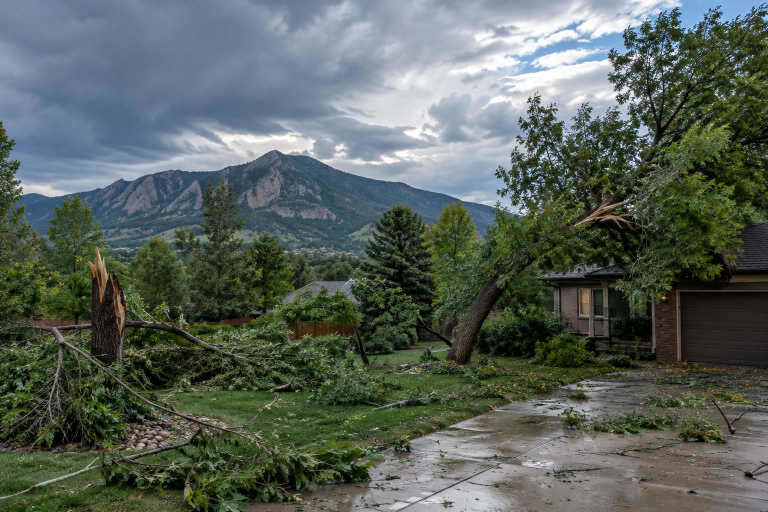
A powerful Front Range windstorm can turn a familiar Boulder yard into a serious safety concern in minutes, leaving broken branches overhead, damaged trunks, or uprooted trees threatening homes and driveways. Knowing when to step back, what damage to look for, and when to seek professional help can make all the difference in protecting people and property. Homeowners looking for local expertise can explore Roots Up Tree Company in Boulder CO for tree-care support or consider emergency tree service in Lafayette CO when storm damage requires urgent attention. Before cleanup begins, however, the priority is always the same: keep people away from unstable trees, hanging limbs, and downed power lines until the area can be assessed safely.
Boulder’s diverse landscape includes mature shade trees, native cottonwoods, conifers, and ornamental trees that respond differently to high winds, heavy snow, and sudden temperature changes. Storm damage is not always obvious: a broken branch may be easy to spot, but a newly tilted trunk, raised roots, or a crack where major limbs meet can signal a more serious structural problem. Looking beyond fallen debris helps homeowners identify potential hazards before they cause further property damage or injury.
Local weather and growing conditions can complicate these risks. Boulder’s location along the Front Range exposes trees to powerful downslope winds, while wet spring snow and fluctuating soil moisture can place additional stress on branches and root systems. Rocky or compacted soils, construction near established trees, and prolonged dry periods may also affect stability and overall tree health. Understanding these local factors helps homeowners identify warning signs, respond more cautiously after severe weather, and make informed decisions about cleanup, professional assessment, and long-term tree care.
Table of Contents
- Why Safety Comes First
- First Steps After a Storm
- Assessing Visible Damage
- Safe Cleanup Limits
- When Professional Help Is Needed
- Preparing Boulder Trees for Future Storms
- Common Questions
Why Safety Comes First
A storm may be over while the danger remains. Broken limbs can be suspended overhead, trunks may be split internally, and roots can lose their hold after saturated soil, wind, or sudden snow loading. Never assume a branch is safe simply because it is still, quiet, or partly supported by another tree. Wood under tension can move without much warning when supporting branches shift, ice melts, or a person attempts to drag debris away.
Keep children, pets, neighbors, and visitors away from the affected area. If you see a downed wire, a tree contacting a utility line, or a damaged service line near the home, stay well away and contact emergency responders or the utility provider. After severe weather, for problems affecting nearby communities, residents should exercise the same caution around wires, elevated limbs, and unstable trunks. Do not attempt to move branches off a line, and do not assume that a wire is safe because it appears disconnected or is not sparking.
The First Steps After a Storm
Before beginning any cleanup, inspect the property only from stable ground. Walk around the area at a distance, avoid standing beneath damaged limbs, and resist the urge to pull on branches that appear loose. If visibility is poor due to darkness, rain, snow, or high winds, wait until conditions improve unless there is an immediate life-safety emergency.
- Check for injuries and call 911 if someone is hurt or trapped.
- Look for power lines, damaged poles, and wires hidden by foliage or debris.
- Examine the home from outside for roof, window, siding, or fence damage.
- Take wide photos of the tree, surrounding landscape, and affected structures.
- Record the storm date and note changes such as a new lean or shifted soil.
- Wait for qualified assistance before climbing, using a ladder, or operating a chainsaw.
How to Assess Visible Tree Damage
A basic visual review can help you describe the situation clearly, but it is not a substitute for a close structural assessment. Look for fresh trunk cracks, torn bark, exposed wood, broken leaders, large missing sections of canopy, or soil that has risen on one side of the tree. Pay particular attention to trees near homes, sidewalks, patios, vehicles, play areas, and neighboring property. Also note whether a damaged limb is resting on another branch, a roofline, a fence, or a utility service drop, since each contact point can change how the wood is supported.
Some damage may be manageable. A generally healthy tree that loses a few smaller branches, remains upright, and has an intact trunk may recover with appropriate pruning and care. By contrast, a split trunk, a major root upheaval, a severe new lean, or a large branch hanging over a roof can pose an ongoing hazard. The guidance for assessing storm-damaged trees notes that large limbs, extensive crown loss, and trunk damage can affect a tree’s prospects for recovery. A prompt assessment can also help prevent well-intentioned but harmful cuts, such as removing too much remaining live canopy at once.
Document Before Major Debris Is Moved
Photograph damage from several safe angles before major cleanup begins, especially when a roof, vehicle, fence, walkway, or other structure was affected. Include both wide views and close images of cracks, broken limbs, and exposed roots. Save receipts for temporary protective measures or emergency repairs, and contact your insurance provider for guidance when property damage is involved. If it is safe to do so, note the time the damage was discovered and avoid altering the scene until you understand what documentation may be needed.
What Homeowners Can Clean Up Safely
Minor debris cleanup may be reasonable when the area is clear of wires, overhead hazards, damaged structures, and unstable trees. Wear gloves, eye protection, long sleeves, and sturdy closed-toe footwear. Small twigs scattered across an open lawn are very different from a bent limb resting against a garage or a branch caught high in another tree. Work slowly, keep bystanders outside the cleanup area, and stop if debris cannot be moved easily by hand from level ground.
- Move only small, loose branches that can be handled from the ground.
- Keep clear of wood that is bent, pinched, suspended, or under visible tension.
- Do not use ladders near damaged trees or climb into the canopy.
- Do not cut a leaning, split, partially uprooted, or elevated tree with a chainsaw.
- Keep debris piles away from driveways, sidewalks, hydrants, and drainage paths.
When to Call a Tree-Care Professional
Professional evaluation is appropriate when the work involves working at heights, heavy wood, uncertain stability, nearby structures, or specialized equipment. It is also wise to note when a mature Boulder tree has shifted position after wind or wet snow, even if it has not fallen. A qualified professional can help distinguish a tree that may be preserved from one that presents an unacceptable risk. This is particularly important when damage is not obvious from the ground, such as a crack high in a major union or a branch that has become lodged in the canopy.
Ask for proof of insurance, a written scope of work, an explanation of cleanup expectations, and a clear recommendation about preservation versus removal. Avoid accepting rushed decisions made before the tree’s condition and surrounding targets have been considered. A clear written estimate should also identify what debris removal, stump work, site protection, and follow-up pruning are included, if any.
Location: Roots Up Tree Company | 343 Indian Peaks Trail W, Lafayette, CO 80026 | (720) 783-7434
Preparing Boulder Trees for Future Storms
Storm preparation is a year-round process. Boulder’s dry periods can place trees under water stress, while heavy snow or wind can expose weak branch structure that developed over many years. Regular observation is especially useful for large trees near a home, driveway, or gathering area. Seasonal checks after leaf-out, before winter weather, and following major construction or landscaping changes can make gradual problems easier to notice.
- Remove dead, broken, or declining branches before severe weather arrives.
- Watch for cracks, multiple trunks with tight unions, and branches rubbing together.
- Water appropriately during prolonged dry conditions, particularly for younger trees.
- Protect the root zone from unnecessary soil compaction and construction disturbance.
- Avoid topping or excessive thinning, which can weaken structure and reduce canopy benefits.
Mulching the root zone with a layer of wood chips, kept a few inches away from the trunk, can help moderate soil temperature and moisture in Boulder’s dry, variable climate. Deep, infrequent watering during dry stretches supports stronger root growth than frequent shallow sprinkling, which tends to keep roots near the surface where they are more vulnerable to wind and freeze-thaw cycles. Planting species suited to local elevation and soil, and giving young trees room to develop a balanced crown, also reduces the chance of future storm losses. Mulch should not be piled against the trunk, since keeping the trunk flare visible helps avoid unnecessary moisture and bark problems at the base of the tree.
Thoughtful preventive pruning and inspections can reduce avoidable failures. Guidance on preparing trees for storm season also emphasizes addressing dead limbs and structural weaknesses before rough weather arrives.
Common Questions About Storm-Damaged Trees
Can a tree survive after losing a large branch?
It can, depending on its overall health, species, remaining canopy, wound size, and trunk condition. A large loss does not automatically mean removal is necessary, but it does justify careful evaluation. Proper pruning of torn or broken branch ends may improve the tree’s ability to compartmentalize the injury, but major cuts should be planned carefully rather than made hastily.
Is a leaning tree always dangerous?
Not necessarily. Some trees grow with a natural lean. A new lean accompanied by cracked soil, raised roots, or trunk damage is more concerning and should be assessed promptly. Compare the tree with nearby fixed features, such as a fence or house, if you are unsure whether its position has changed after the storm.
Should a homeowner cut down a hanging branch?
No. Hanging limbs may shift suddenly due to stored tension or changing wind conditions. Keep the area below the branch clear and leave elevated work to trained professionals.
Final Thoughts
Storm damage may happen in minutes, but the decisions made afterward can have lasting consequences for Boulder homeowners and their trees. Keeping people away from unstable limbs, documenting visible damage, and recognizing when professional help is necessary can reduce the risk of injury and prevent manageable problems from becoming more serious. With regular inspections, appropriate pruning, and attention to Boulder’s changing weather conditions, homeowners can also help prepare their landscapes for future storms. The best storm cleanup is not the fastest cleanup; it is the one that puts safety first, protects what can be saved, and leaves the property better prepared for the next storm.
