



The Evolution of Medical Aesthetics and Wellness Treatments in Modern Dermatology
We all seek clear, radiant skin and an even complexion. In advanced medical aesthetics, one ingredient often discussed is L-glutathione. This powerful antioxidant has gained significant attention for its potential to brighten skin and reduce hyperpigmentation. Many are curious about the science behind it and if it truly delivers on its promises.
This article delves into the scientific understanding of L-glutathione. We will explore its intricate role in melanin production and skin pigmentation. We will compare the effectiveness and safety of different administration methods, including oral supplements, topical creams, and intravenous applications.
Our goal is to provide a clear, evidence-based view of L-glutathione in skin whitening. This includes how it fits into modern approaches for various aesthetic skin and body treatments. We will examine key research findings, the latest innovations, and important safety considerations to help you understand this complex topic.
Modern dermatology has significantly advanced beyond treating superficial symptoms, now focusing on the intricate cellular processes that underpin skin health and appearance. This evolution emphasizes a holistic approach, integrating the understanding of internal physiological balance with external cosmetic applications. Central to this understanding is the concept of oxidative stress – an imbalance between free radicals and antioxidants in the body. When free radicals overwhelm the body’s antioxidant defenses, they can damage cellular structures, leading to accelerated aging, inflammation, and pigmentary changes like hyperpigmentation.
Maintaining redox homeostasis, or the balance of oxidation and reduction reactions, is crucial for cellular wellness. Disruptions in this balance can manifest as dullness, uneven skin tone, and the formation of dark spots. Consequently, many contemporary aesthetic and wellness treatments are designed to enhance cellular detoxification processes and bolster antioxidant defenses. This strategy aims not only to correct existing skin concerns but also to prevent future damage, promoting sustained skin brightness and resilience against environmental aggressors. For instance, effective photoaging defense relies heavily on neutralizing free radicals generated by UV exposure, preventing the cascade of events that lead to wrinkles, loss of elasticity, and hyperpigmentation. This comprehensive approach underscores the shift towards treatments that support the skin’s natural regenerative and protective capacities.

Integrating Glutathione into Medical Aesthetics and Wellness Treatments
Within this evolving landscape, L-glutathione has emerged as a prominent molecule due to its multifaceted role as the body’s “master antioxidant.” Its integration into medical aesthetics and wellness treatments is driven by its unique ability to influence melanin production, the primary determinant of skin pigmentation. The scientific mechanism by which L-glutathione impacts skin pigmentation is complex and involves several key pathways.
Firstly, L-glutathione directly inhibits tyrosinase, the rate-limiting enzyme in the melanogenesis pathway. Tyrosinase is responsible for converting tyrosine into dopa and then into dopaquinone, which are precursors to melanin. By chelating copper ions, which are essential cofactors for tyrosinase activity, glutathione effectively reduces the enzyme’s function. This inhibition slows down the initial steps of melanin synthesis.
Secondly, glutathione modulates dopaquinone, diverting its pathway. Instead of forming dark eumelanin, glutathione promotes the production of lighter pheomelanin. This shift in the melanogenesis pathway is a critical aspect of its skin-lightening effect. Eumelanin provides dark brown/black pigmentation, while pheomelanin contributes to yellow/red hues. By suppressing eumelanin and stimulating pheomelanin, glutathione contributes to an overall lighter and brighter skin tone.
Furthermore, glutathione’s potent antioxidant properties help neutralize free radicals that can activate melanocytes and stimulate melanin production. By reducing oxidative stress within melanocytes, glutathione indirectly dampens melanogenesis. It also plays a role in down-regulating microphthalmia-associated transcription factor (MITF), a key regulator of melanocyte development and melanin synthesis. This comprehensive action profile makes L-glutathione a compelling agent for managing hyperpigmentation and achieving a more even complexion.
Synergistic Antioxidant Protocols and Formulations
The efficacy of L-glutathione in skin brightening is often significantly enhanced when it is combined with other complementary agents, forming synergistic antioxidant protocols. This approach leverages the combined power of multiple ingredients to target various aspects of melanin production and oxidative stress. One of the most notable synergistic relationships involves L-cystine, a precursor to glutathione. Research, such as a 12-week trial, demonstrated that daily oral supplementation with 500 mg of L-Cystine and 250 mg of L-Glutathione was significantly more effective for skin lightening and reducing facial dark spots compared to either compound alone. This highlights L-cystine’s role in supporting the body’s natural glutathione synthesis, amplifying its effects.
Other vital co-factors frequently included in glutathione formulations are ascorbic acid (Vitamin C), alpha-lipoic acid (ALA), and zinc aspartate. Ascorbic acid is a powerful antioxidant that not only neutralizes free radicals but also regenerates reduced glutathione, extending its active lifespan. It also directly interferes with melanin synthesis by reducing dopaquinone. Alpha-lipoic acid, another potent antioxidant, can also regenerate glutathione and other antioxidants like Vitamin C and E, further boosting the body’s free-radical neutralization capacity. Zinc aspartate contributes to overall skin health and immune function, and some studies suggest it can play a role in stabilizing glutathione and enhancing its absorption.
These multi-ingredient formulations aim to create a comprehensive defense against oxidative damage and hyperpigmentation. By combining L-glutathione with its precursors and other antioxidants, the goal is to optimize its bioavailability, enhance its stability, and provide a broader spectrum of action against the complex mechanisms of melanin production. This strategic combination approach helps to explain why clinical outcomes for oral glutathione can vary significantly; the presence and dosage of these synergistic compounds often play a crucial role in the overall effectiveness observed in studies.
Comparative Analysis of Glutathione Delivery Modalities
The journey of L-glutathione from supplement to target cells is fraught with bioavailability barriers, making its administration pathway a critical determinant of its efficacy. Glutathione, a tripeptide, is susceptible to degradation in the gastrointestinal tract and faces challenges crossing cellular membranes. Understanding its pharmacokinetics – how the body absorbs, distributes, metabolizes, and excretes it – is essential for optimizing its use in skin whitening. The three primary administration pathways for L-glutathione are oral supplementation, topical application, and intravenous (IV) infusion, each with distinct advantages, limitations, and safety profiles. The effectiveness of L-glutathione in skin lightening varies considerably across these routes, influencing how it is integrated into various aesthetic and wellness treatment protocols.
Delivery Method Bioavailability Efficacy for Skin Lightening Safety Profile Onset of Effect Oral Low to Moderate (Improved with advanced formulations) Moderate, variable, often enhanced with co-factors Generally mild side effects (GI upset) Weeks to months Topical Moderate (Enhanced with penetration aids) Localized, consistent lightening, improves texture Generally well-tolerated (mild irritation) Weeks to months Intravenous High (Direct systemic delivery) Rapid but often short-lived Significant risks (liver dysfunction, anaphylaxis) Days to weeks 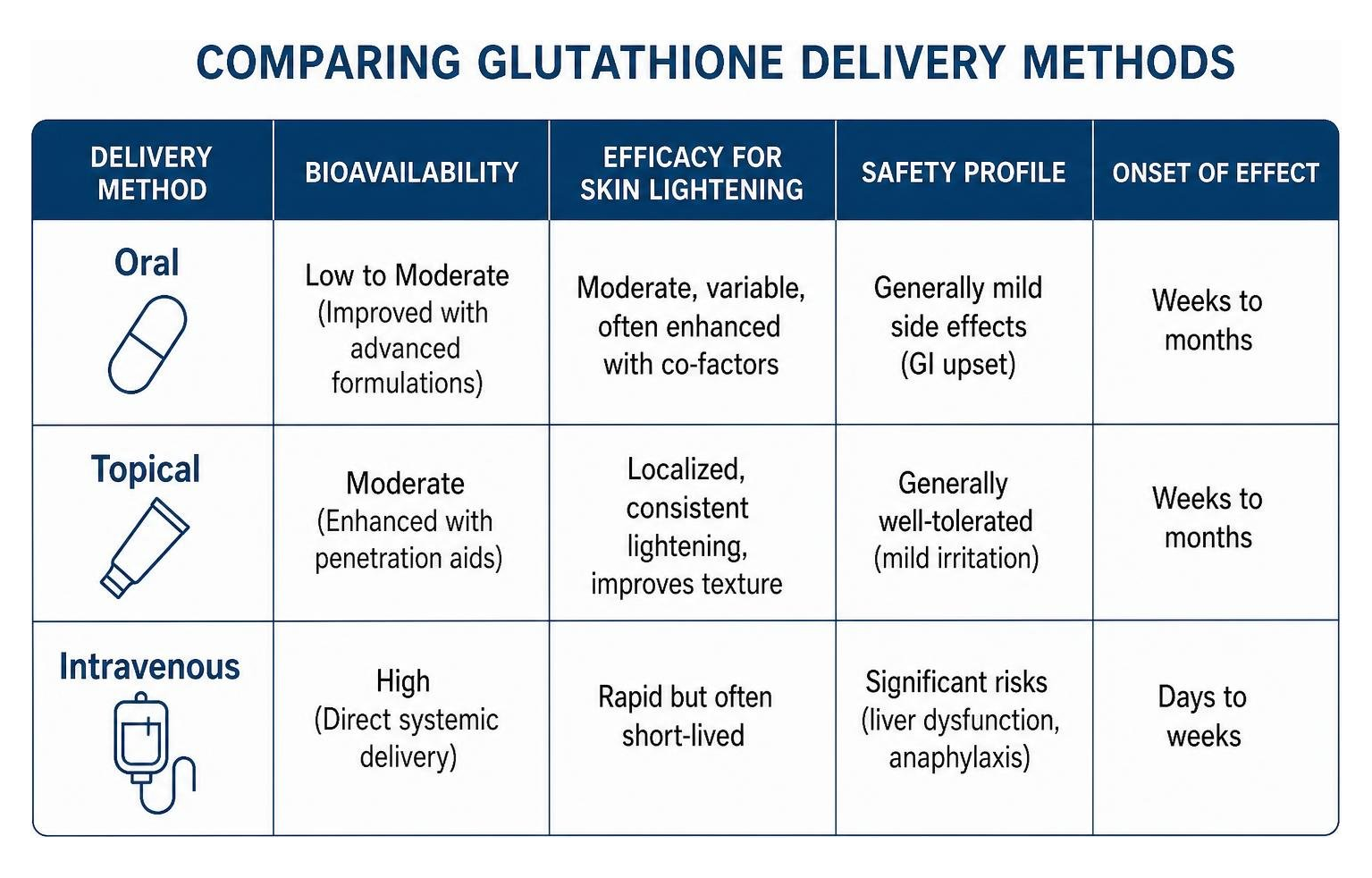
Oral Supplementation and Advanced Bioavailability Technologies
Oral L-glutathione supplementation presents a convenient option for many, but its efficacy has historically been hampered by poor bioavailability. Standard oral glutathione is largely broken down by digestive enzymes in the gut, and what little survives faces significant first-pass hepatic metabolism. This means that only a small fraction of the ingested glutathione reaches systemic circulation and, subsequently, the skin. This inherent challenge contributes significantly to why clinical outcomes for oral glutathione vary across studies, with factors like dosage, duration, and the population’s baseline glutathione levels influencing its effectiveness. Studies have shown that even high doses may result in only modest increases in plasma glutathione levels. For example, while 1000 mg/day might raise plasma levels by 30-35% after six months, 500 mg/day only yields about a 17% increase.
To circumvent these bioavailability barriers, advanced formulations have been developed. Liposomal encapsulation, for instance, involves encasing glutathione within lipid vesicles, protecting it from degradation in the digestive tract and facilitating its absorption through enterocytes (intestinal cells). This technology is claimed to increase absorption significantly, with some product descriptions suggesting up to 98 times greater absorption compared to non-liposomal forms. This improved delivery can lead to higher plasma levels and potentially more consistent skin-lightening results.
Another innovation is the development of esterified glutathione derivatives, such as GSH-MEE (glutathione monoethyl ester). These derivatives are designed to be more lipophilic, allowing them to cross cell membranes more readily and be hydrolyzed intracellularly back into active glutathione. Such formulations aim to bypass the enzymatic degradation and transport limitations of free glutathione, improving its systemic availability and ultimately its impact on skin pigmentation.
Despite these advancements, the effectiveness of oral glutathione still shows variability. A daily oral intake of 500 mg has been shown to result in significant reductions in melanin indices after four weeks, particularly in sun-exposed areas. When combined with L-Cystine, as observed in a 12-week trial, a daily regimen of 500 mg L-Cystine and 250 mg L-Glutathione demonstrated significant skin lightening and reduction in facial dark spots. However, an Indonesian multicenter trial using a combination of 500 mg L-glutathione with ascorbic acid, ALA, and zinc, while showing greater reductions in some skin parameters compared to placebo, did not achieve statistical significance. This underscores the complexity of oral supplementation, where dosage, duration, formulation, and individual physiological factors collectively influence the outcome.
Topical Formulations and Transdermal Enhancements
Topical application of L-glutathione offers a direct approach to target skin pigmentation, bypassing the gastrointestinal and hepatic metabolism challenges of oral intake. However, the skin’s formidable barrier function, primarily the stratum corneum, poses its own set of challenges for ingredient penetration. To address this, formulations often utilize different forms of glutathione or employ transdermal enhancement techniques.
Oxidized glutathione (GSSG) has gained attention for topical use because it is more stable than its reduced form (GSH) and can be converted back to GSH within the skin cells. A double-blind, placebo-controlled clinical trial demonstrated that a topical 2% GSSG lotion applied twice daily over 10 weeks significantly reduced melanin indices and improved skin moisture and texture in healthy women. This suggests that GSSG can effectively penetrate the skin barrier and exert its depigmenting and conditioning effects. Furthermore, a 67.4% reduction in the Modified Melasma Area Severity Index (mMASI) score was observed after 90 days of treatment with 2% topical glutathione in melasma patients, highlighting its potential in managing specific hyperpigmentation disorders.
To further improve the penetration and efficacy of topical glutathione, transdermal enhancements are often employed. Microneedling, for instance, creates microscopic channels in the skin, allowing active ingredients to bypass the stratum corneum and reach deeper layers where melanocytes reside. Studies have shown that combining topical glutathione with microneedling can lead to superior results in reducing hyperpigmentation compared to microneedling alone. This synergistic approach maximizes the therapeutic potential of glutathione by ensuring a more effective delivery to the target cells.
Overall, topical glutathione formulations, particularly those using stable forms like GSSG and combined with penetration enhancers, offer a promising avenue for localized skin lightening with a generally favorable safety profile. They are typically well-tolerated, with minimal side effects such as mild irritation, making them a viable option for individuals seeking to address specific areas of hyperpigmentation.
Clinical Efficacy and Safety Hazards of Intravenous Protocols
While oral and topical glutathione methods offer gradual and generally safe approaches to skin lightening, intravenous (IV) administration has gained popularity in some regions for its promise of rapid results. However, this route comes with a significantly different and often more concerning safety profile. Although IV glutathione delivers the compound directly into the bloodstream, achieving high systemic concentrations, its efficacy for cosmetic skin whitening lacks robust, long-term scientific backing, and its safety risks are considerable.
Clinical trials on IV glutathione for skin lightening are scarce and often show mixed results. For example, one randomized trial reported that 37.5% of participants receiving 1200 mg IV glutathione twice a week for six weeks noticed lighter skin. While this percentage might seem promising, the same study revealed a high incidence of adverse events: 32% of participants experienced side effects, including liver dysfunction, and one severe case of anaphylaxis was reported. These findings underscore the serious risks associated with this method.

The safety hazards of IV glutathione extend beyond immediate allergic reactions. Long-term or high-dose IV administration has been associated with potential systemic issues such as renal dysfunction, thyroid dysfunction, and even a theoretical risk of exacerbating peptic ulcers or increasing melanoma risk due to widespread hypopigmentation. Regulatory bodies worldwide, including the Philippine FDA, have issued public warnings against the off-label use of IV glutathione for cosmetic purposes, citing the lack of evidence for efficacy and the significant safety concerns.
Furthermore, some individuals receiving IV glutathione have reported the development of hypopigmented patches, indicating an uncontrolled and potentially undesirable lightening effect. The absence of standardized dosing protocols for cosmetic IV glutathione further complicates its use, making it difficult to predict outcomes or manage potential side effects. Given the availability of safer and increasingly effective oral and topical alternatives, the serious risks associated with intravenous administration of L-glutathione for skin whitening generally outweigh its unproven and often short-lived benefits. This route should be approached with extreme caution and ideally avoided outside of controlled clinical research settings.
Clinical Outcomes, Safety Profiles, and Depigmenting Benchmarks
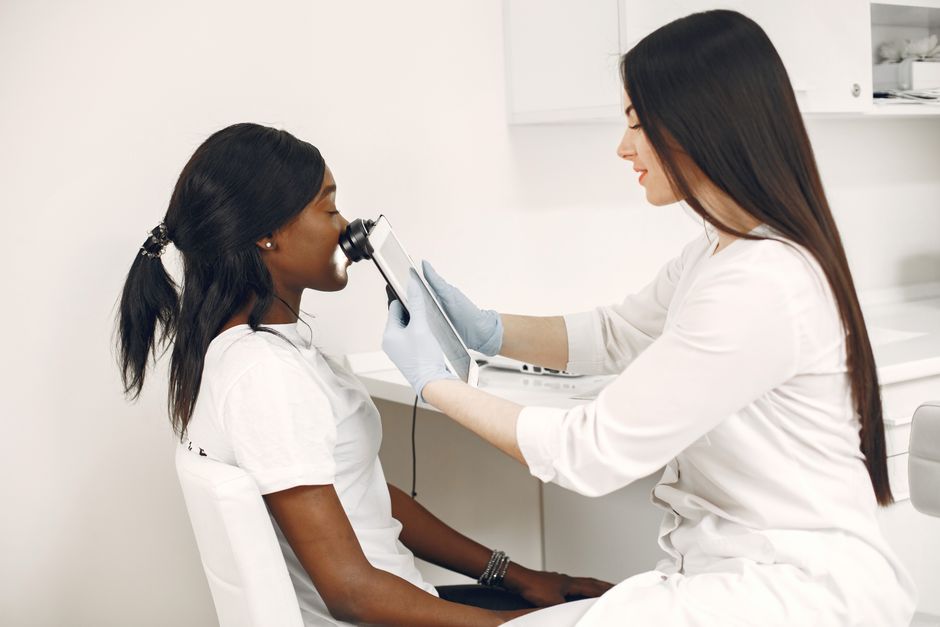
The quest for clearer, brighter skin has led to a diverse array of depigmenting agents, each with unique mechanisms, efficacy levels, and safety considerations. L-glutathione, with its antioxidant and anti-melanogenic properties, stands as a notable contender. When evaluating its overall clinical outcomes and safety profiles, it’s crucial to compare it against established depigmenting benchmarks like hydroquinone, kojic acid, and vitamin C. Objective measurements, such as spectrophotometric skin analysis and the Mexameter index, are indispensable tools in randomized double-blind trials to quantify melanin reduction and ensure unbiased assessment.
Compared to hydroquinone, often considered the gold standard for hyperpigmentation, glutathione offers a different approach. Hydroquinone directly inhibits tyrosinase, leading to melanocyte cytotoxicity at higher concentrations, which can result in side effects like irritation, post-inflammatory hyperpigmentation, and exogenous ochronosis with long-term use. Glutathione, on the other hand, primarily works by inhibiting tyrosinase, chelating copper, and shifting melanin synthesis towards lighter pheomelanin, generally with a milder safety profile for oral and topical routes. While hydroquinone often provides faster and more dramatic results, glutathione’s action is typically more gradual and aims for a more natural lightening without the same risk of harsh side effects.
Kojic acid, derived from fungi, also inhibits tyrosinase by chelating copper, similar to glutathione. It is generally well-tolerated but can cause contact dermatitis in some individuals. Vitamin C (ascorbic acid) is another popular antioxidant that inhibits tyrosinase, reduces oxidized melanin, and offers photoprotection. It is widely used and considered safe, often complementing glutathione’s effects. In terms of efficacy, glutathione’s results, especially from oral and topical applications, tend to be moderate, often requiring consistent, long-term use and sometimes combination with other agents for optimal outcomes. Its safety profile for oral and topical use is generally favorable, with mild and transient side effects being the most common.
Evidence from Randomized Controlled Trials
Randomized controlled trials (RCTs) provide the most robust evidence for evaluating the efficacy and safety of interventions. Several RCTs have investigated L-glutathione’s role in skin lightening, yielding valuable insights into its potential.
One significant finding comes from a study involving a 12-week protocol of oral supplementation. Participants who took 500 mg L-Cystine and 250 mg L-Glutathione daily experienced significant skin lightening after 12 weeks, alongside a notable reduction in the size of facial dark spots as early as six weeks. This highlights the synergistic effect of L-Cystine in bolstering glutathione’s performance.
Another trial focused on oral glutathione at 500 mg/day, demonstrating significant reductions in melanin indices after just four weeks of supplementation, particularly in sun-exposed areas. This suggests that measurable changes can be observed relatively quickly with consistent oral intake.
In the realm of topical applications, a 10-week study involving a 2% glutathione lotion applied twice daily showed significant reductions in melanin indices, coupled with improvements in skin moisture and texture. Furthermore, in patients with melasma, a 2% topical glutathione treatment over 90 days resulted in a substantial 67.4% reduction in the Modified Melasma Area Severity Index (mMASI) score.
However, not all trials have yielded statistically significant results, underscoring the variability in clinical outcomes. An Indonesian multicenter trial, for example, investigated an oral supplement containing 500 mg L-glutathione, 250 mg ascorbic acid, 50 mg ALA, and 4 mg zinc. While it showed greater reductions in spot UV, spot polarization, and skin tone compared to placebo, these differences were not statistically significant. This outcome could be influenced by various factors, including the specific population studied (Fitzpatrick IV-V women), the formulation, and the duration of the trial.
Regarding safety, these trials generally report mild side effects. In the Indonesian trial, mild side effects such as nausea, skin bumps, itching, comedonal acne, and epigastric pain were reported in 9% of the glutathione supplement group and 8% of the placebo group during the first four weeks, indicating a comparable and generally well-tolerated safety profile for oral supplementation in the short term. The varying outcomes across these studies emphasize the importance of considering dosage, duration, formulation, and patient population when assessing the effectiveness of L-glutathione for skin lightening.
Future Innovations in Medical Aesthetics and Wellness Treatments
Despite the promising findings from various studies, several gaps in research remain regarding L-glutathione use in dermatology. Addressing these gaps is crucial for establishing standardized protocols and maximizing its therapeutic potential.
One significant area requiring further investigation is the long-term safety profile of both oral and topical glutathione. While short-term studies generally report mild side effects, data on use beyond 12 months are limited. Understanding the effects of chronic administration is essential for widespread adoption and patient confidence. Similarly, optimal dosing strategies for various skin types and conditions are not yet fully standardized. Research needs to explore personalized dosing regimens that consider individual factors like baseline melanin levels, genetic predispositions, and lifestyle.
Another critical gap is the long-term durability of skin-lightening effects post-supplementation cessation. Do the benefits persist, or is continuous use required to maintain results? This question is vital for managing patient expectations and developing sustainable treatment plans. Comparative effectiveness studies against other established depigmenting agents (e.g., tranexamic acid) in head-to-head trials are also needed to position glutathione accurately within the dermatological armamentarium.
Future innovations in medical aesthetics are likely to focus on improving glutathione’s bioavailability and targeted delivery. Emerging technologies such as transdermal patches could offer controlled and sustained release, bypassing some of the challenges of oral and topical applications. Furthermore, advancements in non-invasive brightening techniques, potentially combining glutathione with light-based therapies or advanced skincare systems, hold promise. The goal is to achieve clinical standardization, ensuring that glutathione-based treatments are not only effective but also consistently safe and predictable across diverse populations. This ongoing research will pave the way for more refined and personalized approaches to skin brightening and hyperpigmentation management in the coming years.
Frequently Asked Questions About Glutathione in Dermatology
How Does Glutathione Influence Melanin Production at the Cellular Level?
L-glutathione primarily influences melanin production through multiple cellular mechanisms. It directly inhibits the activity of tyrosinase, the enzyme crucial for melanin synthesis, by chelating copper ions necessary for the enzyme’s function. Furthermore, glutathione shifts the melanogenesis pathway from producing dark eumelanin to lighter pheomelanin. It also acts as a potent antioxidant, reducing oxidative stress within melanocytes, which can otherwise trigger melanin overproduction. This multi-pronged action, along with its role in maintaining a healthy intracellular GSH:GSSG ratio, contributes to its skin-lightening effects.
What Are the Primary Differences in Safety Between Oral and Intravenous Glutathione?
The safety profiles of oral and intravenous (IV) L-glutathione differ significantly. Oral glutathione is generally considered safe, with reported side effects typically mild and transient, primarily involving gastrointestinal upset like nausea or epigastric pain. Topical applications are also well-tolerated, with occasional mild skin irritation. In contrast, IV glutathione carries serious risks, including liver dysfunction, renal issues, and severe allergic reactions such as anaphylaxis. Regulatory agencies in various countries have issued warnings against its cosmetic use due to these serious systemic risks and a lack of robust efficacy data. Therefore, while oral and topical routes have a favorable safety profile, IV administration poses considerable health hazards.
How Long Does It Take to Observe Measurable Skin-Lightening Results?
The timeline for observing measurable skin-lightening results with L-glutathione varies depending on the delivery method, dosage, and whether it’s used in combination with other agents. With oral supplementation, some studies report significant reductions in melanin indices as early as four weeks with 500 mg/day. When combined with L-Cystine, noticeable skin lightening and dark spot reduction have been observed within six to twelve weeks. For topical applications, a 2% GSSG lotion showed significant melanin reduction over 10 weeks. Intravenous methods might show quicker, albeit often temporary, effects within days to weeks, but at a much higher safety risk. Consistent use and adherence to recommended protocols are key for achieving and maintaining results, with post-treatment maintenance often necessary to preserve the benefits.
Conclusion
As we navigate the complexities of modern aesthetics, L-glutathione stands out as a fascinating molecule with a demonstrable role in influencing skin pigmentation. Its ability to inhibit tyrosinase, shift melanin synthesis towards lighter pheomelanin, and act as a powerful antioxidant offers a compelling mechanism for skin brightening. The research, particularly from randomized controlled trials, indicates that both oral and topical formulations can lead to measurable reductions in melanin indices and improve hyperpigmentation, especially when combined with synergistic compounds like L-Cystine or other antioxidants.
However, the efficacy of L-glutathione is heavily dependent on its delivery method. While oral and topical routes present generally favorable safety profiles with mild, transient side effects, intravenous administration carries significant and serious risks, including liver dysfunction and anaphylaxis, leading to regulatory warnings against its cosmetic use. The variability in clinical outcomes for oral glutathione underscores the importance of factors such as dosage, duration, formulation (e.g., liposomal or esterified forms for improved bioavailability), and individual patient characteristics.
Looking ahead to October 2026 and beyond, the field of medical aesthetics is poised for further innovations. Addressing current research gaps, particularly regarding long-term safety, optimal dosing, and standardized protocols, will be crucial. Future developments may include advanced transdermal delivery systems and personalized treatment plans that integrate L-glutathione into a holistic approach to skin wellness.
An evidence-based dermatology approach, prioritizing patient safety and realistic expectations, is paramount. For individuals seeking to achieve balanced aesthetic outcomes and a brighter complexion, consulting with qualified professionals to determine the most appropriate and safest L-glutathione regimen, or other evidence-based treatments, remains the best course of action.
