


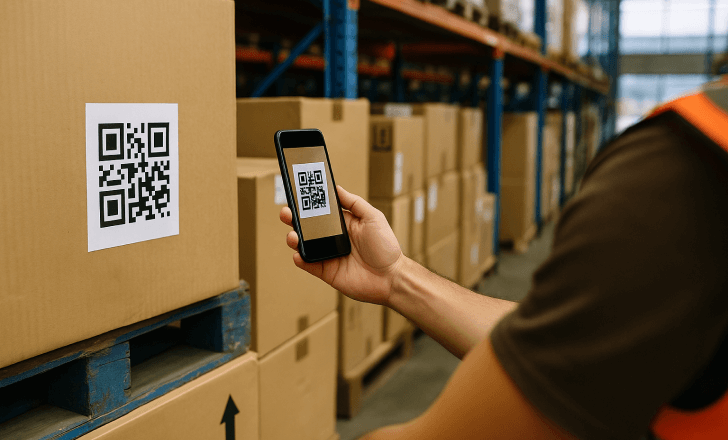
Modern customers want to know where products come from, how they were made, and whether they can trust what is on the label. At the same time, businesses need better control over their supply chains to manage quality, reduce waste, and react quickly when something goes wrong.
By using a QR code generator to add smart codes at key stages of production and distribution, companies can track products more precisely and share clear, verifiable information with everyone from internal teams to end consumers.
Instead of relying only on internal batch numbers or barcodes that mean nothing to the customer, QR codes can carry or link to detailed product data. A single scan can show origin, ingredients or materials, handling steps, and even environmental or ethical details. Internally, this improves traceability and recall management. Externally, it builds transparency and trust.
Why Product Traceability Matters More Than Ever
Traceability is the ability to follow a product’s journey through each step of the supply chain. For businesses, it is no longer just a “nice to have.” It affects:
- Quality control: spotting where defects or contamination may have happened.
- Compliance: meeting industry or regulatory requirements for documentation.
- Risk management: responding quickly and precisely when an issue appears.
- Brand reputation: proving that claims about origin, safety, or sustainability are true.
When traceability is weak, even a small problem can turn into a major crisis. A company may have to recall entire product lines “just in case” because it cannot clearly see which batches, locations, or dates are affected. Strong, QR‑driven traceability lets businesses be specific, acting faster while limiting damage, cost, and waste.
For customers, traceability builds confidence. Being able to scan a product and see where it was made, when, and by whom makes the brand feel more open and responsible. That transparency can be a real competitive advantage.
How QR Codes Fit Into a Traceable Supply Chain
Traditional barcodes are useful—but mostly for internal logistics and pricing. They usually carry limited data and are not very helpful to end users. QR codes, on the other hand, can store more information directly or act as a smart gateway to cloud‑based records.
In a traceable supply chain, QR codes can be:
- Printed on raw material containers or pallets at the factory.
- Applied to semi‑finished components during processing.
- Placed on individual retail units or cases before shipping.
- Shown on outer packaging for warehouses and stores.
Behind each code sits a unique identifier tied to a digital record. Every time that product or batch moves—to a new machine, facility, truck, or shelf—systems can scan and update its status. At the end of the chain, the same code can allow a retailer or customer to see key facts about that exact item.
Using QR Codes at the Factory Level
At the factory, QR codes help connect physical goods with digital logs of what has happened to them. A business can:
- Assign a unique QR code to each batch of materials or finished products.
- Record when they were produced, on which line, and under what conditions.
- Log quality checks, inspections, and results.
When issues arise, this data makes it easier to pinpoint where and when things went wrong. Instead of blaming the whole operation, managers can focus on specific lines, shifts, or suppliers. Over time, this leads to better process control and fewer defects leaving the factory.
For multi‑step production, such as food processing or electronics assembly, QR codes make it easier to link together information from each stage. The code serves as a thread that ties all these steps into one coherent record.
Tracking Movement Through Warehouses and Distribution
Once products leave the factory, they typically move through warehouses, distributors, and transport hubs. Keeping visibility across all these touchpoints can be difficult—especially when dealing with multiple partners.
With QR codes:
- Each scan at a warehouse or dock updates the product’s location and status.
- Incoming and outgoing scans create a clear trail of where products have been.
- Businesses can see which pallets or cases went to which region, retailer, or customer.
This is extremely valuable when tracing back from a problem report. If a retailer complains about a specific batch, trace data shows exactly where that batch came from and which other locations might have received similar stock. That clarity speeds up investigation and response.
For companies with cold chains or sensitive goods, QR‑connected systems can also be linked to condition data (for example, temperature logs) so that any break in required conditions is recorded and easy to trace.
Adding Transparency at the Retail Shelf
At retail, QR codes stop being just an internal tool and start serving customers directly. A small code on the label, tag, or packaging can be scanned by:
- Store staff, to confirm the right product and check internal notes.
- Shoppers, to see origin, certifications, or detailed information.
This can include:
- Where the product was grown, sourced, or manufactured.
- What materials or ingredients were used.
- Which certifications apply (organic, fair trade, quality standards).
- Best‑before or production dates in more readable formats.
- Instructions for safe use, storage, or disposal.
When customers see that level of openness, it differentiates the brand. It also reduces pressure on staff, because many common questions can be answered immediately on a customer’s phone.
Helping Businesses Manage Recalls and Quality Issues
No matter how good a process is, issues can still appear: contamination, mislabeling, defects, or damage in transit. When this happens, the speed and precision of the response are critical.
QR‑driven traceability helps by:
- Identifying exactly which batches or ranges are affected.
- Showing which distributors and retailers received them.
- Revealing how much stock is still in warehouses or on shelves.
A business can issue a targeted recall instead of a broad, expensive one. Retailers can quickly scan stock to see which units must be removed, instead of relying on guesswork or manual lists. Communication with regulators and the public is clearer because the company can explain what went wrong and what is being done with more certainty.
For the brand, this can be the difference between a short‑term incident and a lasting reputation problem. Being able to show that you know where your products are and how you are dealing with them builds confidence even in difficult moments.
Enabling Authenticity Checks and Anti‑Counterfeiting
In industries where counterfeiting is a serious issue—like cosmetics, electronics, fashion, or premium foods—QR codes help customers and partners verify authenticity.
Each product can carry a code tied to a secure record. When someone scans it:
- A page confirms whether the code is valid, where and when it was first activated, and possibly where it was originally shipped.
- Suspicious patterns (such as the same code scanned in distant locations at the same time) can signal potential fraud.
This helps protect both customers and the brand. Customers are less likely to be harmed by fake or unsafe products posing as real. Brands can track where fakes are appearing and take action. Clear authenticity checks also support pricing and positioning by justifying why genuine items cost more.
Building Consumer Trust Through Transparency
Beyond logistics and risk management, transparency is a powerful brand asset in itself. Many buyers—especially in categories like food, beauty, health, and kids’ products—care deeply about origin, safety, and values.
By using QR codes to share traceability information, businesses can:
- Tell the story of their supply chain in a concrete way, not just with vague claims.
- Show maps, timelines, or photos from farms, factories, or workshops.
- Explain how they ensure quality and what standards they follow.
This kind of openness moves a brand from “just another label” to a trusted choice. When people feel they know what they are buying and who is behind it, they are more loyal and more likely to recommend the brand to others.
Practical Considerations When Implementing QR‑Based Traceability
Using QR codes for traceability and transparency does not have to be overly complex, but it does need planning.
Key points to think about include:
- Data structure: Decide what information each code should point to (batch number, production data, location history, consumer‑facing content).
- Labeling process: Integrate code printing or labeling into existing production and packaging steps so it is reliable and scalable.
- Scanning workflows: Make sure staff know when and how to scan codes as goods move and that systems record these events consistently.
- Customer experience: Design simple, clear mobile pages for consumers so they immediately see the most important information when they scan.
Testing is important. Before a full rollout, run pilots on a limited product line or region. Check that codes remain readable through handling and transport, that the data flows correctly, and that customers find the information useful instead of overwhelming.
FAQ: QR Codes, Product Tracking, and Transparency
1. How are QR codes different from traditional barcodes for product tracking?
Traditional barcodes usually hold a short code that systems translate into basic information like price or a stock‑keeping unit. QR codes can hold more data directly and, more importantly, can link to rich digital records online. This makes them far more flexible for both internal tracking and consumer‑facing transparency.
2. Do businesses need to track every single item, or is batch‑level traceability enough?
It depends on the product and risk level. Many businesses start at the batch or lot level, which already improves recall precision and origin visibility. Higher‑risk or higher‑value products may benefit from item‑level codes, especially where authenticity and individual history matter.
3. How can small and mid‑sized businesses realistically implement QR‑based traceability?
They often begin with a few key products or categories and simple steps: assigning a code to each batch, scanning at major hand‑off points, and creating a basic consumer page that explains origin and key details. As they see benefits in quality control and customer trust, they gradually expand coverage.
4. Are customers actually interested in scanning products to see traceability information?
Many are, particularly in sectors where origin and safety are important. Even those who do not scan still gain confidence from knowing the option exists. For brands, the act of offering traceability often signals responsibility and care, which supports positioning and loyalty.
5. What happens if a QR code is damaged or unreadable on a product?
Good practice is to use high‑quality printing, protective placement, and sometimes redundancy (such as codes on both outer packaging and inner labels). If a code is unreadable, internal systems can still use other identifiers like batch numbers, but the goal is to minimize these cases through solid design and testing.
In your own context, which part of your product’s journey—factory, warehouse, or retail shelf—feels like the most urgent place to improve traceability, and what kind of information would you most want to see when scanning a code there?
