


Key Takeaways
- Crape myrtles usually need less pruning than homeowners expect.
- Late winter is generally the best time for needed structural pruning.
- Full sun, well-drained soil, and good air movement support vigorous growth and flowering.
- Severe topping often creates weak shoots and an unnatural form.
- Seasonal inspections can reveal bark scale, mildew, branch damage, and watering needs before they become larger concerns.
- Choosing a cultivar that fits its mature space prevents repeated pruning conflicts.
Crape myrtles are a familiar part of York, South Carolina, landscapes, bringing summer color to front yards, neighborhood entrances, and sunny streetscapes. Their success depends less on dramatic annual cutting and more on matching care to York’s warm, humid growing season, occasional dry stretches, and winter temperature swings. Homeowners who need site-specific help can consult a crape myrtle specialist in York, SC, when a tree has structural damage, persistent pest issues, or has outgrown its location. A practical seasonal routine protects flowering, bark character, and branch structure without turning maintenance into a major project. The goal is to help the tree grow naturally while addressing problems early, especially where compacted soil, reflected heat from pavement, shade, and humid weather can affect performance.
Why York, South Carolina Crape Myrtles Benefit From Seasonal Care
In York, crape myrtles move from winter dormancy into rapid spring growth, flowering through the heat of summer before slowing down in fall. A few well-timed tasks are more useful than one aggressive cleanup. Young trees need help establishing roots, while older plants often need only monitoring and selective pruning. Local planting conditions matter. A tree growing beside a sunny driveway may dry more quickly than one in an open lawn, while a tree planted beneath larger shade trees may have fewer blooms and greater disease pressure. For broader guidance on observing tree health and making sound maintenance decisions, tree education can help homeowners understand what to look for throughout the year.
Winter: Inspect Structure Before Spring Growth
Check Branches and Trunks
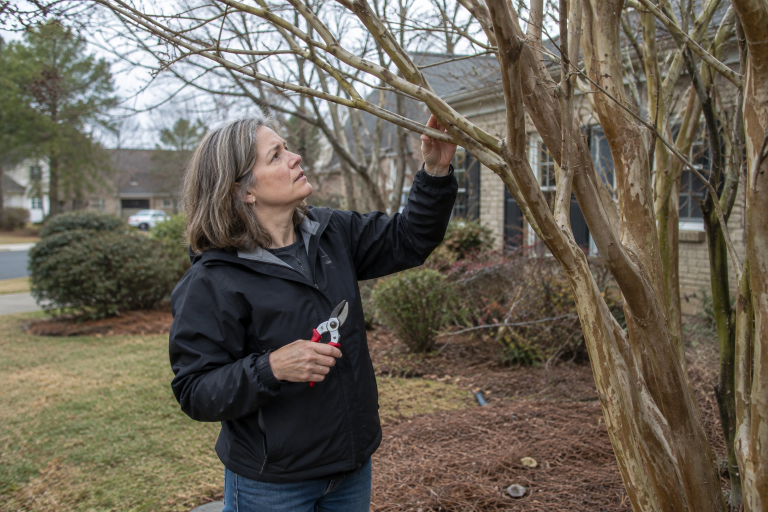
During the dormant season, inspect the tree for dead, broken, rubbing, or crossing limbs. Look closely at major branch unions and the trunk for cracks, cavities, loose bark, or visible decay. Remove basal suckers when practical, to help the plant maintain its intended shrub or tree form.
Prune With a Specific Purpose
Prune in late winter, before vigorous spring growth begins, when removing damage, improving clearance, or reducing crowding is necessary. Use clean, sharp tools and cut just outside the branch collar rather than leaving long stubs. University guidance on pruning, watering, sunlight, and planting practices emphasizes that crape myrtles do not require harsh annual pruning to bloom.
Spring: Encourage Healthy New Growth
As leaves emerge, check moisture below the soil surface rather than relying on whether the top layer looks dry. Newly planted crape myrtles benefit from deep watering during rain-free periods, while established trees generally tolerate short dry spells better. Apply mulch in a broad ring over the root zone, keeping it several inches away from the trunk to avoid trapping moisture against the bark. Fertilizer should not be automatic. A soil test can identify whether nutrients are actually needed, and excessive nitrogen can encourage leafy growth at the expense of flowers. In York’s often heavy Piedmont soils, drainage is equally important. Avoid low spots that remain wet after rainfall.
Summer: Protect Blooms and Monitor for Problems
Water Deeply During Dry Weather
Summer heat can be especially stressful for young trees and plants near brick walls, pavement, or driveways. Water slowly enough that moisture reaches the root zone, then allow the surface to dry between watering sessions. Established crape myrtles may tolerate drought, but watering during dry flowering periods can support better blooming.
Inspect Leaves, Bark, and Flowers
Warm, humid conditions can favor powdery mildew and leaf-spot problems, particularly on crowded or shaded plants. Watch for a white, powdery coating, distorted new growth, dark leaf spots, sticky residue, black sooty mold, or small, white, felt-like insects on branches. Recent Auburn research on crape myrtle management and pest concerns highlights the continuing attention given to crape myrtle bark scale in southeastern landscapes.
Fall: Prepare the Root Zone for Winter
Remove fallen leaves that show significant disease symptoms, refresh thin mulch, and inspect nearby supports, structures, and low branches before stormy weather. Avoid heavy fall pruning. Cutting back growth too late can encourage tender shoots that are more vulnerable when cold arrives. Let the tree enter dormancy naturally while keeping the root zone clear of persistent weeds and turf competition.
How to Avoid Severe Topping
Cutting every main branch back to thick stubs is commonly called severe topping or “crape murder.” Although crape myrtles bloom on new growth, this practice is unnecessary and can produce fast-growing, weakly attached shoots. It also removes the graceful branching and exfoliating bark that make mature trees valuable in York landscapes.
Better Pruning Choices
- Remove dead, damaged, and diseased wood first.
- Thin only crowded branches that rub or cross.
- Remove suckers that interfere with the desired form.
- Raise lower branches only when pedestrian, driveway, or mowing clearance is needed.
- Preserve the tree’s natural outline whenever possible.
Why a Crape Myrtle May Bloom Poorly
- Too much shade from buildings or larger trees.
- Dry conditions during active growth and bud development.
- Excess fertilizer, especially high-nitrogen applications.
- Cold injury to new spring growth.
- Powdery mildew, leaf disease, or insect activity.
- A cultivar that is too large for its available space.
Choose the Right York, SC Planting Site
Select a site with full sun for most of the day and enough space for the cultivar’s mature height and spread. Keep plants away from persistently wet areas, overhead utility lines, roof edges, and narrow planting strips that force repeated cutting. A well-chosen compact cultivar can work near patios and foundations, while larger tree forms need open space to develop their canopy.
Simple Seasonal Checklist
- Late winter: Inspect structure and make only necessary pruning cuts.
- Spring: Monitor new growth, mulch, and soil moisture.
- Summer: Water during dry weather and inspect leaves, bark, and flowers.
- Fall: Clean up diseased debris and avoid heavy pruning.
- Every season: Watch for changes in vigor, bark, branch attachment, and canopy density.
When to Ask for Professional Help
Professional evaluation is appropriate when large dead limbs hang over a home, driveway, or walkway; branches are near power lines; the trunk has deep cracks or decay; or a severely topped tree needs gradual structural correction. Persistent pests, recurring leaf problems, and pruning cuts above safe working height also warrant experienced help.
Frequently Asked Questions
Do crape myrtles need pruning every year?
No. Established trees may need only occasional removal of damaged, crossing, or poorly placed branches.
What is the best time to prune in York, SC?
Late winter, before vigorous spring growth begins, is generally the preferred time for structural pruning.
Why are the leaves turning white?
A white coating can indicate powdery mildew, which is more likely where humidity, shade, and limited airflow combine.
Conclusion
Healthy crape myrtles in York, SC, benefit from steady observation, adequate sunlight, thoughtful watering, and restrained pruning. Homeowners should also pay attention to soil drainage, signs of disease or pest activity, and changes in growth throughout the year. By working with the seasons rather than cutting back aggressively each year, homeowners can protect blooms, branch strength, attractive bark, and the long-term value of these popular Southern landscape trees. Proper care also helps maintain the tree’s natural shape while reducing unnecessary stress and encouraging healthy growth. With regular monitoring and timely maintenance, crape myrtles can remain a useful and attractive part of the landscape for many growing seasons.
