


Key Takeaways
- A detailed consultation is a stronger starting point than asking for a general pool price.
- Gunite pools can be shaped around a homeowner’s space, intended use, and preferred features.
- Little Giant Pool & Spa offers construction options for in-ground pools, including gunite, fiberglass, and vinyl-lined.
- Pool safety, equipment, drainage, access, and long-term maintenance should be considered before construction begins.
- A written scope of work helps homeowners understand what is included in a proposed pool project.
Table of Contents
- Introduction
- Starting a Missouri Gunite Pool Request
- Why Work With Little Giant Pool & Spa?
- Understanding Gunite Pool Design
- Comparing In-Ground Pool Types
- Planning for Pool Safety
- Long-Term Pool Ownership
- What to Include in Your Request
- Frequently Asked Questions
A custom pool project begins with clear goals for the yard, the household, and the way the pool will be used. Homeowners exploring gunite swimming pools Missouri should prepare for a conversation that goes beyond size and price. Yard access, slopes, drainage, existing patios, utilities, equipment placement, local requirements, and desired safety features can all affect the final scope of work.
A site-specific consultation gives homeowners a practical way to organize those decisions. Little Giant Pool & Spa can help start the discussion around pool type, shape, features, construction considerations, and future care. A thoughtful request creates a better foundation for comparing options and developing a pool plan that fits the property.
Why Work With Little Giant Pool & Spa?
Little Giant Pool & Spa is a Pacific, Missouri, pool company whose publicly listed services include new pool construction, renovation, repair, maintenance, equipment support, liner replacement, resurfacing, and safety cover installation. The company also lists gunite, fiberglass, and vinyl-lined in-ground pool construction, giving homeowners an opportunity to discuss several approaches rather than assuming one pool material suits every backyard.
That broader service range matters after installation as well. Pool ownership may eventually involve water testing, equipment repairs, seasonal opening and closing, surface updates, or replacement components. Homeowners should ask which services are available for their specific project, who will perform the work, and what ongoing support is included in the proposal.
Understanding Gunite Pool Design
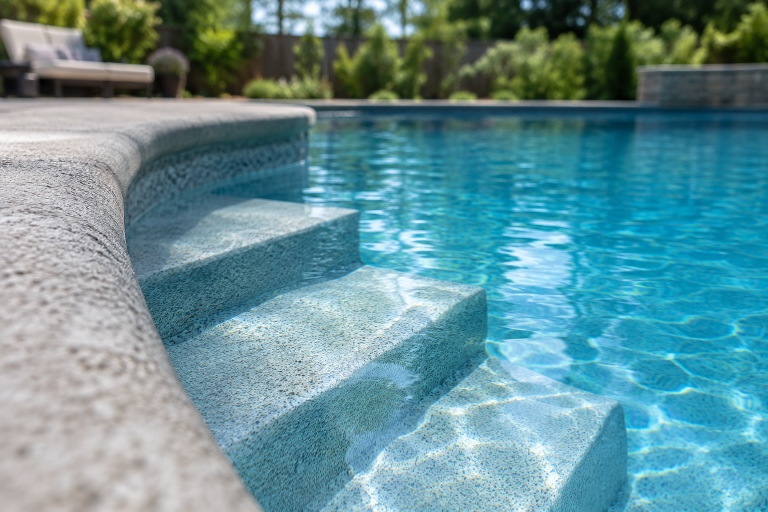
Gunite is often chosen by homeowners seeking substantial flexibility in the pool’s shape, dimensions, depth transitions, and integrated features. Depending on the design and site conditions, a gunite pool may include broad entry steps, benches, tanning ledges, water features, lighting, or an attached spa. The right combination depends on how the household expects to use the water.
Start With the Pool’s Purpose
- Family recreation: Consider shallow areas, easy entry, seating, and room for active use.
- Exercise: Discuss a layout that supports swimming laps or other water-based fitness activities.
- Entertaining: Plan circulation between the pool, patio, seating, and outdoor cooking areas.
- Relaxation: Evaluate benches, spa features, lighting, and layout to create a quieter setting.
Features should not be chosen in isolation. Steps, ledges, skimmers, returns, lighting, and water features all need to work within the overall design, equipment plan, and maintenance routine. Little Giant Pool & Spa can help homeowners turn a general wish list into property-specific questions.
Comparing In-Ground Pool Types
There is no universal best in-ground pool type. A productive consultation compares the homeowner’s priorities with the site’s limits and opportunities.
- Gunite: Often selected for custom shapes, personalized dimensions, and integrated design features. Homeowners should discuss finishes, construction scope, and long-term surface care.
- Fiberglass: Uses a factory-built shell with a defined selection of shapes and sizes. The key question is whether an available shell design fits the yard and desired use.
- Vinyl-lined: Can provide design flexibility with a liner surface that will require replacement over time. Homeowners should ask about liner care, replacement planning, and the structure behind the liner.
Property access can influence every option. A narrow side yard, retaining wall, overhead line, steep grade, or drainage concern may affect construction planning. Asking about these conditions early helps prevent a pool request from resulting in an incomplete estimate based solely on a preferred shape.
Planning for Pool Safety
Safety planning belongs at the beginning of a pool project, not after the pool is finished. The CDC recommends a four-sided fence that is at least four feet high, fully encloses the pool, separates it from the house, and includes self-closing, self-latching gates. Local codes and permit requirements may impose additional obligations, so homeowners should confirm which requirements apply to their property.
Fencing, gates, alarms, covers, swimming skills, rescue readiness, and attentive supervision are layers of protection. No cover, fence, or alarm removes the need for close and constant adult supervision when children are near water. Pool chemicals should also be stored securely and handled according to product directions.
Long-Term Pool Ownership
A well-planned pool needs regular attention after construction. Maintenance may include water analysis, cleaning, filtration checks, equipment inspection, seasonal service, and repairs as needed. Homeowners can ask Little Giant Pool & Spa about the service schedule, equipment recommendations, and the responsibilities associated with their chosen pool type.
Water stewardship is also part of responsible ownership. The EPA explains that pool covers can reduce evaporation, while leak checks and appropriate maintenance can help limit unnecessary water loss. A cover may also reduce debris entering the pool, but it should be selected and used for its intended purpose and in accordance with applicable safety requirements.
What to Include in Your Pool Request
- Your property location and a description of available yard space.
- Your preferred pool type, or a request to compare gunite, fiberglass, and vinyl-lined options.
- Desired shape, approximate dimensions, depth, and primary use.
- Interest in steps, benches, tanning ledges, lighting, spas, covers, or water features.
- Details about fences, patios, landscaping, retaining walls, drainage, and access limitations.
- Your preferred timeline and budget range.
- Questions about permits, equipment, warranties, maintenance, cleanup, and startup service.
Request a written scope of work before moving forward. It should identify the proposed pool type, include equipment, finishes, decking or coping if applicable, electrical work, safety features, site preparation, and items that may be outside the contractor’s scope.
Frequently Asked Questions
Can Little Giant Pool & Spa help with a gunite pool request?
Little Giant Pool & Spa publicly lists gunite pool construction as one of its services. A consultation is the appropriate time to discuss the property, desired layout, features, construction needs, and available service options.
Should I ask for a price before deciding on pool features?
You can discuss a budget range early, but a meaningful proposal usually requires details about the site, pool type, access, equipment, finishes, and desired features. A clearer project description supports a clearer scope of work.
Can an existing pool be renovated or repaired?
Little Giant Pool & Spa publicly lists renovation, resurfacing, repair, replacement, vinyl liner replacement, and equipment-related services. Describe the pool’s age, visible issues, equipment condition, and improvement goals when requesting help.
Choosing a gunite pool starts with understanding the property, the household’s needs, and the scope of work involved. Homeowners can use a consultation with Little Giant Pool & Spa to discuss pool types, design features, site conditions, safety considerations, equipment, and ongoing maintenance. Preparing those details in advance can make it easier to develop a pool plan that fits the property and provides a clear path toward the next steps.
