


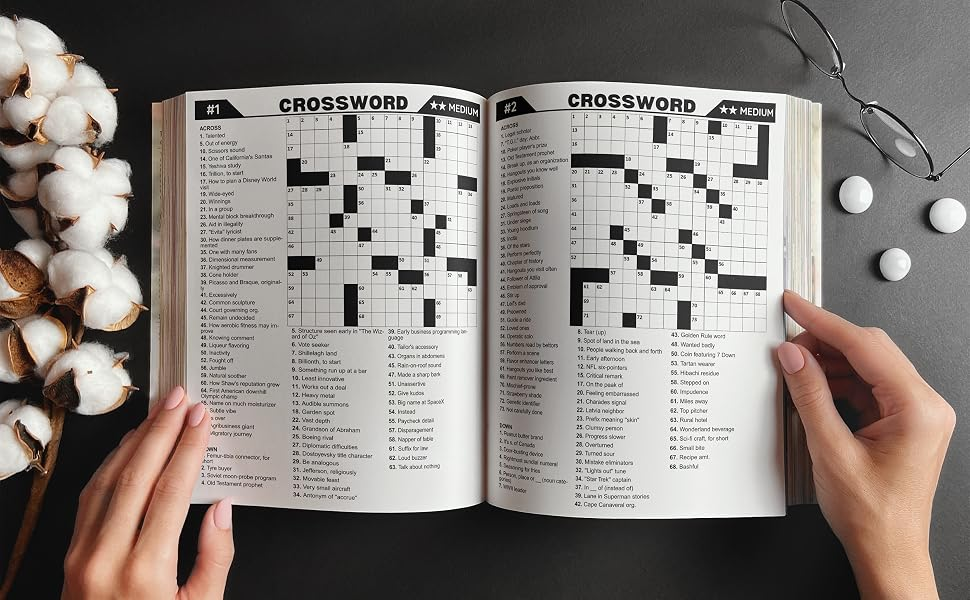
Engaging in crossword puzzles is more than just a leisurely pastime; it serves as a powerful tool for maintaining and enhancing mental acuity. Whether you are looking to sharpen your mind or pass the time in a meaningful way, the impact of regularly working through puzzle books can be profound. In fact, Penny Dell Puzzles challenging crossword puzzle books provide an engaging way to stimulate various cognitive functions, blending intellectual challenge with enjoyment.
Cognitive stimulation from crosswords is not limited to immediate mental exercise. Studies now show that sustained puzzle-solving can contribute to long-term brain health, delaying memory decline and supporting skills that are vital throughout life. This accessible and rewarding hobby is a simple yet effective way to support your brain’s continued growth and development.
Memory Enhancement
Regular participation in crossword puzzles can lead to substantial improvements in memory recall. Notably, research conducted by Columbia University and Duke University showed that adults who consistently engaged with word puzzles demonstrated cognitive performance similar to that of those ten years younger. As we age, maintaining memory and mental agility becomes increasingly important, and activities such as crosswords provide a practical way to build and retain these crucial abilities.
Memory, both short-term and long-term, benefits from the mental gymnastics required to keep track of clues and solutions. Many enthusiasts find that challenging themselves with a variety of puzzle types keeps their minds flexible and nimble. Furthermore, experiencing small victories, such as solving a particularly elusive clue, can foster confidence in memory skills and encourage ongoing engagement with intellectually stimulating tasks.
Vocabulary Expansion
Crossword puzzles are unique in the way they challenge solvers to recall words, definitions, and even word origins. This consistent mental practice strengthens verbal skills and rapidly expands vocabulary. Each clue offers an opportunity to learn or reinforce a word, and over time, this process leads to improved communication and reading comprehension. For many participants, seeking out new meanings and integrating them into everyday speech is a key benefit of the hobby.
For language learners, the consistent exposure to synonyms, antonyms, and colloquial phrases in crossword puzzles presents a unique opportunity for language enrichment. Educators often use crossword puzzles in the classroom to help students strengthen their spelling and context clue skills in a fun, low-pressure environment. As vocabulary breadth increases, so does confidence in both written and spoken communication.
Problem-Solving Skills
Every crossword presents a new set of clues, each requiring deductive reasoning, logical thinking, and creative association. Solvers systematically interpret hints, look for patterns, and test possible answers. This patient’s unraveling of clues strengthens resilience and adaptability, real-life problem-solving skills that translate into better decision-making in daily encounters, whether at work, school, or home. Cognitive training such as this has been shown to build flexible thinking and analytical strength. According to resources like Psychology Today, thinking through educated guesses, verifying them with data, and being willing to erase and reconsider can improve decision-making, and being willing to erase and reconsider fosters persistence. These logic-based skills are fundamental not only in academic environments but also in navigating the complexities of modern life, from managing finances to troubleshooting technology or mediating social situations.
Attention and Focus
Finishing a crossword puzzle often requires sustained concentration for considerable periods of time. Navigating the interconnectedness of clues and solutions exercises the brain’s attention span and inhibitory control. With regular practice, individuals may notice increased focus, enhanced productivity, and improved performance during other mentally demanding activities. Scientific literature, including a review in the journal Frontiers in Human Neuroscience, illustrates the positive impacts of mentally engaging pastimes such as crosswords on attention and executive function.
When we tune out distractions during a puzzle session, our brains practice the art of deep concentration, a skill increasingly challenged by modern technology and rapid, multitasking lifestyles. Integrating crosswords into daily routines, whether over breakfast, during commutes, or before bed, can anchor the mind and provide much-needed mental clarity at the start or close of a busy day.
Stress Reduction
Beyond cognitive benefits, working on crossword puzzles can act as a form of mindfulness. Immersion in solving clues redirects attention away from worries, helping to reduce anxiety and promote inner calm. The engaging yet non-pressurized environment provides both relaxation and a sense of accomplishment, with each completed puzzle boosting mood and morale. Many solvers report using crosswords to decompress after busy or stressful days.
Tackling a crossword can also offer structure during otherwise chaotic times, rewarding users with a sense of familiarity and predictability. This regular ritual, much like meditation or journaling, offers moments of introspection and self-care, supporting emotional well-being and cognitive fitness.
Social Engagement
Crossword puzzle books are commonly viewed as solo activities, but they can also foster social interaction. Collaborating with friends or family members on challenging clues transforms puzzle-solving into a communal experience. This teamwork builds trust, enhances communication, and fosters a shared sense of achievement. Clubs, meet-ups, and online forums provide a multifaceted approach for individuals to build a supportive community.
Participating in group challenges or online multiplayer crossword competitions can infuse a sense of excitement and camaraderie. Sharing favorite puzzles or unique solving strategies also inspires others and encourages wider participation. For individuals seeking connection, these social opportunities offer not only intellectual enrichment but also meaningful interpersonal engagement.
Combining Activities for Optimal Benefits
While crossword puzzle books offer significant cognitive benefits, combining them with other brain-challenging tasks can amplify those benefits. Learning a new language, participating in strategy games, or picking up a musical instrument all stimulate different brain regions, creating a comprehensive workout for your mind. This multifaceted approach is widely supported by experts and maximizes cognitive resilience through life’s various stages.
It’s important to incorporate variety into brain-training routines to stave off cognitive plateau. Regularly rotating between crosswords, logic puzzles, creative arts, and memory games ensures the brain is challenged in diverse and complementary ways. This well-rounded approach supports both neuroplasticity and long-term cognitive vitality, giving you the best chance for lifelong mental sharpness.
Final Thoughts
Adding crossword puzzle books to your daily or weekly habits is a simple step toward improving and protecting cognitive function. From memory and vocabulary enhancement to stress reduction and social bonding, the benefits are both extensive and long-lasting. A well-rounded routine that incorporates crosswords and other mentally stimulating activities fosters a healthier, more resilient mind for years to come.
If you haven’t already explored the world of crossword puzzle books, consider making them a regular part of your lifestyle. The ongoing boost to brain power, coupled with the satisfaction of each solved puzzle, can enrich your life in unexpected ways. Start small, celebrate your progress, and enjoy the journey of continuous mental growth.
