


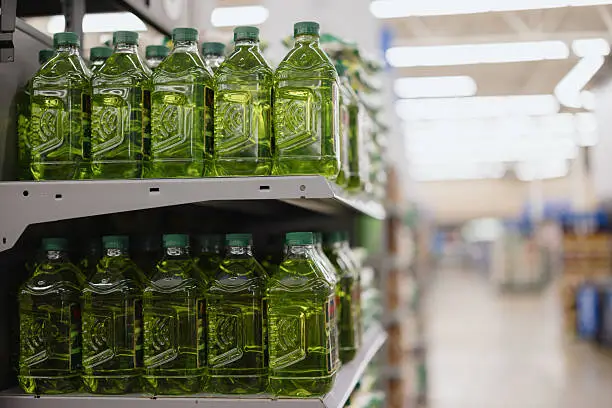
In modern retail merchandising and fast-moving consumer goods (FMCG), visual engagement directly dictates shopper conversion rates. Consumers increasingly demand complete visual transparency to verify ingredient freshness, color vibrancy, and product integrity prior to point-of-sale acquisition.
However, translating visual transparency into high-throughput distribution presents severe operational challenges for packaging engineers and supply chain directors. Traditional transparent substrates introduce high transit damage rates and freight penalties that erode retail margins.
Addressing this vulnerability requires evaluating alternative rigid packaging architectures that combine glass-grade optical clarity with structural durability and strict hermetic barrier control.
The Visual Merchandising Paradox: Balancing Transparency with Transit Resilience
Transparent primary containers provide proven sales lift across confectionery, roasted nuts, botanical teas, functional powders, and specialty cold-chain beverages. Displaying the actual morphology, particle size, and natural textures of premium food formulations establishes immediate consumer trust.
Despite these merchandising advantages, legacy soda-lime glass containers introduce severe structural liabilities across multi-tier logistics networks. Glass bottles and jars impose a high tare-weight penalty, commonly accounting for 30% to 50% of total packaged product mass.
This deadweight forces transport carriers to reach gross vehicle weight (GVW) limits long before trailer volume is maximized, inflating freight tariffs and per-unit transport carbon footprints.
Furthermore, dynamic transit vibration and intermodal shock loads trigger brittle micro-fractures in glass containers:
- Compressive Shear Fractures: Static top-loads combined with vertical transit harmonics induce brittle failure at bottom pallet layers.
- Secondary Contamination: A single shattered container releases liquids or abrasive shards, soaking corrugated secondary packaging and causing full pallet rejection.
- Handling Inefficiencies: Brittle materials necessitate extensive secondary internal corrugate dividers and bubble wrapping, escalating packing line cycle times and material expenses.
In contrast, engineering-grade polyethylene terephthalate (PET) resolves this operational trade-off by combining high optical clarity (88% to 92% light transmittance) with ductile fracture toughness.
While transparent packaging consistently drives retail conversion through sensory engagement, traditional glassware imposes unsustainable freight costs and transit fracture risks across modern omnichannel logistics. To resolve this friction, operations engineers increasingly specify engineered polymers; technical documentation from packaging manufacturers such as OUTSTANDING Packaging illustrates that high-clarity food-grade PET plastic cans provide optical transparency exceeding 88% alongside the elastomeric shock resilience required to completely eliminate transit shatter during palletized transport.
By replacing brittle, heavy substrates with dimensionally stable, low-tare polymers, operations managers protect retail presentation while decoupling primary packaging from freight surcharges.
Barrier Integrity and Cleanroom Molding: Controlling Gas Ingress at the Molecular Level
Transitioning from glass or seamless aluminum cans to rigid transparent polymer canisters frequently raises technical questions regarding gas barrier efficacy. For sensitive formulations containing polyunsaturated fatty acids, bioactive extracts, or hygroscopic powders, molecular permeation dictates commercial viability.
Gas migration through polymer boundaries follows passive solution-diffusion kinetics, where atmospheric gases dissolve into the container sidewall and diffuse inward along partial pressure gradients:
- Oxygen Transmission Rate (OTR, ASTM D3985): Molecular oxygen ingress triggers lipid autoxidation in fat-rich foods, generating volatile aldehydes and ketones that cause rancidity, flavor deterioration, and loss of fat-soluble vitamins.
- Water Vapor Transmission Rate (WVTR, ASTM F1249): Moisture sorption into dehydrated goods depresses the glass transition temperature of the matrix, resulting in powder caking, particle agglomeration, and structural collapse.
The intrinsic barrier performance of rigid PET canisters depends directly on polymer chain orientation achieved during Injection Stretch Blow Molding (ISBM). Biaxial stretching aligns polymer chains parallel to container walls, creating dense crystalline lamellae that force diffusing gases along convoluted pathways.
However, barrier continuity can be compromised by resin impurities or substandard molding practices:
- Micro-Gels and Fish-Eyes: Thermal degradation products or unplasticized polymer cores disrupt the semi-crystalline lattice, forming microscopic focal points with lower barrier resistance.
- Airborne Particulate Inclusions: Dust particles embedded within the molten resin stream create unbonded interfacial boundaries that act as micro-channels for accelerated gas diffusion.
Fabricating rigid canisters in an ISO Class 8 (Class 100,000) cleanroom environment mitigates these microstructural defects. Cleanroom air handling systems limit airborne particulates to fewer than 3,520,000 particles per cubic meter.
Maintaining a particulate-controlled environment eliminates crystallization nuclei in the molten polymer, preserves tight sidewall thickness tolerances, and minimizes initial bioburden on internal food-contact surfaces.
Container-Closure Interface Mechanics: Eliminating Leakage in High-Speed Seaming
While container sidewall morphology governs passive gas permeation, the container-closure interface represents the primary failure point for sudden atmospheric ingress. For rigid PET canisters, achieving a reliable hermetic seal requires mechanical double seaming with aluminum or tinplate Easy-Open Ends (EOE).
The double-seaming process forms a five-layer mechanical interlock between the metal closure and the thermoplastic container flange across two synchronized operations:
- First Operation: The first seaming roll drives the curled edge of the metal end beneath the PET container flange, forming the mechanical interlock between body and cover hooks.
- Second Operation: The second seaming roll applies high radial pressure, flattening the interlocking folds and compressing the internal polymeric gasket compound into micro-grooves along the flange.
Achieving a hermetic seal requires precise control over critical seam metrics:
- Seam Overlap Percentage: The physical engagement between the cover hook and body hook must exceed 75% to prevent mechanical decoupling under transit shock loads.
- Seaming Chuck Spindle Alignment: Axial runout must remain within 0.02mm to prevent localized flange thinning or hoop stress fractures during roll engagement.
- Baseplate Pressure Calibration: Vertical spring pressure must balance container flange support against excessive compressive force that could cause sidewall buckling.
A frequent cause of seal failure in contract manufacturing is bifurcated sourcing—procuring PET canister bodies from one converter and EOE lids from another. Minor variances in flange radius, curl depth, or wall thickness frequently result in loose seams, micro-capillary leaks, or flange crushing.
Standardizing on factory-matched container and closure assemblies ensures uniform dimensional tolerances, safeguarding modified atmosphere flushes and eliminating product recall risks.
Key Takeaways
| Area | Key Takeaway | Impact/Data |
| Freight Cost | Replace heavy glass containers | Cuts tare weight from 30%–50%; optimizes payload |
| Merchandising | Match flint glass visibility | Delivers 88%–92% light transmission; zero shatter |
| Barrier Purity | Mandate ISO Class 8 molding | Caps particles <3.52M/m³; optimizes OTR/WVTR |
| Seam Precision | Calibrate mechanical double-seaming lines | Enforces >75% overlap and ≤0.02mm spindle runout |
| Sourcing Risk | Eliminate bifurcated body-lid procurement | Factory-matched sets stop flange crush and micro-leaks |
| Circularity | Standardize on unpigmented mono-PET | NIR sortable; satisfies FDA & EU OML (<10mg) |
Extended Producer Responsibility (EPR) and Circular Food-Contact Compliance
Modern retail buyers evaluate packaging formats not only for shelf stability and visual appeal, but also for compliance with sustainability mandates and food-contact safety standards. Global regulations increasingly penalize multi-layer, non-recyclable structures while establishing strict chemical purity thresholds.
Under the UK Plastic Packaging Tax (PPT) and the European Union Packaging and Packaging Waste Regulation (PPWR), mono-material primary containers hold a distinct operational advantage:
- Automated Sortability: Unpigmented, clear rigid PET exhibits high near-infrared (NIR) spectral reflectivity, enabling rapid mechanical sorting in commercial recovery facilities.
- High Post-Consumer Value: Clean mono-material PET retains strong commercial value in post-consumer reprocessing streams, supporting bottle-to-bottle recycling loops.
- Exemption from Multi-Material Penalties: Monolithic PET canisters avoid the disposal taxes and sorting surcharges applied to foil-lined multi-layer pouches.
Beyond circular recyclability metrics, primary packaging substrates must undergo stringent toxicological scrutiny to prevent compound leaching under varying distribution temperatures. As categorized under international safety standards governing food contact materials, polymer resins deployed in direct contact with perishable foodstuffs must demonstrate overall migration levels strictly below authorized regulatory ceilings to safeguard consumer health.
Under US FDA 21 CFR 177.1630 and EU Regulation (EU) No 10/2011, primary food containers must satisfy an Overall Migration Limit (OML) of less than 10, alongside rigorous screening for Non-Intentionally Added Substances (NIAS).
By deploying engineered, cleanroom-manufactured PET canisters with precision double seams, FMCG brands satisfy visual merchandising demands and barrier requirements while maintaining full regulatory compliance across international markets.
