


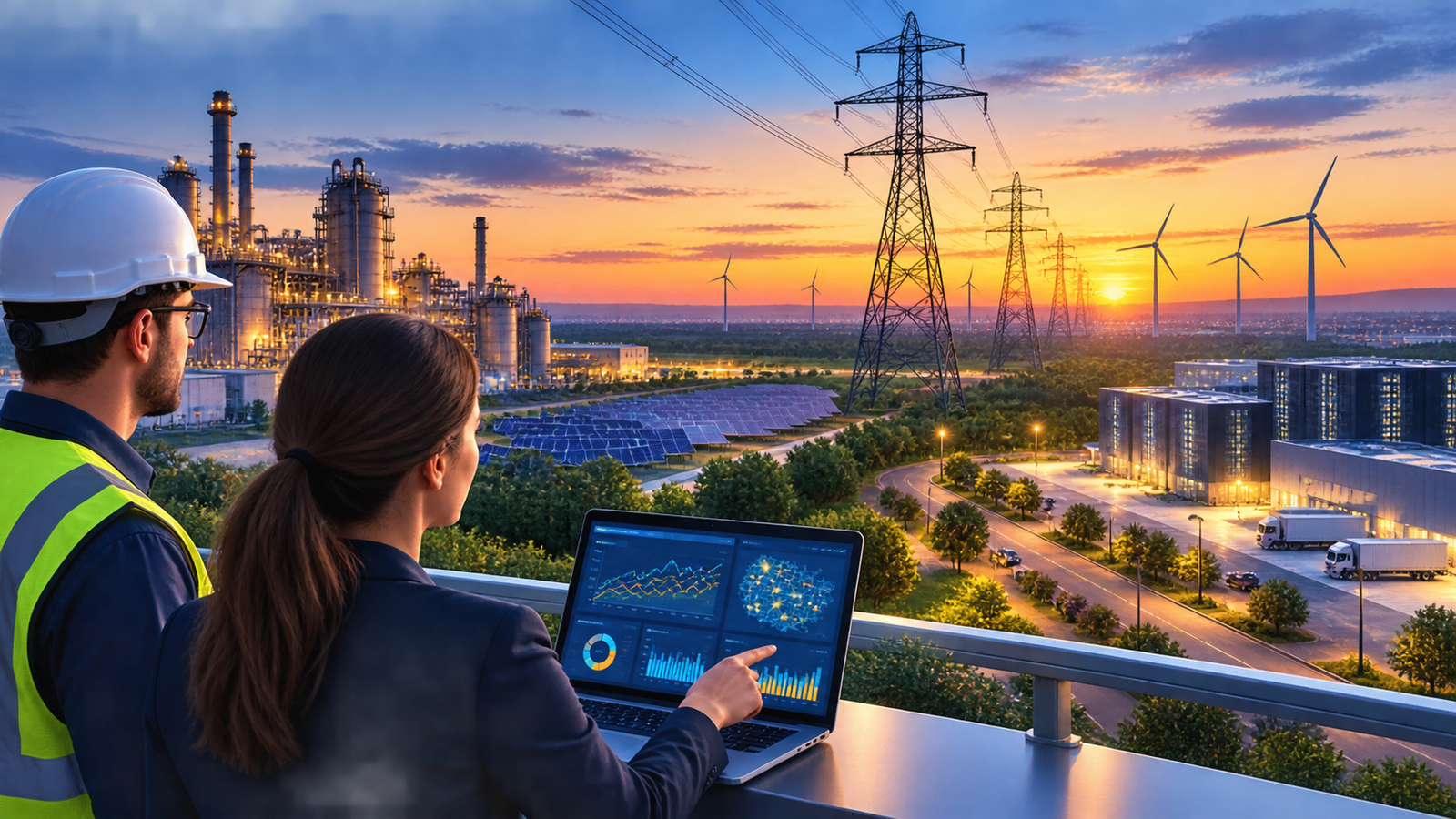
For much of the last century, responsibility for keeping the lights on rested almost entirely with utilities. They generated electricity, built transmission infrastructure, responded to growing demand, and expanded the grid as communities and industries grew. Businesses consumed electricity, paid their monthly bills, and generally had little reason to think about the broader system that supplied the power they depended on every day.
That relationship is changing.
Across North America, electricity is moving from being a background utility to becoming one of the defining economic issues of the next decade. The transition isn’t being driven by a single event but rather by several trends that are all unfolding at the same time. Manufacturing continues to return to North America, artificial intelligence is driving the construction of large data centres, electric vehicles are placing new demands on local distribution networks, and governments are encouraging industries to electrify equipment that historically relied on natural gas or diesel.
Each of those developments supports economic growth, but together they are creating an entirely different set of challenges for electricity providers.
Building new generating stations and expanding transmission networks remain essential, but they are not quick solutions. Major infrastructure projects often require years of planning, environmental assessments, regulatory approvals, engineering studies, and construction before they begin supplying electricity. As demand continues to increase, utilities are looking beyond traditional infrastructure investments and recognizing that large commercial and industrial customers can play a meaningful role in improving the efficiency of the electricity system itself.
This represents a significant shift in thinking.
Historically, industrial organizations were viewed almost exclusively as consumers of electricity. Today’s electricity markets increasingly recognize that businesses can also become active participants in supporting system reliability through better operational planning, improved visibility into energy consumption, and greater flexibility during periods of high demand.
The concept is remarkably practical.
Large manufacturing facilities, distribution centres, food processing plants, commercial office towers, hospitals, universities, mining operations, and municipal facilities all rely on electricity to carry out critical operations. Most also possess varying degrees of operational flexibility. Certain processes can be scheduled differently, building systems can be optimized, maintenance activities can be coordinated more effectively, and equipment performance can be continuously monitored to identify inefficiencies before they affect production.
None of these changes require organizations to reduce productivity.
Instead, they encourage businesses to operate more intelligently by making better use of the electricity they already consume.
This is one reason energy demand management programs continue attracting attention across North America. Rather than asking organizations to simply use less electricity, these initiatives focus on understanding when electricity is consumed, how operational decisions affect demand, and where improvements can strengthen both business performance and overall grid reliability. The result is a more collaborative relationship between utilities and their largest customers, where both parties benefit from greater operational efficiency.
Technology has made this transition significantly easier than it would have been even a decade ago.
Modern facilities collect an enormous amount of operational information every day. Electrical infrastructure measures consumption continuously. Building automation systems monitor heating, cooling, and ventilation. Production equipment reports operating conditions in real time, while maintenance platforms track equipment health throughout its lifecycle. Together, these technologies provide organizations with a detailed picture of how energy supports daily operations.
Perhaps more importantly, they allow businesses to move beyond simply reviewing monthly utility invoices.
Managers can identify trends while they are developing instead of after costs have already increased. Equipment that gradually becomes less efficient can often be detected before mechanical failures occur. Production schedules can be reviewed alongside electricity consumption to determine whether operational adjustments could improve performance without affecting output.
Artificial intelligence is also beginning to play an important role.
Rather than replacing engineers or facility managers, AI enables organizations to analyze millions of operational data points much more quickly than traditional methods. Relationships between weather conditions, equipment performance, occupancy levels, production schedules, and electricity consumption become easier to identify, allowing businesses to make more informed decisions based on measurable operational evidence instead of assumptions.
This evolution is changing how executives think about electricity.
Energy is increasingly viewed alongside labour, supply chain performance, maintenance, and production efficiency as another strategic variable that influences business performance. Organizations that understand their own energy use are often better positioned to improve resilience, reduce unnecessary operating costs, support sustainability initiatives, and respond more effectively to changing market conditions.
Perhaps most importantly, they become better prepared for an economy where electricity will play an even larger role than it does today.
The shift toward greater participation from businesses is happening at a time when electricity systems are undergoing one of the most significant transitions in their history. Renewable generation continues to expand across North America, bringing important environmental benefits while also changing how electricity is produced and delivered. Wind and solar facilities now contribute a growing share of generation in many jurisdictions, while battery storage technologies are helping utilities better balance fluctuations in supply.
These developments are encouraging utilities to think differently about the role of electricity consumers.
For decades, planning focused almost entirely on predicting future demand and building enough infrastructure to satisfy it. Today, planners recognize that improving the efficiency of existing systems can often be just as valuable as constructing new generating capacity. Every improvement in operational efficiency, every reduction in unnecessary peak demand, and every facility that gains better visibility into how it consumes electricity contributes to a more resilient grid.
The economic implications are substantial.
Constructing new electrical infrastructure requires enormous investments that are ultimately reflected throughout the economy. Generation facilities, transmission corridors, substations, and distribution upgrades involve billions of dollars in capital spending and years of construction. While these investments remain essential, delaying or reducing the need for additional infrastructure through better utilization of existing assets can benefit utilities, businesses, and consumers alike.
Industrial organizations are beginning to recognize that these system-wide benefits often align closely with their own operational objectives.
A manufacturing facility that identifies inefficient equipment lowers operating costs while reducing unnecessary electricity consumption. A commercial office portfolio that optimizes building systems improves occupant comfort while easing demand on the local grid. A logistics company that gains better visibility into facility operations strengthens productivity while improving energy performance. In each case, operational improvements create value for the business while supporting the broader electricity system.
This is one reason energy discussions are increasingly taking place in executive boardrooms rather than remaining solely within facilities departments.
Chief financial officers are evaluating electricity alongside other controllable operating expenses. Operations leaders are looking at how production schedules influence energy intensity. Sustainability teams are working more closely with engineering departments because many efficiency improvements contribute directly to environmental objectives. Even information technology teams have become more involved as operational technology, automation platforms, and analytics systems become more deeply integrated throughout industrial facilities.
The convergence of these disciplines reflects a larger trend occurring across modern business.
Data has become one of the most valuable resources available to organizations. Businesses monitor sales performance, inventory levels, customer behaviour, supply chains, and financial metrics continuously. Energy is increasingly becoming part of that same ecosystem, not because electricity itself has changed, but because organizations now have the ability to understand it in ways that simply weren’t possible a generation ago.
Connected sensors, advanced metering, automation systems, cloud computing, and artificial intelligence have transformed the amount of information available to decision-makers. The challenge is no longer gathering data. It is interpreting that information and translating it into practical operational improvements that deliver measurable business results.
That often requires expertise spanning multiple disciplines.
Modern energy strategies involve engineering, data analytics, operational planning, automation, sustainability, electricity markets, and financial analysis. Few organizations possess deep expertise across all of these areas while also maintaining focus on their core business. As a result, many companies are choosing to work with an experienced energy services company that can help evaluate operations from a broader perspective. These partnerships frequently identify opportunities that improve efficiency, strengthen resilience, support sustainability initiatives, and reduce long-term operating costs without compromising productivity.
Looking ahead, few analysts expect electricity demand to level off. Artificial intelligence will continue expanding, manufacturers will invest in more automation, transportation will become increasingly electrified, and population growth will place additional pressure on existing infrastructure. Utilities will continue building new generation and modernizing transmission networks, but those investments alone will not define the future of the electricity sector.
Success will also depend on how effectively businesses use the infrastructure that already exists.
Organizations that understand their operations, continuously evaluate performance, and make informed decisions based on reliable data will be better positioned to adapt as electricity systems evolve. Small operational improvements made consistently over time can produce meaningful financial benefits while contributing to the stability and resilience of the broader grid.
That represents an important change in the relationship between businesses and electricity providers. Companies are no longer simply purchasing energy to power their operations. Increasingly, they are becoming active participants in creating a more efficient, more reliable, and more sustainable electricity system.
As North America’s economy becomes increasingly dependent on electricity, that partnership is likely to become one of the defining characteristics of modern infrastructure planning. The businesses that recognize this shift today will be well positioned to navigate the opportunities and challenges that accompany a more connected, data-driven, and electrified economy.
