


Table Of Contents
- Why Daily Movement Matters
- The Three Parts Of Active Aging
- Build A Safe Starting Point
- Simple Strength Exercises
- Balance And Mobility Practice
- Create A Weekly Movement Plan
- Adjust For Health Needs
- Make Movement A Daily Habit
- Track Progress Without Pressure
- When To Ask For Help
Staying active does not have to mean intense workouts or complicated equipment. For many older adults, a few simple movements practiced consistently can make everyday tasks feel more manageable, from getting out of a chair to carrying groceries or walking through the neighborhood. A practical approach to movement focuses on building confidence as much as fitness.
Whether you are returning to exercise or looking for a more sustainable routine, guidance from wellness professionals such as Alexandra Chipurnoi can help reinforce an important idea: progress starts with movements that match your current abilities. The goal is not perfection. It is to keep moving safely, regularly, and with purpose.
Why Daily Movement Matters
Daily life calls for strength, coordination, balance, and mobility. Standing from a low chair uses the legs and hips. Reaching into a cabinet requires shoulder movement. Turning while walking calls for balance and control. A regular movement routine can support independence by helping people continue the activities that matter to them.
Consider a person who finds it difficult to rise from the couch without using both hands. Practicing controlled chair stands may gradually make that task feel easier. Small improvements can also build confidence to attend social events, take walks, or handle errands with less worry.
The Three Parts Of Active Aging
A complete routine includes aerobic activity, strength work, balance practice, and gentle mobility exercises. The CDC activity guidelines for older adults recommend aerobic activity, muscle-strengthening work on at least two days each week, and balance activities as part of a weekly plan.
- Aerobic activity: Walking, cycling, water exercise, or dancing can raise the heart rate in a manageable way.
- Strength work: Exercises for the legs, hips, back, chest, shoulders, and arms can support everyday movement.
- Balance practice: Heel-to-toe walking, chair stands, and supported single-leg work can develop steadiness.
- Mobility work: Gentle joint movements can reduce the stiffness that often follows prolonged sitting.
Build A Safe Starting Point
Begin with exercises that feel familiar and stable. Use a sturdy chair, countertop, or wall for support, wear shoes with secure soles, and clear rugs, cords, or clutter from the exercise area. Start with a short session rather than trying to do too much on the first day.
Stop exercising if you experience sharp pain, chest pressure, faintness, or unusual shortness of breath. People with a recent injury, major health condition, dizziness, or repeated falls should speak with a qualified health professional before changing an exercise routine.
Simple Strength Exercises
Beginner-Friendly Options
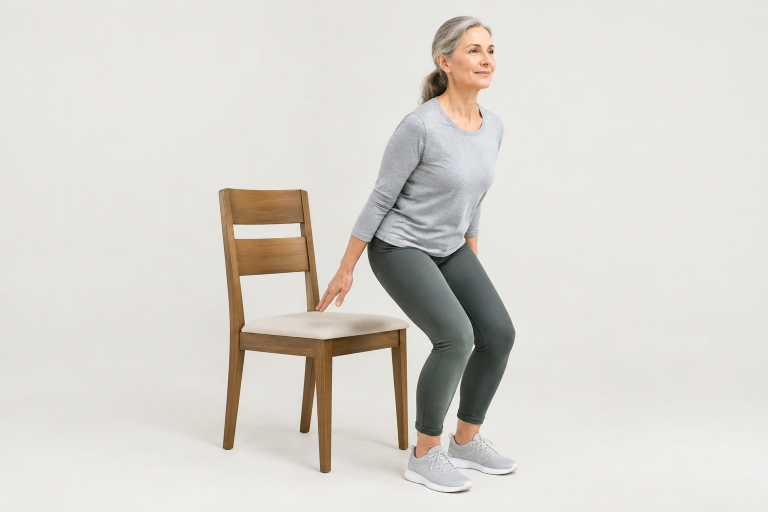
- Chair stands: Sit near the front of a sturdy chair, place your feet flat on the floor, and stand with control before sitting down slowly.
- Wall push-ups: Place your hands on a wall, bend your elbows gently, then press back to standing.
- Heel raises: Hold a counter, lift the heels slowly, pause, and lower with control.
- Step taps: Tap one foot at a time onto a low step or sturdy object without climbing onto it.
- Resistance-band rows: Pull a securely anchored band toward the body while keeping the shoulders relaxed.
- Supported hip hinges: Hold a counter and practice bending at the hips with a long, comfortable spine.
Start with one set of slow repetitions. When the movement stays steady and comfortable, add a few repetitions, a second set, or light resistance. Controlled form matters more than speed.
Balance And Mobility Practice
Practice balance when you feel alert and always stay close to a stable support. Side steps along a counter, heel-to-toe walking, and supported weight shifts can be useful choices. Move slowly enough to notice how your feet, knees, and hips feel.
Mobility can fit naturally into the day. Try ankle circles before a walk, shoulder rolls after sitting, and gentle trunk turns while standing near a chair. Research on physical exercise reinforces the value of protecting practical movement as people age.
Create A Weekly Movement Plan
A simple schedule is easier to follow when it includes variety and recovery.
- Monday: Short walk, chair stands, wall push-ups, and gentle stretching.
- Tuesday: Mobility movements and supported balance practice.
- Wednesday: Walking, resistance-band rows, heel raises, and step taps.
- Thursday: Rest or light activity around the home.
- Friday: A full-body strength routine with extra rest between exercises.
- Saturday: An enjoyable activity such as gardening, swimming, dancing, or a longer walk.
- Sunday: Gentle stretching and a review of what felt good during the week.
Consistency matters more than following a perfect schedule. A brief routine completed often is usually more helpful than an ambitious plan that feels impossible to maintain.
Adjust For Health Needs
No single routine works for everyone. Joint discomfort may call for a smaller range of motion or low-impact activity. A limited balance may mean exercising beside a counter or starting from a seated position. Low stamina may make several short sessions more realistic than one longer workout.
Those managing chronic conditions should ask a health professional about suitable intensity and personal warning signs. After surgery or injury, follow the recovery instructions provided by the care team.
Make Movement A Daily Habit
Attach movement to routines you already have. Do five chair stands before lunch, walk through the house after meals, or stand during part of a phone call. Keep a resistance band or sturdy chair in sight, invite a friend to walk, and choose activities that feel useful or enjoyable.
Track Progress Without Pressure
Progress is not limited to weight or appearance. Notice whether standing from a chair feels easier, a walk lasts a few minutes longer, carrying a light bag feels more comfortable, or recovery after activity improves. These everyday changes can be meaningful signs of growing capability.
When To Ask For Help
A physician, physical therapist, or qualified trainer may help adapt exercise when pain, fear of falling, or a health condition limits activity. Seek medical advice for chest pain, fainting, severe breathlessness, sudden weakness, or a new loss of balance. Professional support can make movement safer without removing it from daily life.
Conclusion
Stronger days are built through small, repeatable actions. Start with one safe movement, practice it regularly, and adjust as your needs change. Over time, a steady routine can support strength, balance, mobility, and confidence in everyday life.
