


Table of Contents
- Why Fabric Choice Shapes the Final Result
- Start With the Project’s Main Purpose
- Read the Pattern Before You Shop
- Compare Fiber Content and Construction
- Use Weight, Drape, and Structure as a Quick Test
- Match Fabric to Canadian Weather and Daily Use
- Check Care, Shrinkage, and Colorfastness
- Buying Fabric Online Without Guesswork
- Common Fabric Selection Mistakes
- A Five-Minute Fabric Checklist
Choosing fabric is one of the most important decisions in any Canadian sewing project. A beautiful print cannot rescue a shirt that feels restrictive, a bag that collapses under everyday use, or a quilt that behaves unpredictably after washing. For makers comparing materials across Canada, shop Canadian online fabrics through Fabric Design Treasures, a Canadian-owned fabric store with categories for quilting, apparel, knit, linen, flannel, and notions. Its project-focused selection makes it a useful reference for Canadian sewists who need to compare fabric types for changing seasons, household projects, and handmade garments.
The best choice starts with function, then considers weight, drape, stretch, care, and durability. Whether you are sewing a breezy summer top, a lined winter tote, or a hard-working family quilt, fabric determines how the finished piece looks, feels, and lasts.
Why Fabric Choice Shapes the Final Result
Patterns provide a plan, but fabric gives that plan its character. A soft, fluid material can create graceful gathers and movement in a dress. A firm woven fabric can hold the shape of a tote, jacket, cushion, or storage basket. Choosing the wrong fabric can affect fit, comfort, sewing difficulty, and care requirements, even when every pattern instruction is followed carefully.
Fiber content matters, but it is only part of the picture. Weave, knit construction, thickness, finishes, and yarn type can make two fabrics with similar labels behave very differently. Before treating a care label as a final answer, review the Canadian guide to apparel and textile care symbols to plan for washing, drying, pressing, and professional cleaning before cutting.
Start With the Project’s Main Purpose
Ask what the finished item needs to do in real life. This simple question prevents many expensive mistakes.
- Garments: Prioritize comfort, movement, breathability, stretch, and practical laundering.
- Quilts: Choose stable fabrics with compatible weights, reliable cutting edges, and colors that can be tested for bleeding.
- Bags: Look for body, abrasion resistance, and enough strength for the intended contents.
- Home décor: Consider sunlight exposure, cleaning needs, pattern scale, and the level of structure the item requires.
- Children’s projects: Focus on softness, secure construction, simple care, and repeated washing.
Read the Pattern Before You Shop
Read the entire pattern envelope or instruction sheet before falling in love with a fabric. Recommended materials are not absolute rules, but they reveal the designer’s intended drape, structure, and stretch.
- Check the suggested fabric types and the required width.
- Confirm the stated yardage or metreage for your size or project variation.
- Look for stretch requirements, especially for knit garments.
- Note whether the pattern needs lining, interfacing, stabilizer, special needles, or hardware.
- Add extra fabric for directional prints, stripes, plaids, large motifs, and possible shrinkage.
A substitution can work well when the replacement has similar weight, drape, stretch, and structure. Replacing a soft rayon with stiff canvas, for example, changes far more than the color of a garment.
Compare Fiber Content and Construction
Common Fabric Characteristics
- Cotton: Often breathable, comfortable, and beginner-friendly. Some cotton fabrics wrinkle or shrink, so preparation matters.
- Linen: Known for breathability and visible texture. It tends to crease and often becomes softer with use.
- Wool: Available in many weights and finishes, from soft coatings to structured suiting and warm outerwear fabrics.
- Rayon or viscose: Often has a soft hand and fluid drape, but can shift while cutting and sewing.
- Polyester: Commonly used for durable, wrinkle-resistant fabrics and blends with strong color retention.
- Knits: Made with interlocking loops, which generally give them more stretch than woven fabrics.
- Blends: Combine fiber traits, so judge the actual fabric rather than relying on the fiber label alone.
Use Weight, Drape, and Structure as a Quick Test
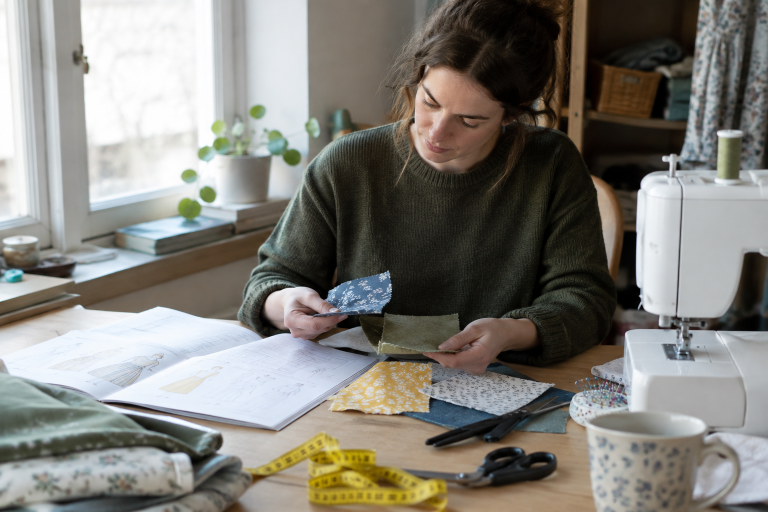
When shopping for fabric in person, use your hands and eyes. Hold the material up, fold it, and let one corner fall over your arm or the edge of a table. A fabric that falls in soft folds is likely better for flowing skirts, blouses, scarves, and dresses. A fabric that keeps its shape may be better for shirts, simple bags, jackets, and home décor.
- Soft and fluid: Suits flowing garments, but may slide while cutting.
- Stable and medium weight: Works well for shirts, quilts, beginner projects, and uncomplicated bags.
- Firm and structured: Fits totes, outerwear, upholstery details, and projects that need shape.
- Stretchy and flexible: Fits T-shirts, leggings, lounge sets, and activewear, but may need a stretch needle and careful handling.
Also, check the opacity by holding the fabric toward the light; if it appears sheer, plan for a lining, layering, or a different garment design.
Match Fabric to Canadian Weather and Daily Use
Canada’s weather makes practical fabric choices especially useful. Lighter cotton, linen, lawn, and rayon blends can be comfortable for warm weather or indoor spaces. For colder months, wool, flannel, fleece, corduroy, heavier denim, and layered garments can provide more warmth and structure.
Consider the routine around the item, not just the season. A school lunch bag, pet blanket, children’s pajamas, or kitchen apron needs to be easy to care for and resilient. A special-occasion garment may justify more delicate fabric and more careful laundering. For window treatments and cushions near bright light, consider how often the material will be exposed to and cleaned.
Check Care, Shrinkage, and Colorfastness
For garments, quilts, and washable household projects, prewashing can help reveal shrinkage, color transfer, or changes in texture before construction. Follow the supplier’s care guidance, especially for delicate fabrics, wool, specialty finishes, and materials that may require dry cleaning.
When combining dark and light fabrics, test a small piece to see if color bleeding would ruin the project. Pressing is part of sewing, too, so make sure the fabric can tolerate the heat and steam you expect to use.
Buying Fabric Online Without Guesswork
Online shopping works best when you read specifications rather than relying on a photo. Check fiber content, width, listed weight when available, stretch information, care notes, and the scale of the print. Order a swatch if color, texture, or drape is essential to the project.
Measure twice before ordering. Buy enough for seam matching, shrinkage, directional layouts, quilting errors, and future repairs when possible. A little extra fabric is usually easier to manage than trying to match a discontinued print later.
Common Fabric Selection Mistakes
- Choosing solely by color before checking weight and stretch.
- Assuming all cottons, linens, knits, or denims behave the same way.
- Ignoring the direction and repeat size of a print.
- Using slippery or highly stretchy fabric for a first project without changing the sewing approach.
- Forgetting that interfacing, lining, closures, and hardware affect the final structure.
A Five-Minute Fabric Checklist
- What will this finished item do every day?
- Does the fabric weight suit the pattern?
- Does the drape match the intended shape?
- Will the fabric stretch, fray, shift, or require special tools?
- Can it handle the expected washing, wear, and Canadian seasonal use?
- Do you have enough fabric for the layout and print repeat?
Color and print make a project personal, but function makes it successful. Match fabric to the purpose first, then refine your choice through touch, testing, and practical care planning. That approach leads to projects that sew more smoothly, wear more comfortably, and remain useful long after the final stitch.
