


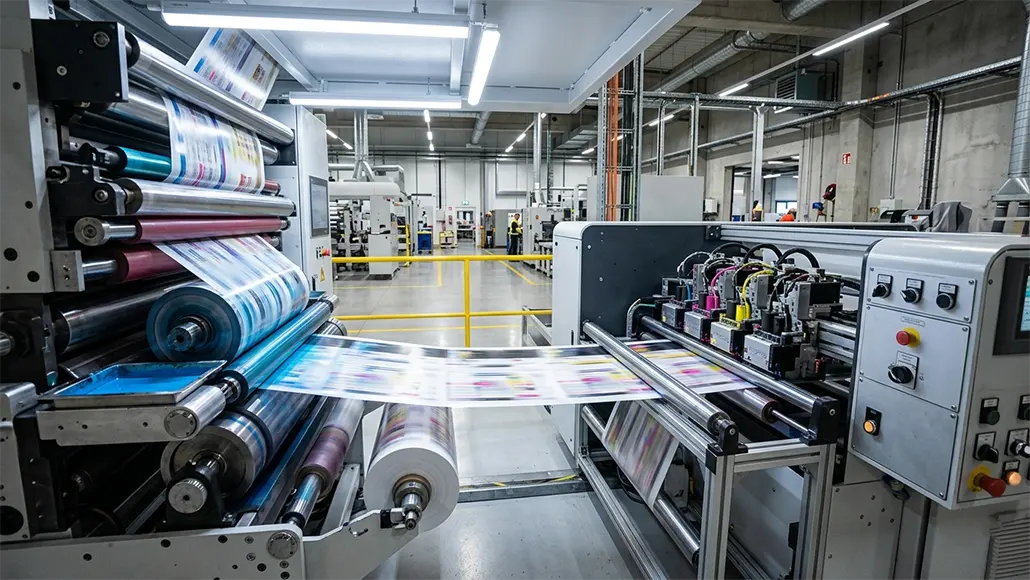
Every day, millions of people open snack pouches, grab chilled drinks wrapped in full-body sleeves, and dispense personal care products without giving the packaging machinery a second thought. Yet behind a clean seal, sharp logo, or snug bottle wrap lies a sequence of coordinated industrial steps.
Modern packaging technology turns continuous rolls of film, paper, or label stock into functional, protective formats at high speed. Small improvements in print accuracy, web control, and sealing consistency can noticeably change how a product looks and performs in daily life.
Understanding how printing and converting work together helps brands and everyday observers see why behind-the-scenes engineering matters so much.
How Precision Printing and Converting Work Behind the Scenes
Behind every cleanly sealed pouch or contoured bottle label is a sequence of printing, slitting, and converting steps engineered for repeatability. Manufacturers such asKETE, which has built printing and packaging converting machinery since 2011—including heat-shrink sleeve seaming equipment running up to 300 meters per minute—show how specialized industrial systems keep high-volume production moving smoothly.
| Process Stage | Core Role in Production | Key Quality & Technical Focus |
| Printing & Graphics | Applies brand visuals, product details, and barcodes onto roll substrates | Colour consistency, sharp text edges, and reliable ink adhesion |
| Converting & Seaming | Cuts, slits, folds, seams, or forms rolls into sleeves, labels, or pouches | Alignment accuracy, clean edges, and consistent seam or seal formation |
| Quality & Sealing Check | Verifies that finished formats meet size, visual, and closure standards | Seal integrity, registration checks, and defect screening before dispatch |
From Roll Substrates to Finished Sleeves and Pouches
Most packaging starts as large master rolls of plastic film, specialty paper, or laminate rather than pre-shaped containers. Printing presses transfer graphics and product information onto these moving webs before downstream equipment shapes them into final formats.
Depending on the product, converting machines slit wide rolls to exact widths, form longitudinal seams for shrink sleeves, or fold and seal webs into pouches. Each step turns flat or tubular material into a format ready for filling lines.
Speed and Accuracy in High-Volume Production
Running packaging lines at high speeds tests mechanical stability. Even minor shifts in web tension or alignment can blur fine print, stretch thin films, or skew seals across thousands of units per minute.
Consistent roller tension, steady machine speeds, and accurate registration keep graphics aligned and dimensions uniform. That precision ensures every pouch or sleeve feeds smoothly when products are filled and packaged.
What Drives Next-Generation Packaging Innovation
Packaging technology continues to evolve as brands look for cleaner workflows, lower waste, and better user convenience. Practical engineering refinements often make the biggest difference on the production floor and in shoppers’ hands.
Smarter Automation and Reduced Material Waste
Modern converting systems increasingly rely on automated controls to keep tension, alignment, and cutting actions steady. Better process stability reduces trial-and-error adjustments during startups and changeovers.
Fewer misalignments and cleaner slitting or forming steps mean less off-spec film or trim scrap. Reducing waste lowers material costs while supporting cleaner manufacturing habits.
Adapting to Consumer Convenience and Shelf Appeal
Everyday convenience shapes whether shoppers enjoy using a product or find it frustrating. Easy-open notches, resealable closures, clear ingredient lists, and scuff-resistant graphics all improve day-to-day usability.
At the same time, eye-catching wraps and clean typography help products stand out both on store shelves and in online listings. Good packaging pairs visual appeal with practical handling from the first open to the last drop.
Practical Takeaways for Brands Choosing Packaging Partners
Choosing the right packaging partner involves more than comparing quote sheets. Brands get better results when manufacturing capabilities match real product needs and quality checks happen early.
Matching Packaging Mechanics to Product Needs
A dry snack pouch, a liquid beverage sleeve, and a personal care tube each face different physical demands. Moisture sensitivity, product weight, dispensing style, and shelf life should guide material and format choices.
Matching packaging mechanics to the product from the start avoids costly redesigns later. It also helps ensure the package protects contents during shipping and normal storage.
Checking Quality Consistency Before Scaling Orders
Scaling up too quickly without thorough sample testing can turn small flaws into widespread customer complaints. Running pilot batches and inspecting seams, print clarity, and fit on real containers catches issues early.
For teams tracking broader technology and innovation trends or balancing business and lifestyle insights, disciplined quality verification is what turns clever packaging concepts into dependable everyday products.
Quick Checklist Before You Finalize a Packaging Design
Before signing off on a final packaging specification, run through these four practical checks:
- Substrate Suitability: Confirm the film, paper, or sleeve material fits the product’s weight, flexibility, and storage conditions.
- Print Clarity and Legibility: Check fine text, contrast, barcodes, and colours on actual printed samples rather than relying only on screen proofs.
- Seal and Closure Reliability: Test seams, closures, or shrink fits against handling, moisture, and routine opening stress.
- Sustainability and Compliance: Review recyclability considerations, material efficiency, and required labelling details for target markets.
Treating packaging as an integral part of product engineering rather than an afterthought helps prevent damage and improves everyday usability. As explained in overviews ofpackaging engineering, aligning materials, structural design, and manufacturing processes protects goods from production through daily use.
