


The Economics of Proactive Home Maintenance and Protection
While the initial investment in a home is substantial, the ongoing commitment to its upkeep is what truly preserves its value and functionality. Many homeowners find themselves in a reactive cycle, addressing issues only when they become emergencies. This approach, however, often proves far more costly in the long run. The principle is simple: every $1 of deferred maintenance can escalate into $4 of future repair or replacement costs. This isn’t just a hypothetical; it’s a financial reality that can significantly impact your household budget and overall asset value.
Proactive maintenance acts as a form of financial forecasting, allowing you to anticipate and budget for necessary tasks rather than being blindsided by expensive breakdowns. Instead of facing a sudden, five-figure bill for a critical system failure, regular inspections and preventative care can identify minor issues before they spiral out of control. This strategic approach helps maintain your home’s asset value, preventing the depreciation that often accompanies neglect. By dedicating a portion of your budget annually, often recommended as 1% of your home’s value, you can build a maintenance reserve that covers routine upkeep and mitigates the impact of unforeseen repairs. This financial discipline not only saves money but also provides invaluable peace of mind.
Prioritizing High-Cost Systems and Structural Integrity
When considering where to focus your maintenance efforts, certain systems and structural elements stand out due to their high replacement costs and critical role in your home’s integrity. These are the areas where proactive care offers the most significant financial protection.
The roof, for instance, is your home’s primary shield against the elements. Regular inspections can identify loose shingles, damaged flashing, or minor leaks before they compromise the entire structure, leading to costly water damage, mold, and even structural decay. Similarly, the foundation is the bedrock of your home. Any signs of settling, cracks, or moisture intrusion demand immediate attention, as foundation repairs can be among the most expensive and disruptive projects a homeowner faces.
Another often-overlooked but critical system is the sewer line. Blockages or damage can lead to sewage backups, causing extensive damage and health hazards. With sewer line repairs ranging from $2,500 to $4,000, and complete replacements potentially costing between $3,000 and $7,000, regular camera inspections and preventative measures are wise investments.
Then there are the essential mechanical systems, such as your HVAC unit. These systems are central to your comfort and energy efficiency. An HVAC system replacement can cost $18,000 or more, making routine tune-ups and filter changes crucial for extending its lifespan and maintaining optimal performance. For homeowners in the market for new installations or needing expert advice on optimizing their heating and cooling systems, consulting with professionals specializing in residential HVAC installation and repair can provide significant long-term benefits. These experts can help ensure your systems run efficiently, saving you from unexpected breakdowns and high energy bills.
Understanding the typical lifespan of these systems allows you to plan for eventual replacement, ensuring you’re not caught off guard by a sudden failure.
Sudden cooling failures during severe heat waves can create immediate indoor safety concerns for households. Addressing mechanical issues right away helps stabilize indoor temperatures and prevents further strain on internal cooling components. When unexpected equipment breakdowns occur, arranging prompt emergency ac repair Melbourne ensures systems are restored safely without causing prolonged disruptions to daily routines or household comfort.
Addressing minor cooling issues promptly can prevent unexpected mechanical breakdowns during hot weather. Routine checks often reveal small problems like worn belts or dirty coils before they affect overall cooling efficiency. Timely ac repair helps restore balanced airflow, protects sensitive internal components, and keeps household energy usage under control throughout the summer.
Regular seasonal checkups ensure that internal mechanisms remain clean and properly calibrated over time. Simple maintenance tasks, such as replacing clogged air filters and checking electrical connections, help prevent unexpected mechanical failures. Taking care of your home’s hvac equipment not only supports consistent daily comfort but also maintains system efficiency, helping lower monthly utility expenses throughout the year.
Local climate conditions and regional weather patterns can also affect how frequently cooling equipment requires attention. When routine cooling tune-ups or unexpected repairs are needed in nearby communities, homeowners can visit our Harvey location to learn more about keeping their home systems operating smoothly throughout the season.
Evaluating Utility and Third-Party Protection Plans
In an effort to ease the burden of unexpected repairs, many utility companies and independent providers offer various home protection plans. These plans are designed to provide peace of mind by covering the costs associated with breakdowns of essential home systems and appliances.
Utility-backed coverage, such as Xcel Energy’s HomeSmart plans or DTE Energy’s Home Protection Plus, often bundles repair coverage for critical systems like furnaces, central A/C, water heaters, and even major appliances directly into your monthly utility bill. This offers convenient billing and access to a network of skilled technicians. For example, over 225,000 Michigan homeowners rely on Home Protection Plus for repair coverage, highlighting the appeal of such integrated services.
Beyond utility offerings, third-party providers like HomeServe (which partners with utilities but operates independently) offer a range of specialized repair plans. These can include interior plumbing, exterior water service lines, exterior electric lines, electrical surge protection, and even water heater repair/replacement plans. The key differences often lie in what’s covered, the service caps (maximum payout per incident or year), and whether the plan covers parts, labor, or both.
When considering these plans, it’s crucial to differentiate them from home warranties. While both aim to protect against repair costs, home protection plans typically cover specific systems or lines, often due to wear and tear, whereas home warranties usually cover appliances and systems that fail due to normal use. Always review the terms and conditions carefully, including any deductibles, service call fees, and coverage limits, to ensure the plan aligns with your home’s needs and your budget. These plans can be particularly beneficial for older homes with aging systems, providing a financial buffer against potentially expensive repairs.
Comprehensive Strategies for Water Damage and Moisture Management
Water is essential for life, but uncontrolled, it can be one of the most destructive forces a home faces. Water damage can lead to structural decay, mold growth, compromised air quality, and significant financial loss. Proactive strategies for leak detection and moisture management are therefore paramount to protecting your home’s integrity and your family’s health. Understanding your home’s water pressure, installing moisture barriers, and diligently monitoring for leaks are foundational steps in this defense.

Indoor Plumbing Integrity and Fixture Efficiency
Maintaining the integrity of your indoor plumbing systems is crucial for preventing costly water damage. Even small, undetected leaks can lead to substantial waste and damage over time. One of the most reliable ways to detect hidden leaks is to perform regular meter tests. By reading your water meter before and after a two-hour period of no water use, you can identify if water is still flowing, indicating a leak somewhere in your system. For homes with no outdoor water use in the winter, a family of four exceeding 12,000 gallons per month often signals a serious leak.
Flushing your water heater annually is another vital task. This simple maintenance step reduces sediment buildup, which not only improves efficiency but also extends the unit’s lifespan, preventing premature failure and potential leaks. Toilets are notorious for silent leaks; a simple dye test (adding food coloring to the tank and checking the bowl after 15 minutes) can reveal a faulty flapper. Regularly inspecting and cleaning faucet aerators and showerheads can prevent mineral buildup, which can restrict flow and put undue stress on plumbing. Opting for WaterSense labeled fixtures when replacing components can also significantly improve water efficiency, reducing both your utility bills and the overall strain on your plumbing system.
Exterior Moisture Control and Pest Defense
The exterior of your home plays a critical role in managing moisture and preventing water intrusion. Effective gutter cleaning and downspout drainage are non-negotiable. Clogged gutters can cause water to overflow, leading to fascia damage, foundation erosion, and basement flooding. Ensuring downspouts direct water at least several feet away from the foundation is essential.
Beyond drainage, managing moisture in areas like crawl spaces is vital. Crawl space encapsulation, vapor barriers, and proper ventilation can prevent moisture accumulation, which is a leading cause of mold growth, wood rot, and pest infestations.
When excess humidity settles into hidden spaces, addressing fungal growth becomes essential for protecting structural wood and indoor air quality. Timely residential mold cleanup helps prevent spores from spreading to living areas, preserving household health and safeguarding building materials against ongoing decay.
Foundation grading, ensuring the ground slopes away from your home, is another fundamental defense against water pooling near the foundation.
Pests, particularly termites, thrive in moist environments and can exacerbate structural damage. Termite damage alone costs U.S. homeowners more than $5 billion annually, and most insurance policies don’t cover it. Regular inspections and preventative treatments are critical. Integrating pest management into your home maintenance routine is a smart investment. For comprehensive protection against various pests, including those attracted to moisture, considering professional residential and commercial pest control services can provide peace of mind and safeguard your home’s structure. These specialists can identify vulnerabilities and implement effective exclusion strategies. By addressing both moisture and pest control proactively, you create a robust defense for your home’s exterior and foundation.
Developing an Actionable Seasonal Upkeep Strategy
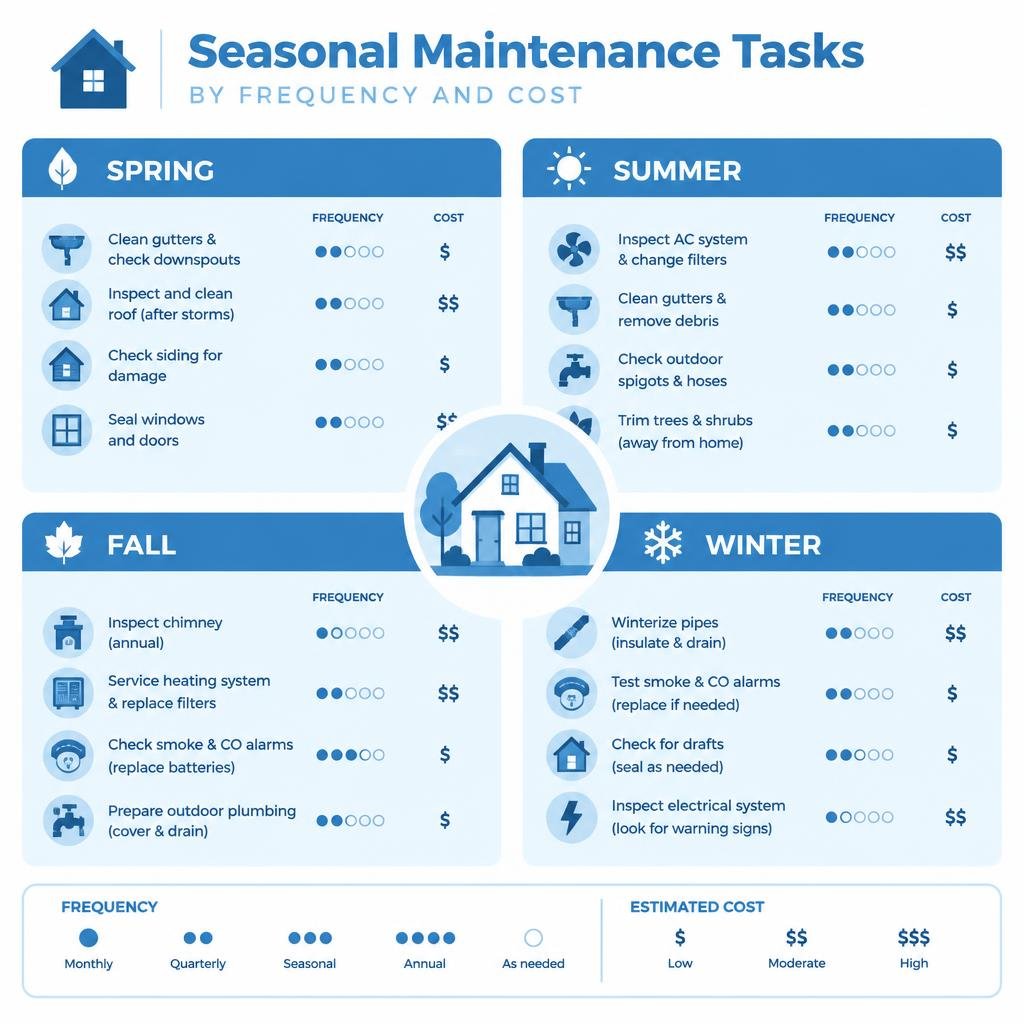
A well-structured seasonal maintenance plan is the backbone of effective home protection. It allows homeowners to systematically address tasks that are best performed at specific times of the year, often in anticipation of changing weather conditions. This proactive approach ensures your home is prepared for seasonal transitions, enhancing its thermal efficiency, protecting its exterior envelope, and preventing small issues from escalating into major problems.
Integrating Home Maintenance and Protection into Seasonal Routines
Each season brings its own set of maintenance imperatives. As we approach cooler months, winterizing pipes becomes crucial to prevent freezing and bursting, a common cause of significant water damage. This involves insulating exposed pipes, disconnecting outdoor hoses, and potentially draining irrigation systems. Chimney inspections should be an annual autumn task, ensuring there are no blockages or structural issues that could pose a fire hazard.
Spring and summer are ideal for addressing the home’s exterior. Siding maintenance, including cleaning and inspecting for cracks or damage, helps protect against moisture intrusion. Sealing windows and doors not only prevents drafts but also significantly cuts HVAC bills by up to 20%. Regularly clearing debris from the roof and gutters, especially after storms, prevents water buildup and potential leaks.
A seasonal approach helps distribute maintenance tasks throughout the year, making them more manageable and less overwhelming.
Essential Safety Audits and Hazard Prevention
Beyond structural and system maintenance, regular safety audits are non-negotiable for protecting your family and your home. Smoke detectors and carbon monoxide (CO) alarms are life-saving devices that require consistent attention. Batteries should be tested monthly and replaced at least twice a year (a good habit is to change them when daylight saving time begins and ends). Detectors themselves should be replaced every 10 years.
Electrical systems also warrant regular checks. Look for flickering lights, warm outlets, or frequently tripped breakers, which could indicate overloaded circuits or faulty wiring. Professional electrical inspections, especially in older homes, can identify potential hazards before they lead to fires.
Finally, dryer vents are a common source of house fires. Lint buildup restricts airflow, causing the dryer to overheat. Cleaning your dryer vent annually, or more frequently if you have a large household or pets, is a simple yet critical task for fire prevention. These essential safety checks, integrated into your seasonal routine, provide a vital layer of protection for your home and loved ones.

Navigating Service Plans, Insurance, and Professional Selection
The landscape of home maintenance and protection can be complex, with various service plans, insurance policies, and an array of professionals vying for your attention. Navigating this environment effectively requires a clear understanding of what each option offers and how to make informed choices that best serve your home’s needs.
Comparing Home Maintenance and Protection Plans vs. Insurance Coverage
It’s crucial to understand the fundamental differences between home maintenance and protection plans and standard home insurance coverage. Home insurance primarily protects against sudden, accidental damage caused by perils like fire, theft, or natural disasters. Crucially, it typically does not cover damage resulting from neglect, wear and tear, or gradual deterioration. For example, if your roof leaks due to prolonged lack of maintenance, your insurance might deny the claim. This is a significant point, as 4 out of 10 homebuyers report hidden maintenance costs to be higher than expected, often because they confuse insurance coverage with maintenance protection.
This is where home maintenance and protection plans step in. These plans, whether offered by utilities or third-party providers, are designed to cover the costs of repairing or replacing systems and appliances that fail due to normal wear and tear. They bridge the gap left by traditional insurance, offering coverage for breakdowns that are not sudden accidents. While these plans come with monthly fees and often service call fees, they can prevent homeowners from facing substantial out-of-pocket expenses for common failures like a broken furnace or a burst water pipe due to age. Always review policy exclusions, coverage limits, and any service caps to ensure the plan meets your expectations. Documenting all maintenance and repairs is also key, as it can demonstrate diligence and potentially impact your home insurance premiums or claims process by showing a reduced risk profile.
Criteria for Selecting Qualified Service Providers
Finding trustworthy home repair professionals is a common challenge, with 65% of homeowners reporting difficulty in this area. When selecting a service provider for maintenance or protection, due diligence is paramount.
First and foremost, verify their trade licensing and ensure they carry adequate insurance (liability and worker’s compensation). This protects you from financial responsibility should an accident occur on your property. Look for companies that offer clear, written estimates before any work begins, detailing the scope of work, materials, and labor costs. Priority response times and 24-hour callback guarantees, often included in service agreements, can be invaluable during emergencies.
Additionally, consider the company’s reputation. Online reviews, testimonials, and referrals from trusted sources can provide insight into their reliability and quality of work. Ask about their technicians’ qualifications and experience. A provider that offers service guarantees on their work demonstrates confidence in their craftsmanship. While the temptation to opt for the cheapest option might be strong, quality and reliability often come at a fair price. Investing in a reputable professional can prevent repeat issues and provide long-term savings and peace of mind.
Frequently Asked Questions About Home Maintenance and Protection
Home maintenance and protection can raise many questions for homeowners, especially given the financial implications and the sheer volume of tasks involved. Here, we address some of the most common inquiries.
How much should homeowners budget annually for home maintenance?
Budgeting effectively for home maintenance is a critical step in proactive home protection. While there’s no one-size-fits-all answer, a widely accepted guideline is the “1% rule,” which suggests setting aside 1% of your home’s value annually for maintenance and repairs. For example, if your home is valued at $400,000, you would aim to budget $4,000 per year. Some experts recommend a slightly higher percentage, especially for older homes or those with complex systems.
Another approach is to budget based on square footage, often ranging from $1 to $4 per square foot. For a 2,000-square-foot home, this could mean $2,000 to $8,000 annually. These are averages; actual costs can vary based on your home’s age, location, and condition. Homeowners spend up to $6,000 on average on repairs and maintenance, so having a dedicated maintenance reserve is crucial for covering both routine upkeep and unforeseen repairs. Building this reserve over time helps prevent financial strain when unexpected issues arise.
Does routine home maintenance lower homeowners insurance costs?
Yes, routine home maintenance can indirectly lead to lower homeowners insurance costs over time, though it’s not always a direct, immediate discount. Insurers assess risk when determining premiums. A well-maintained home presents a lower risk profile for potential claims. By regularly inspecting and repairing your roof, plumbing, electrical systems, and other critical components, you reduce the likelihood of major damage from preventable issues.
For instance, addressing a small roof leak promptly prevents it from becoming a major structural repair claim. Keeping your property free of hazards (e.g., clear gutters preventing water damage, well-maintained trees preventing falling limb damage) also reduces risk. While insurers typically don’t offer specific “maintenance discounts,” a history of no claims, coupled with evidence of proactive care (maintenance logs, inspection reports), can contribute to more favorable rates upon renewal. Conversely, neglecting maintenance can lead to denied claims or increased premiums if issues arise from preventable wear and tear. Discussing your maintenance efforts with your insurance provider can help them understand your commitment to risk reduction.
What is the most reliable way to check for hidden plumbing leaks?
Hidden plumbing leaks can be incredibly destructive and costly if left undetected. The most reliable method for homeowners to check for these elusive leaks is a combination of monitoring and testing:
- Water Meter Idle Test: This is a highly effective method. First, ensure no water is being used inside or outside your home (turn off all faucets, appliances, and irrigation). Then, locate your water meter and note the reading. Wait for at least two hours (or even overnight for a more conclusive test) without using any water. Read the meter again. If the reading has changed, it indicates that water is flowing somewhere, signaling a leak. For homes with no outdoor water use in the winter, a family of four exceeding 12,000 gallons per month often points to a serious leak.
- Monitor Your Water Bill: Keep an eye on your monthly water usage. A sudden, unexplained spike in your water bill, especially during months when your usage patterns haven’t changed, is a strong indicator of a leak. Compare current bills to previous months or the same month in prior years.
- Visual Inspection: Regularly check under sinks, around toilets, water heaters, and in basements or crawl spaces for any signs of moisture, water stains, or mold. Even small drips can indicate a larger problem.
- Acoustic Sensors/Smart Leak Detectors: For advanced protection, consider installing smart leak detection systems. These devices use acoustic sensors or moisture probes to detect leaks and can send alerts to your smartphone, sometimes even automatically shutting off your water supply in an emergency.
By combining these methods, you can significantly increase your chances of detecting hidden plumbing leaks early, preventing extensive water damage and costly repairs.
Conclusion
Our homes are more than just structures; they are significant investments, repositories of memories, and sanctuaries for our families. Protecting this investment through diligent home maintenance and protection is not merely a chore but a strategic imperative. As we’ve explored, moving from a reactive stance to proactive management can save thousands of dollars, prevent catastrophic damage, and significantly extend the lifespan of your home’s critical systems.
From understanding the economics of deferred maintenance to implementing seasonal upkeep strategies and navigating the complexities of service plans and insurance, every step taken contributes to the long-term equity and structural safety of your property. By prioritizing high-cost systems, diligently managing water and moisture, and conducting essential safety audits, you empower yourself to be a more informed and effective homeowner.
The journey of homeownership is continuous, but with a commitment to preventative planning and the right resources, you can ensure your home remains a source of comfort, security, and lasting value for years to come.
