


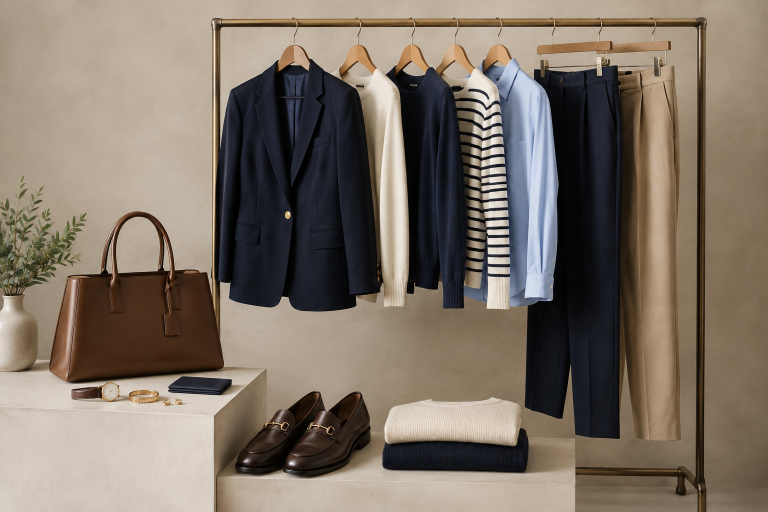
Key Takeaways
- Start with your real workplace dress code before deciding what to buy.
- Choose compatible colors, fabrics, and silhouettes that create repeatable outfits.
- Prioritize fit, comfort, and care needs alongside appearance.
- Use secondhand shopping to fill specific gaps instead of buying at random.
- Refresh familiar outfits with layers, shoes, and accessories rather than a complete reset.
A strong workwear rotation is not about owning the smallest possible closet. It is about having clothes that make sense for your actual schedule, workplace, commute, weather, and comfort level. A thoughtfully planned business casual capsule wardrobe can make busy mornings easier while leaving room for personality and evolving professional needs. Choosing versatile pieces that fit your routine can also help you maintain a polished appearance with less daily effort.
The most useful approach is flexible rather than restrictive. A capsule wardrobe is built around pieces that can be combined in different ways, but it does not require everyone to follow the same list of garments or colors. Your rotation should support the way you work, not an idealized version of office life. Over time, a well-planned wardrobe can adapt as your responsibilities, preferences, and work environment change.
Why Workwear Needs More Flexibility
A single workday may include focused time at home, a video call, a commute, an in-person meeting, and an evening commitment. Clothing that feels polished in one setting but impractical in another often ends up unworn. Building around versatile separates, comfortable shoes, and layers makes it easier to adjust without having to carry an extra outfit.
Start With the Dress Code You Actually Follow
“Business casual” means different things in different workplaces. A school, clinic, law office, creative studio, and remote-first company may use the same phrase while expecting very different clothing. Watch what trusted colleagues wear for a full week before you add new pieces.
Questions to Ask Before Building the Rotation
- Are dark, clean jeans acceptable, and if so, how often?
- Do client-facing days call for a blazer, structured jacket, or dressier shoes?
- How much walking, standing, driving, or public transit is part of the day?
- Is the office consistently warm, cold, or difficult to predict?
- Which lengths, colors, and levels of formality appear appropriate around you?
Audit the Closet Before Shopping
Start with the pieces you already reach for. Remove items that no longer fit, feel uncomfortable, or need repairs you are unlikely to arrange. Then separate work-ready clothing from casual, formal, seasonal, and damaged items. Look for patterns in the clothes that work: perhaps you prefer soft tailoring, darker trousers, washable knits, or flat shoes.
Next, identify genuine gaps. You may not need another top if the real problem is a versatile layer, a reliable pair of trousers, or shoes that work for a long commute. Original price should not decide whether a garment stays. Regular wear and current usefulness matter more.
Build Around a Simple Color Plan
A limited palette reduces guesswork because more items naturally work together. Choose two core neutrals, one lighter neutral, and one or two accent colors that you enjoy wearing. For example, navy and charcoal can pair well with white and burgundy, while camel and chocolate can pair well with cream and muted blue.
Matching does not mean every garment must be nearly identical in shade. It means most pieces should have at least two or three natural partners. If a new blouse only works with one specific pair of pants and one specific pair of shoes, it may be less useful than it first appears.
Choose Pieces That Work Hard
Rather than following a rigid shopping checklist, choose categories that make sense for your routine. Useful options may include polished layers such as blazers, cardigans, overshirts, or lightweight jackets; reliable bottoms such as trousers, skirts, dark denim, or tailored knit pants; and flexible tops, including button-downs, simple blouses, shells, and knit tops.
Also consider one-piece options, comfortable workplace-appropriate shoes, and practical accessories. A dress that works with a cardigan, blazer, boots, and flats has more value than one that only works for a single occasion. The same principle applies to bags, belts, outerwear, and jewelry.
Use the Three-Outfit Test
Before buying or keeping an item, build three outfits around it using clothes you already own. First, pair it with a dependable neutral. Second, combine it with a different texture or accent color. Third, style it for a more formal day or a relaxed hybrid day. Include the shoes and outer layer in each test.
This prevents isolated purchases that look appealing on a hanger but create no real outfit options. A garment does not need to work with everything, but it should make your existing wardrobe more functional.
Shop Secondhand With a Clear Plan
Secondhand shopping works best when you search for a defined need, such as wool trousers, a navy blazer, a leather belt, or a structured work bag. Filter by measurements, fabric, color, condition, and garment type rather than relying solely on the size label or brand name. When reviewing clothing, check seams, hems, cuffs, collars, zippers, buttons, lining, and visible signs of wear.
Read descriptions carefully and account for possible cleaning, repair, or tailoring costs. Clothing labels can also help you compare materials, since fiber content is generally listed on textile labels. Start with durable repeat-wear categories, then add more distinctive seasonal pieces after the foundation is working.
Think About Fabric and Care
Fabric affects comfort, wrinkling, shape retention, washability, and how a garment performs throughout the day. Ask whether an item will feel comfortable during a commute, whether it can be cared for at home, and whether its maintenance routine fits your schedule. A lower-priced piece that requires frequent professional cleaning may not be the easiest choice for regular wear.
Create Weekly Outfit Formulas
Outfit formulas reduce decision fatigue without making every day look the same. Try trousers, a knit top, a polished layer, and loafers; dark denim, a button-down, a cardigan, and flats; or a dress with a blazer and low boots. Change color, proportion, texture, accessories, or shoes to keep the formula feeling personal. Photograph combinations that work well and save them in a phone album for rushed mornings.
Refresh the Rotation by Season
Seasonal dressing does not require replacing your entire closet. Trade heavy knits for breathable layers in warm weather, then bring back tights, boots, textured jackets, and warmer outerwear as temperatures drop. Scarves, belts, jewelry, and a different shoe shape can also update familiar outfits. Store only clothing that is genuinely difficult to wear during the current season.
Track What Gets Worn
Keep a simple wear log for four to six weeks. Note the outfits that felt easy, the pieces that needed adjustment, and the items that remained untouched. The results can reveal favorite colors, recurring fit problems, missing basics, and clothing that looks good but does not support your day-to-day life.
Conclusion: Build for Real Life
The best workwear rotation is comfortable, adaptable, and easy to maintain. When each item fits your dress code, works with what you own, and earns regular wear, getting dressed becomes simpler without becoming boring.
