


Key Takeaways
- Do not re-enter a fire-damaged home until fire officials say it is safe.
- Damage may include smoke, soot, water, odor, and hidden structural concerns.
- Photographs, videos, receipts, and notes can help support an insurance claim.
- Food, medicine, and personal items exposed to heat, smoke, soot, or water may be unsafe.
- Florida Gulf Coast heat and humidity can make moisture and odor problems harder to manage.
- Start cleanup only after the home is safe and the damage has been documented.
A house fire can leave Florida Gulf Coast homeowners feeling unsure about what to do next. Even when the flames are out, smoke, soot, water, damaged wiring, and weakened building materials may still create risks. A careful plan can protect your family, your property, and the records needed for recovery.
Whether the fire affected one room or several areas of the home, the first priorities are safety, documentation, and clear communication. Homeowners facing smoke, water, or debris concerns may need professional fire damage restoration in Florida Gulf Coast communities to help assess conditions before cleanup begins.
Why Damage Can Continue After the Fire
A small burn area does not always mean the overall loss is small. Smoke can move through hallways, cabinets, vents, and other rooms. Soot can settle on walls, furniture, clothing, and electronics. Water from hoses, sprinklers, broken pipes, or a damaged roof can soak drywall, flooring, insulation, and belongings.
On the Florida Gulf Coast, warm and humid conditions can slow drying inside a closed home. That moisture may add to odor problems and damage materials that remain wet. Homes also may need to be secured quickly if a fire damages windows, doors, or roofing before heavy rain arrives.
For homeowners in Sarasota County and nearby coastal communities, arranging fire damage restoration in Venice may be part of a broader recovery plan when smoke, moisture, or debris affects the home.
Step One: Put People and Pets First
Confirm Everyone Is Safe
Call 911 if anyone needs urgent medical care. Move people and pets away from the damaged property, smoke, fallen debris, and possible utility hazards. Keep children out of the home until it has been inspected. Let close family members, employers, schools, and caregivers know what happened, especially if routines or housing plans have changed.
Find a Safe Place to Stay
Temporary housing may be needed when the home has no safe power, water, bathrooms, secure entry, or suitable air quality. Ask the insurance carrier about coverage for lodging and related costs. Keep receipts for hotel stays, meals, clothing, transportation, pet care, and emergency supplies. The steps to take immediately after a home fire also stress staying out of a damaged home until local fire authorities approve re-entry.
Step Two: Wait for Clearance Before Re-Entering
Follow instructions from firefighters, building officials, and utility providers. Do not go inside if there are damaged floors, sagging ceilings, leaning walls, standing water, loose wires, or a strong odor of gas. A rotten-egg smell or hissing sound can signal a gas leak. Leave the area and contact the utility provider or emergency services.
Do not use matches, candles, lighters, or any open flame in or near the property. If the home is dark and officials allow entry, use a flashlight during daylight hours. Do not turn on damaged appliances or restore utility service unless qualified professionals say it is safe.
Step Three: Document Damage Before Moving Items
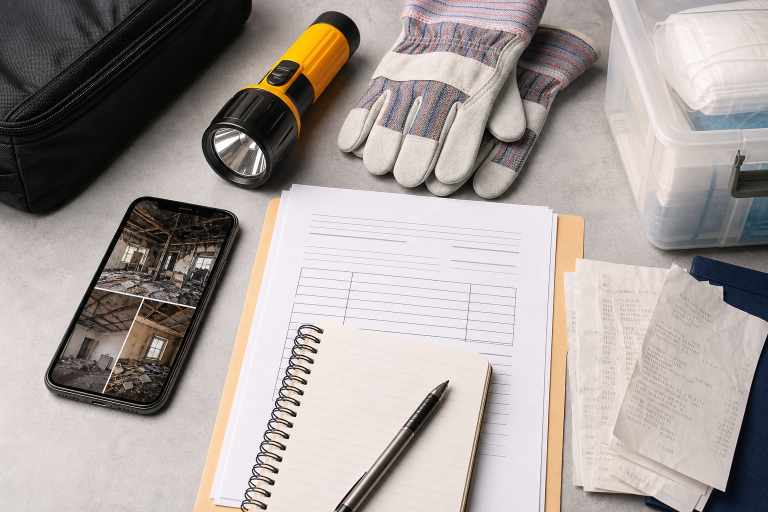
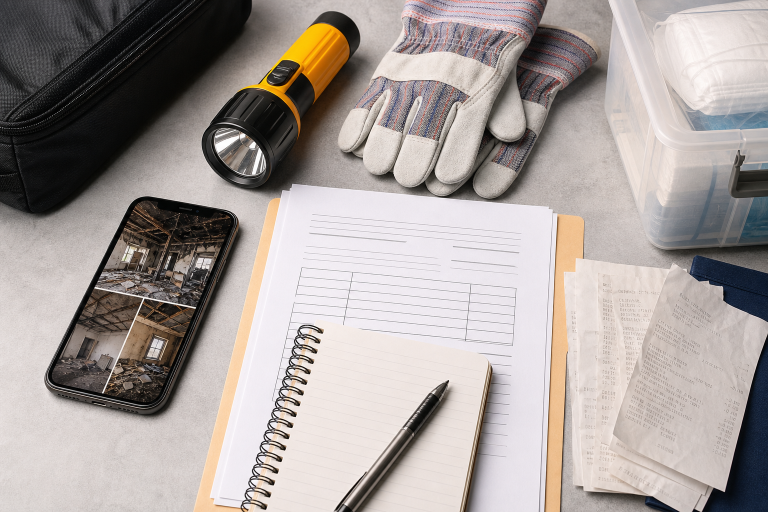
Before cleanup, create a room-by-room record of the damage. Take wide photos first, then close-up photos of smoke stains, water lines, damaged ceilings, floors, furniture, appliances, windows, doors, and personal belongings.
- Record videos while walking through each room.
- Make a list of items that are damaged, missing, or possibly salvageable.
- Save receipts for emergency repairs and temporary living expenses.
- Store photos, claim numbers, reports, and receipts in cloud storage.
- Write down the date, time, and names of people involved in the recovery process.
Step Four: Contact Insurance and Utility Providers
Report the loss to the insurance carrier as soon as practical. Ask what evidence is needed before throwing away damaged property. Request details about temporary repairs, debris removal, additional living expenses, and personal property coverage. Insurance policies differ, so review your own policy and ask direct questions about what it covers.
Also, contact electric, gas, water, and internet providers if fire, water, or debris may have affected service lines or equipment. Keep written records of each call, including the representative’s name, the date, and any instructions provided.
Step Five: Separate the Types of Damage
Smoke and Soot
Soot can smear and spread when rubbed into painted surfaces, fabrics, or furniture. Smoke odor may remain in carpets, curtains, cabinets, insulation, and air ducts. Painting over stains without proper cleaning can leave odor and residue behind.
Water and Structural Damage
Wet drywall, flooring, insulation, and furnishings need prompt attention. Water can also affect electrical systems. Heat may weaken roofing, framing, stairs, ceilings, and other parts of the home. Structural and utility concerns should be inspected by qualified professionals rather than handled as a do-it-yourself project.
What to Throw Away and What May Be Salvageable
Food, drinks, medicine, cosmetics, baby products, and medical supplies exposed to heat, smoke, soot, or contaminated water often need disposal. The American Red Cross advises discarding food exposed to heat, smoke, or soot. Some metal, glass, ceramic, and solid wood belongings may be cleaned and inspected. Clothing and washable fabrics may also be recoverable, depending on the level of exposure.
Do not make final disposal decisions before photographing items and checking with the insurance carrier. Important papers, books, and photographs may need careful handling to prevent further damage.
Safe Cleanup Practices for Gulf Coast Homes
- Wear gloves, sturdy shoes, eye protection, protective clothing, and appropriate respiratory protection when needed.
- Keep children, pets, and people with breathing concerns away from active cleanup areas.
- Never mix cleaning products, especially bleach and ammonia-based products.
- Take breaks, drink water, and avoid heavy lifting during hot Florida weather.
- Stop work if you notice a gas smell, unstable debris, damaged wiring, or heavy soot residue.
Professional help often makes sense when smoke has spread through several rooms, water has reached walls or electrical systems, odors remain strong, or structural damage is visible. The after-fire guidance for community residents from the U.S. Fire Administration can also help households think through early recovery needs.
A Simple 24-Hour Recovery Checklist
- Confirm that everyone and every pet is safe.
- Follow instructions from emergency officials.
- Arrange temporary housing if needed.
- Call the insurance carrier.
- Photograph the home and damaged belongings.
- Contact utility providers about unsafe systems.
- Keep receipts, reports, and written notes.
- Avoid unsafe cleanup or repairs without approval.
Moving Forward After a House Fire
Recovery after a house fire takes time, but the first steps can bring order to a stressful situation. Put safety first, wait for clearance before entering, and document every loss. Address smoke, soot, water, and structural issues separately. With organized records and appropriate support, Florida Gulf Coast homeowners can begin rebuilding with greater confidence.
