

A server decision influences the efficiency of business operations, including running applications, data management, user support, and growth. Under-provisioning in terms of processor capacity creates bottlenecks, while over-provisioning, which results in buying unnecessary performance, drives up the cost of the infrastructure without providing any additional benefit. There is a wide variety of server choices that utilize AMD CPUs.
1. Start With the Business Workload
A smaller company operating file sharing, web apps, or business applications will have different needs than one that is running virtualization, database, analysis, or other resource-intensive applications.
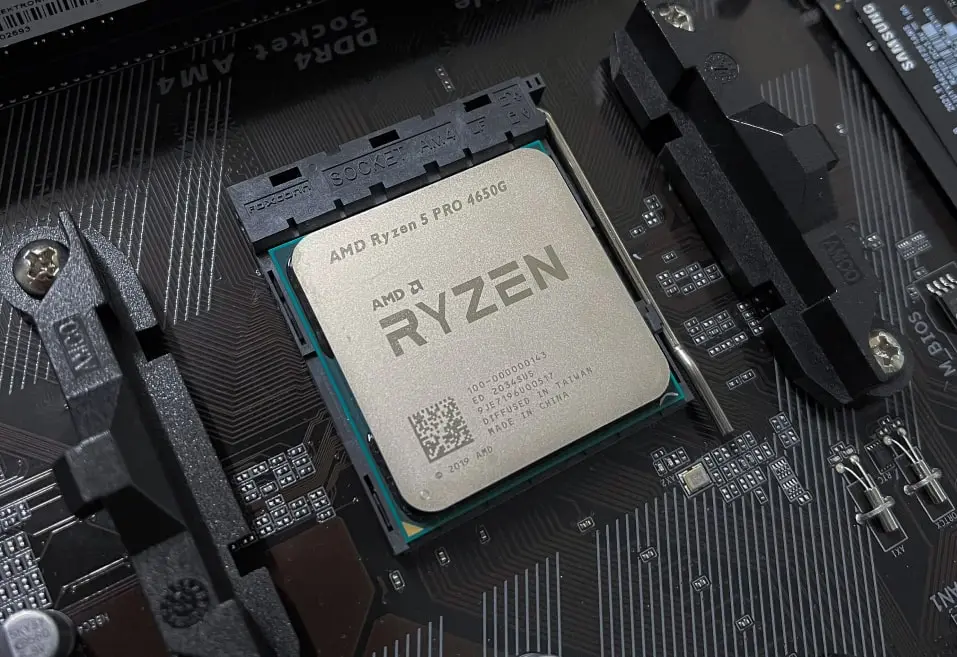
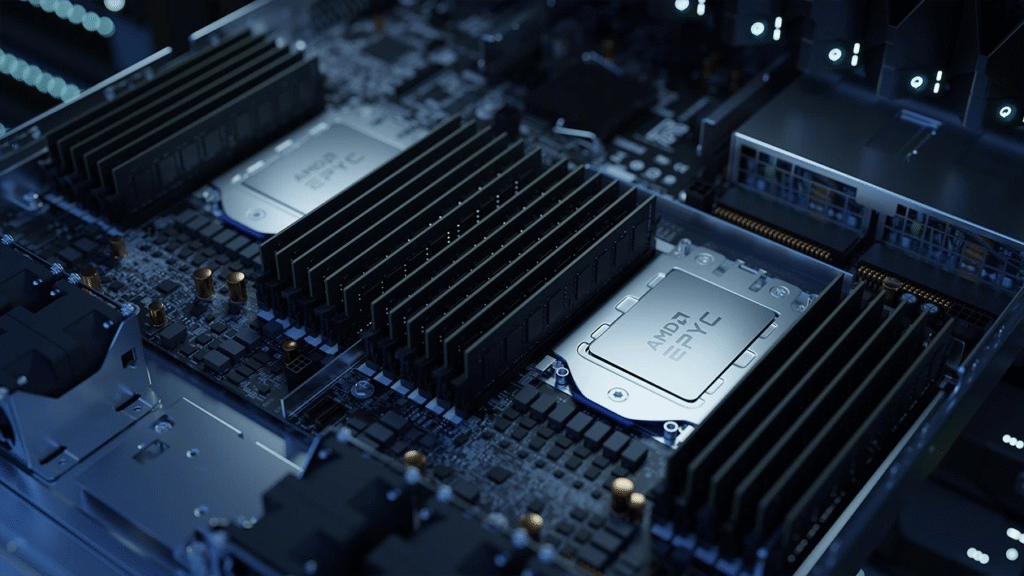
One that operates a smaller workload may benefit from an AMD Ryzen server, which provides high multi-core efficiency and stability around-the-clock. But more demanding applications may need the performance, increased cores, memory, and I/O capabilities of an AMD EPYC server.
It is also critical to consider the number of applications to be run concurrently when performing the workload analysis. Applications such as virtual machines, databases, containers, and services can all share CPU resources.
2. Match CPU Cores to Processing Needs
The number of cores that come in a CPU is among the major considerations in deciding on an AMD server. Having more cores means that the CPU will be able to perform several processes at the same time, but having the maximum number of cores does not necessarily mean that it is the best option for all businesses.
In general business applications, having a moderate number of cores would be enough. Applications like virtualization, big databases, analytical systems, and multi-threading applications would benefit from CPUs with a much higher number of cores.
There is also the issue of clock speed, as some applications require faster individual cores while others require multiple threads.
3. Consider Memory Capacity and Bandwidth
The performance of the CPU can be hindered in cases where there is insufficient memory in the server. Some applications that are used in processing large amounts of data, running virtual machines, and storing large databases may need more memory compared to other office-based tasks.
The AMD server platform is known for offering high memory capacity and memory bandwidth. This becomes helpful in situations where various demanding applications require simultaneous access to the data.
One should also look at the ability to expand in the future when purchasing a server platform. Choosing a server platform with extra memory slots and high memory capacity can facilitate the expansion of the server’s functionality. This will help the server last longer.
4. Evaluate Storage and I/O Requirements
Performance of servers goes beyond mere processing capabilities. It is greatly dependent on the storage performance and the ability to access data. Businesses that deal with databases, virtual machines, video files, or any other large volume of data may benefit from using NVMe storage due to its high-speed access compared to hard drives.
PCIe connectivity is another consideration. High-speed networking, storage controllers, and accelerator hardware can require substantial I/O bandwidth. A server platform with sufficient PCIe lanes helps prevent these components from competing for limited connectivity.
5. Plan for Virtualization and Scalability
Virtualization provides a different approach to the consumption of server resources. Instead of allocating a physical server per application, enterprises can deploy several virtual machines on one server. Companies contemplating the purchase of AMD CPU-based servers will need to take into account the scalability of the processor, memory size, storage, and networking aspects.
This makes CPU cores, memory size, storage speed, and network bandwidth very crucial. A virtualization server needs to be equipped with sufficient resources not only to accommodate existing virtual machines but also to provide extra room for more workloads.
Scalability should also be considered beyond the initial deployment. A business may begin with a few applications but later add more users, virtual machines, databases, or services. Choosing a platform with room for expansion can make that growth easier to manage.
6. Assess Security and Reliability Features
But business servers require more than just sheer computing power. There are various hardware-based capabilities that could offer greater security and reliability.
For instance, AMD’s EPYC processors come equipped with different capabilities that may offer better protection for virtualized environments. These capabilities include things like Secure Encrypted Virtualization.
Reliability features are equally important. Error detection and correction capabilities can help identify memory-related problems and reduce the risk of unexpected interruptions. For businesses that depend on continuous application availability, these capabilities can be a key part of server selection.
7. Balance Performance With Power Efficiency
Server performance should be evaluated alongside power consumption and cooling requirements. A processor that delivers high throughput efficiently can help businesses handle demanding workloads without unnecessarily increasing the data center’s energy burden.
High core density can also allow organizations to consolidate workloads onto fewer physical systems. With less hardware able to do the same job, it may be possible to save on rack space, power usage, cooling, and hardware maintenance.
The purpose is not merely to buy the best processor available. A good strategy would be to choose hardware that can meet the performance requirements in an efficient manner.
8. Choose a Platform That Supports Long-Term Growth
It is important to keep in mind what the organization will need in the coming years while selecting a server. If an organization selects a system that fulfills current requirements but cannot be upgraded further, it can become a problem very soon.
The factors that an organization needs to take into account while selecting an AMD CPU-based server are processor scalability, memory upgradability, storage capabilities, networking, and compatibility with future infrastructure.
Future upgrade needs of an organization can become easier by choosing a suitable platform. Upgrading memory capacity, storage capability, or networking can become much easier than upgrading the whole system.
9. Compare the Complete Server Solution
Selecting an appropriate AMD processor is not enough by itself. The entire server solution should be selected based on the workload, which includes memory, storage, networking, cooling, power supply, and management possibilities.
An economical solution may seem tempting at first sight, but can prove costly in case of regular upgrades and problems handling an increasing workload. An overkill solution will result in wasted processing power.
This is where comparing complete configurations becomes more useful than comparing processor specifications alone. Businesses should evaluate performance, expandability, reliability, and total operating requirements together.
Build Around the Actual Business Need
The ideal AMD CPU-based server is not one with the highest number of cores and the highest specs. Rather, it is one with an ideal combination of processing capabilities, memory, storage space, connectivity options, reliability, and scalability.
Cloud Ninjas is comparable to other established server hardware manufacturers like Dell and HPE. In contrast to the large hardware vendors who offer full-fledged business ecosystems, Cloud Ninjas offers targeted solutions for server and workstation hardware configuration. This will make it easier for organizations to configure hardware according to their computing needs.
An analysis of existing workload and potential growth becomes necessary. Instead of choosing hardware based on specs alone, businesses will be able to create a server hardware platform that provides good performance now and is scalable in the future.