


Key Takeaways
- A home emergency plan should be short, visible, and easy to follow under stress.
- Clear contacts, open walkways, updated medical details, and a nearby backup person can improve readiness.
- Falls, medication errors, fires, missed check-ins, severe weather, and power outages deserve special attention.
- Emergency tools are most effective when paired with routines and people who know how to respond.
- The plan should protect independence while matching the person’s current needs and abilities.
Living alone can support independence, comfort, and familiar routines, especially when a home is arranged with safety in mind. A practical emergency plan helps an older adult respond more clearly to a fall, sudden illness, fire, severe weather event, or power outage without turning daily life into a constant worry.
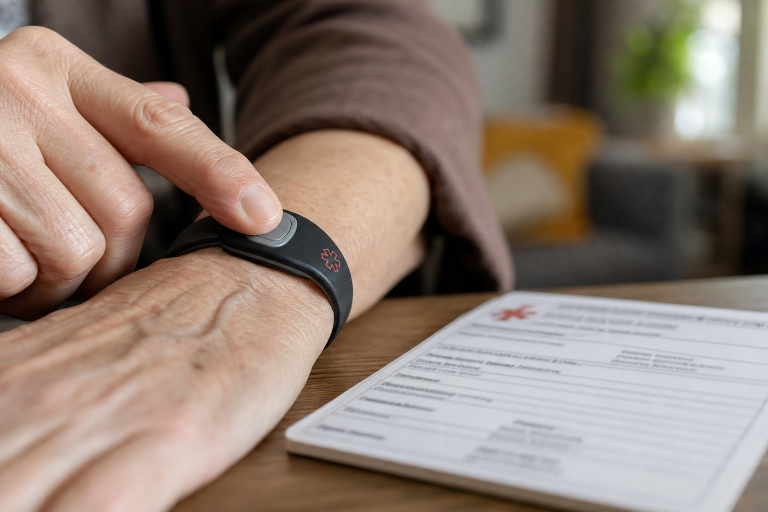
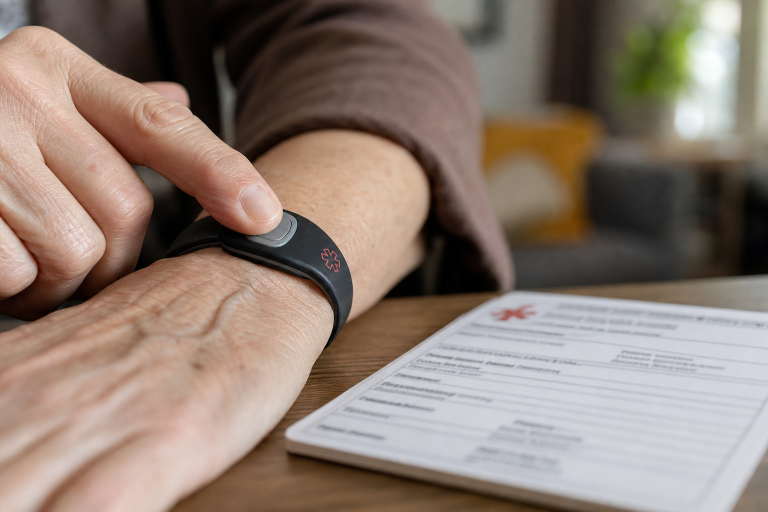
The best plan combines safer surroundings, reliable people, current health information, and simple ways to call for help. For example, a medical alert bracelet may be useful for someone who could have trouble reaching a phone after a fall, but it should be one part of a larger plan that is understood and tested.
Why a Home Emergency Plan Matters
Living alone does not automatically mean living unsafely. It does mean that a person may need a reliable way to get help if they cannot answer the door, reach a phone, leave the home, or explain their needs quickly. The National Institute on Aging offers disaster preparedness guidance for older adults that emphasizes planning for medical needs, emergency supplies, evacuation, and support networks.
Review the Main Risks at Home
Start with likely problems rather than trying to prepare for every imaginable emergency. Consider falls in the bathroom or on stairs, sudden illness, medication confusion, smoke or carbon monoxide alarms, blocked exits, and outages that affect heating, cooling, communications, elevators, or medical equipment. Also consider local hazards, such as flooding, wildfire smoke, extreme heat, winter storms, or tornadoes.
Complete a Room-by-Room Safety Check
Walk through the home once in daylight and once after dark. Look for small barriers that could become serious when someone is tired, ill, or moving quickly.
Entryways, Hallways, and Stairs
- Remove loose rugs, cords, boxes, and narrow obstacles from common routes.
- Improve lighting near doors, stairs, and the route to the bathroom.
- Keep keys, shoes, phones, and mobility aids easy to reach.
Bathroom, Kitchen, and Bedroom
- Use secure grab bars and slip-resistant surfaces where needed.
- Store heavy kitchen items between waist and shoulder height.
- Keep pathways clear around the bed, favorite chair, and frequently used furniture.
- Place a flashlight near the bed and test smoke and carbon monoxide alarms regularly.
Organize Medical and Emergency Information
Create one readable page with the person’s full name, address, emergency contacts, current medications and doses, allergies, major health conditions, doctors, pharmacy, insurance details, and preferred hospital. Add practical notes about pets, building access, gates, elevators, or the location of a spare key. Keep copies near the main phone, in the emergency kit, and in a wallet or purse. Update the page after a move, medication change, diagnosis, or hospital visit.
Create a Check-In and Contact Plan
A check-in routine can provide reassurance without making someone feel monitored. Choose a primary contact, a second contact, and at least one nearby person who can visit if necessary. Agree on a usual call, text, or visit time, then decide what constitutes an unusual delay.
- Call again using the usual method.
- Send a text or try another familiar contact method.
- Check for appointments, travel, known outages, or schedule changes.
- Ask the nearby backup person to visit.
- Request a welfare check when there is a credible reason to believe the person may be in danger.
Build a Practical Emergency Kit
Store supplies in a labeled, easy-to-reach container, plus a smaller grab-and-go bag for an evacuation. Include water, nonperishable food, medications, first-aid supplies, hygiene items, a flashlight, extra batteries, phone chargers, a power bank, cash, identification, health information, extra glasses, hearing-aid batteries, and needed mobility accessories. Tailor the kit to the home, climate, health needs, and pets or service animals.
Prepare for Power Outages and Severe Weather
List every device that requires electricity, including oxygen equipment, an electric wheelchair, a hospital bed, refrigeration for medication, or a phone. Discuss backup options with the healthcare professional or equipment supplier when appropriate. Before forecasted storms, charge phones and power banks, identify a safe alternate location, and arrange transportation early if evacuation may be needed. Keep weather alerts enabled through a trusted local source.
Choose Helpful Emergency Response Tools
Choose tools that solve a specific problem and that the person is comfortable using. Useful options may include programmed emergency contacts, medication reminders, voice assistants, automatic lighting, stove shut-off devices, wearable call buttons, and fall-detection features. The CDC’s fall-prevention resources can also help families discuss fall risks, medication reviews, balance, and home safety with a healthcare professional. No device handles every emergency, so test it, keep it charged, and make sure responders know the plan.
Practice and Update the Plan
A written plan becomes more useful when it is practiced. Walk through how to call for help, exit the home, locate supplies, and contact the backup person. Test alarms, lights, chargers, phones, and response tools. Review supplies every six months, and update contacts whenever health, housing, family, or transportation arrangements change.
Know When More Support May Be Needed
Reassess the plan if there are repeated falls, missed medications, new confusion, trouble using familiar devices, difficulty with bathing or cooking, spoiled food, unpaid bills, increasing isolation, or no dependable person available in an emergency. A doctor, pharmacist, occupational therapist, social worker, or trusted family member can help identify practical next steps. More support is not a loss of independence. It can be the adjustment that helps a person remain safely at home.
Conclusion
A safer home emergency plan does not need to be complicated. Clear contacts, safer walkways, up-to-date medical information, accessible supplies, and a practiced response routine can make independent living safer. The strongest plan is one the older adult accepts, understands, and can use when help is needed quickly.
