


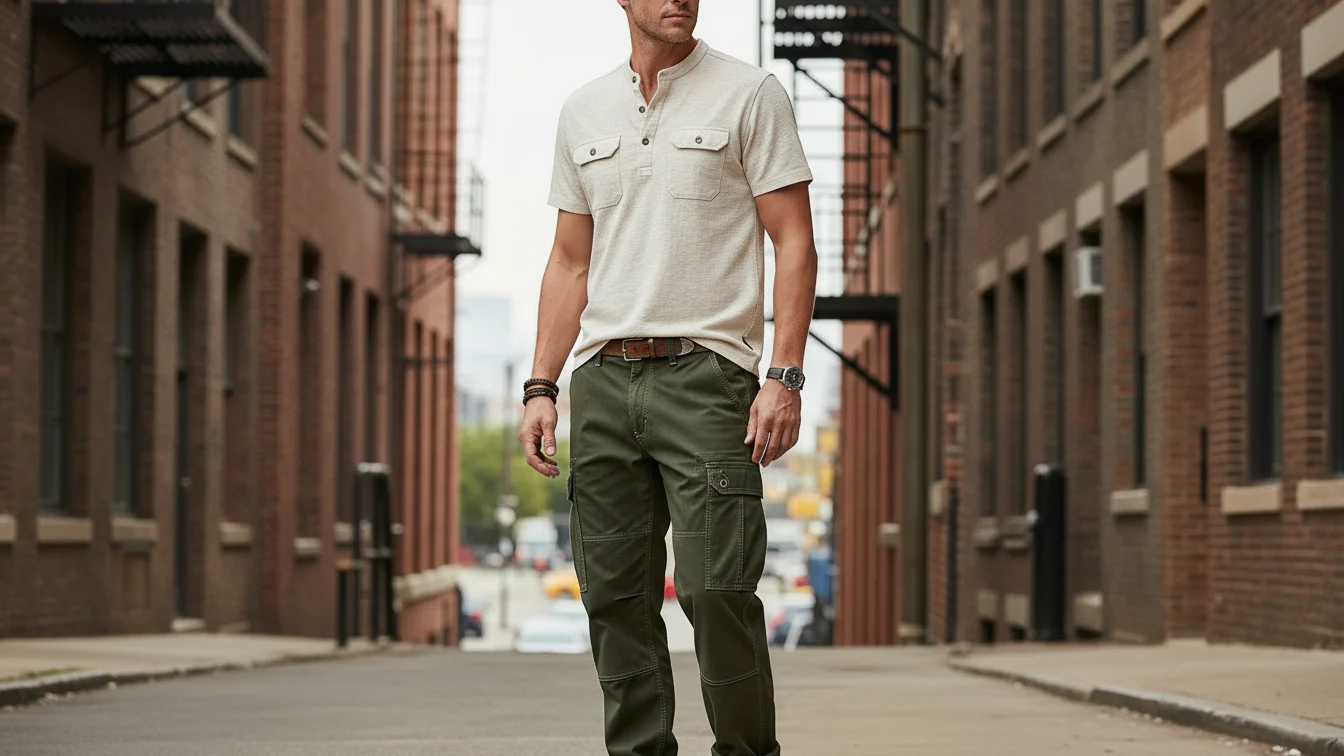
The right pants do more than complete an outfit. They affect how comfortably you commute, sit at work, travel, handle outdoor tasks, and show up for social plans. Understanding the different types of pants for men is a useful first step, but the best choice depends on how and where you will actually wear them.
Rather than buying every new silhouette or trying to make one pair work everywhere, build your choices around lifestyle, weather, fit, and dress code. A dependable rotation can be small, practical, and easy to style when each pair has a clear purpose.
Why the Right Pair Matters
Pants set the foundation for proportion, comfort, and practicality. A pair that looks sharp but pulls at the thighs will not serve you well on a long day. Likewise, pants that feel great on the couch may look too relaxed for an office or dinner reservation. The construction of classic jeans makes them a durable casual staple, but denim is only one option among many.
Start With Your Lifestyle
Before shopping, consider what fills most of your week. Ask yourself:
- How much time do you spend sitting, walking, commuting, or traveling?
- Do you need stretch, deep pockets, water resistance, or easy-care fabric?
- Will you wear the pants mainly indoors, outdoors, or in changing conditions?
- Does your workplace lean casual, business casual, or formal?
For example, someone who takes public transit, works in a casual office, and meets friends after work may need stretch chinos or clean technical trousers. They should move easily during the commute while still looking polished with a button-down shirt or knit polo.
Learn the Main Pant Categories
- Denim: Durable, casual, and reliable for everyday outfits.
- Chinos: A versatile middle ground between jeans and dress trousers.
- Utility pants: Practical for hands-on work, errands, and outdoor activity.
- Cargo pants: Relaxed pants with added storage and a more casual feel.
- Joggers: Best for travel, exercise, and low-pressure days.
- Corduroy: Textured pants that work especially well in cooler weather.
- Technical pants: Designed for stretch, quick drying, wrinkle resistance, or weather protection.
- Dress trousers: The strongest choice for formal events, refined offices, and dressier evenings.
Match Pants to the Dress Code
- Relaxed weekend: Choose denim, joggers, utility pants, or cargos with a T-shirt, overshirt, and sneakers.
- Business casual: Start with chinos or clean trousers, then add a knit polo, button-down, loafers, or minimal sneakers.
- Outdoor activity: Choose utility or technical pants with durable fabric, secure pockets, and room to move.
- Evening event: Dark trousers or refined chinos pair well with a structured shirt, jacket, and cleaner footwear.
- Travel day: Lightweight stretch pants offer comfort, layering flexibility, and a tidier appearance than sweatpants.
Choose the Right Fit
Fit is not limited to slim, straight, relaxed, or wide-leg labels. The waistband should stay in place without digging in. The seat should not sag or pull. Your thighs need enough room to sit and climb stairs, while the rise should feel natural when you bend or move. Finally, the leg opening should work with the shoes you wear most often.
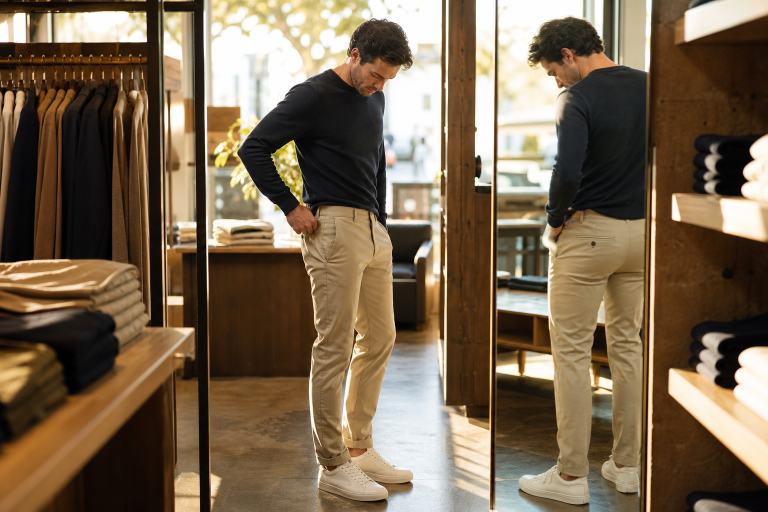
Use a quick try-on test. Stand, sit, walk, and place your phone or wallet in a pocket. Check for pulling across the thighs and waistband. Then look at the hem with sneakers and dressier shoes. A small alteration to the length or taper can make an ordinary pair look far more intentional.
Consider Fabric and Weather
Fabric determines how pants breathe, drape, and hold up through the day. Cotton twill is a comfortable everyday choice, while denim offers structure and durability. Linen blends are lighter for warm weather, corduroy adds warmth and texture in fall and winter, and wool blends bring polish to cooler offices and events. Stretch and technical blends are useful for commuting, travel, and active routines.
As a simple rule, lighter fabrics usually suit heat, while heavier materials provide more warmth and structure. Checking the fiber content and care labels can help you understand what a pair is made of and how to maintain it.
Build a Small, Flexible Pant Wardrobe
- Choose one dark everyday pair, such as dark blue denim or navy chinos.
- Add a lighter pair in tan, stone, or olive for warm-weather outfits.
- Keep a comfortable stretch option for travel and relaxed days.
- Own one sharp pair of trousers for work, dates, and events.
- Add weather-ready utility or technical pants if you spend time outdoors.
Neutral colors such as navy, charcoal, olive, tan, and dark blue create more combinations with fewer pieces. The goal is not to own every style, but to avoid having five nearly identical pairs that all serve the same purpose.
Simple Ways to Style Each Pair
- Balance roomier pants with a closer-fitting T-shirt, knit, or jacket.
- Pair slimmer pants with a relaxed overshirt or lightweight outer layer.
- Match shoes to the occasion, using sneakers for casual settings and loafers or boots for sharper looks.
- Add depth with textures such as denim, corduroy, knitwear, or suede.
Easy outfit formulas include everyday pants with a plain T-shirt and overshirt, chinos with a knit polo and loafers, or stretch travel pants with a breathable shirt and packable jacket.
Avoid Common Buying Mistakes
- Buying based only on the size label instead of trying the pants on.
- Choosing a trend that does not suit your routine or footwear.
- Ignoring fabric weight, pocket depth, and seasonal comfort.
- Buying too many pairs in nearly identical colors and cuts.
- Skipping minor alterations when the waist, hem, or taper is close but not quite right.
Care and Maintenance Tips
Read the care label before washing, wash similar colors together, and avoid high dryer heat when shrinkage is possible. Spot-clean small marks when practical, repair loose buttons and hems early, and rotate frequently worn pairs. Folding knits and casual pants neatly or hanging trousers by the waistband helps them keep their shape between wears.
Common Questions About Men’s Pants
How Many Pairs of Pants Does a Man Need?
There is no fixed number. A compact wardrobe works well when it covers everyday wear, work, weather changes, travel, and occasional formal needs.
Should Pants Be Tight or Loose?
The best fit allows movement without excess fabric. Straighter and roomier shapes can look current and comfortable, but the pants should still sit cleanly through the waist, seat, and leg.
What Colors Are Easiest to Style?
Navy, charcoal, olive, tan, and dark blue are dependable starting points because they pair easily with white, gray, black, brown, and many muted colors.
Can Casual Pants Be Worn to Work?
That depends on the workplace. Clean fabric, a simple silhouette, and polished shoes can make chinos, dark denim, and some technical trousers appropriate for relaxed offices.
Final Thoughts
The best pants are not necessarily the newest or boldest pair. They fit well, suit the setting, feel comfortable, and work with the clothes you already own. Choose based on your real routine, local climate, and dress code, then properly refine the fit and care for each pair. That approach creates more useful outfits with less guesswork.
